
Last updated November 2, 2026
 Sweep & inspection
 Caps & crowns
 Flue relining
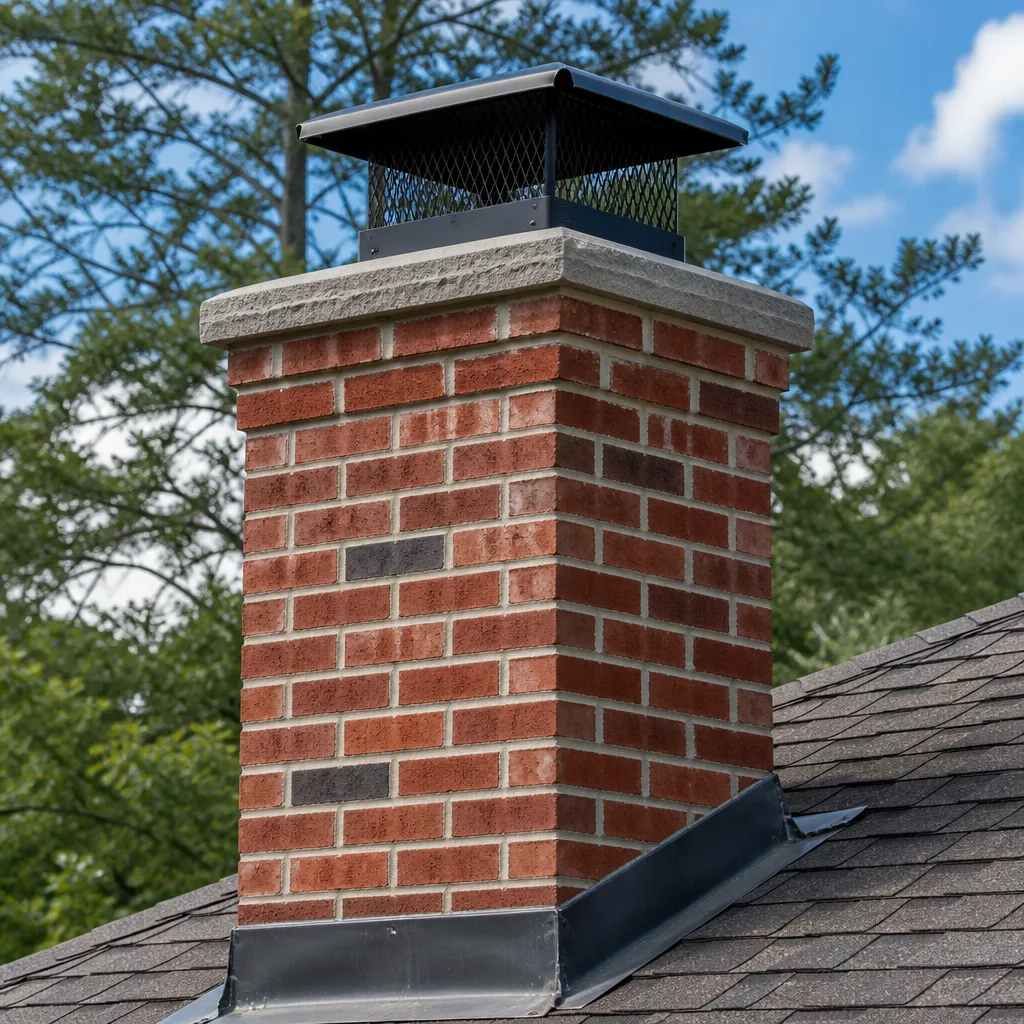 Masonry repair
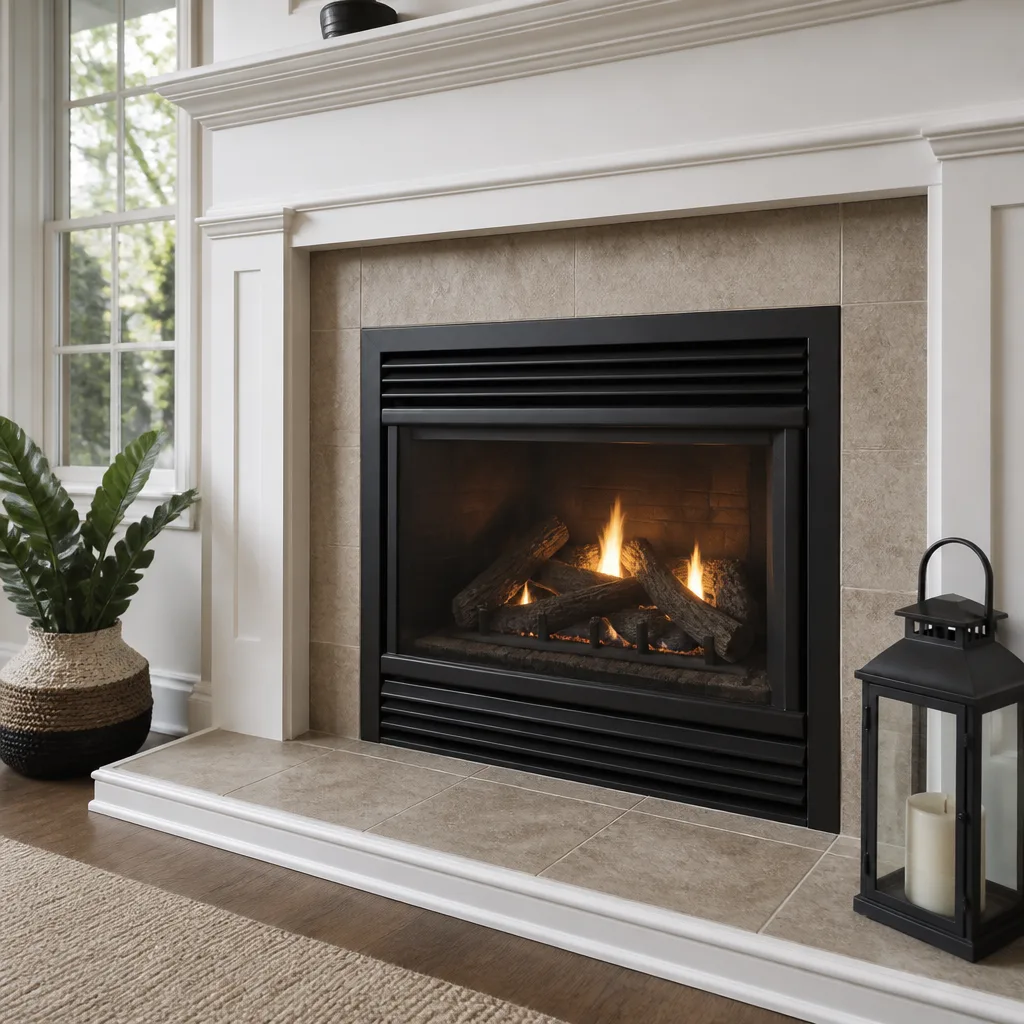 Gas fireplace service
Level 1 sweep and inspection to the NFPA 211 annual standard - flue, crown, cap, and flashing checked and photographed
Chimney sweep logs do not sweep chimneys. They loosen some creosote - which then falls where a brush and vacuum still have to collect it.
Chimney Cleaning Warning Signs: A Santa Monica Homeowner’s Reference Guide
Most chimney warning sign guides tell you to look for smoke in the living room or a strong smell. By the time those show up, you’re already late. The real early warnings are quieter: a white mineral stain bleeding through exterior brick, a tiny clink of falling mortar, a flame that takes a half-second too long to catch. This guide exists because Santa Monica homes sit in a marine layer that treats masonry differently than inland houses, and because the Steadfast Chimney Sweep home page can’t fit everything a homeowner needs to know before booking a sweep. We’ll show you how to read the subtle, materials-level signals that appear months or years before a chimney becomes dangerous, and when they’re actually harmless.
Quick Answer
A chimney needs professional attention when you see white mineral staining (efflorescence), flaking brick or stucco, mortar that crumbles when you scrape it with a key, smoke that curls back into the room, a smell like stale campfire on days you haven’t burned, or a damper that won’t hold its position. In Santa Monica’s marine climate, water entry through the crown or cap is the root cause of most structural warning signs, and creosote buildup from low-temperature fires is the root cause of most draft problems. Both are fixable when caught early and expensive when ignored.
Styles & brands we work with
- Sweep & inspection
- Caps & crowns
- Flue relining
- Masonry repair
- Gas fireplace service
Table of Contents
- Efflorescence vs. Paint Peel: What the White Stuff Actually Means
- Spalling, Flaking, and the Mortar Test You Can Do With a Key
- The Smell Test: Backdrafting vs. Normal Fireplace Odor
- Delayed Ignition, Puffing, and Draft Sounds: What the Fire Is Telling You
- How to Test a Failing Damper Without Tools
- Cosmetic Surface Issues vs. Structural Problems: The Line That Matters
- Why Santa Monica’s Marine Layer Accelerates Chimney Wear
- Gas Inserts Have Different Warning Signs: What to Watch For
Efflorescence vs. Paint Peel: What the White Stuff Actually Means
A white stain on the outside of your chimney isn’t cosmetic. It’s efflorescence, and it’s telling you that water is moving through your masonry and dissolving the mortar salts from the inside out. By the time it’s visible, the damage has been happening for months. The stain forms when moisture enters porous brick or mortar, dissolves mineral salts, carries them to the surface, and evaporates, leaving the salt behind. In Santa Monica, the marine layer keeps exterior masonry damp for more hours than inland cities, so efflorescence appears earlier and spreads faster here than it would in, say, Bakersfield or Palmdale.
The practical question is whether the white residue is efflorescence or something simpler. Run a finger across it. Efflorescence feels crystalline, like fine sand, and it brushes off dry. Paint peel feels rubbery or flakes in sheets. Efflorescence is a symptom of a water pathway; paint peel is usually a failed surface coating. One is informational, the other is cosmetic.
Where the stain is located tells you more. Efflorescence near the top of the chimney usually means water is entering through a cracked crown or failed cap flashing. Staining lower down, especially in patches that correspond to the firebox, suggests water is condensing inside the flue and weeping outward. A stain that grows after rain is active water entry, not leftover residue. We’ve seen Santa Monica chimneys where the crown crack was a hairline fissure and the efflorescence band was the only clue before spalling started. That’s the treatment window you want to catch.
For most Santa Monica homes built before 1980, the chimney exterior is brick without a protective crown seal or with a badly weathered one. If you see efflorescence, the next step is a proper inspection, not a wire brush. The stain itself can come back even after repointing if the water entry isn’t addressed at the source.
Spalling, Flaking, and the Mortar Test You Can Do With a Key
Spalling is the word for brick or stone faces flaking off in layers. It happens when water inside the masonry expands and contracts through Santa Monica’s temperature swings, which are mild compared to desert climates but still enough to cycle stress through older brick. Spalling is a structural warning, not a surface cosmetic issue. Once brick faces start popping off, the protective outer skin of the chimney is gone, and moisture reaches deeper with every rain.
Mortar erosion is easier to spot and frequently overlooked. Mortar is meant to fail before brick does. That’s by design: repointing mortar is cheaper than replacing brick. The problem is that most homeowners never test their mortar. Here’s the test we teach Santa Monica homeowners:
- Take a house key or a flathead screwdriver.
- Scrape it lightly across a mortar joint on the chimney exterior, below the crown.
- If the mortar crumbles and falls away as sand, the joint is weathered past the point of weather resistance.
- If the key only leaves a faint scratch, the mortar is still serviceable.
- Repeat the test at three different heights: near the ground, at mid-chimney, and just below the crown.
Mortar that fails near the top of the chimney usually points to crown leakage. Mortar that fails everywhere just means the chimney is old and due for repointing. Either way, the fix is the same: tuckpointing. Delaying it allows water to reach the flue liner, and once a clay tile liner cracks, the repair cost steps up significantly. Chimney Repair in Santa Monica handles exactly this progression, and it’s far cheaper to repoint than to reline.
The Smell Test: Backdrafting vs. Normal Fireplace Odor
A fireplace that smells like last winter’s ashes on a random Tuesday in August is usually backdrafting, not dirty. The distinction matters because a dirty chimney might need cleaning, but a backdrafting chimney is a combustion safety problem that needs diagnosis. Santa Monica’s coastal weather patterns make backdrafting more common here than homeowners expect.
Backdrafting is when the house itself starts pulling air down the chimney instead of the chimney pulling air up. It happens when exhaust fans, a clothes dryer, or a water heater create negative pressure inside the home. In older Santa Monica bungalows with small square footage and tightly sealed windows, a running bathroom fan can overcome a cold chimney’s natural upward draft. The smell you get is stale wood smoke and creosote, but the source isn’t the creosote, it’s the air flow.
Normal fireplace odor is a low, smoky smell that hangs around for a day or two after burning and fades. Backdrafting odor is sharper, more like wet ash, and it comes and goes without any fire being lit. It often gets worse when you run the dryer or the range hood. If you notice the smell only when the dryer is running, Dryer Vent Cleaning in Santa Monica is a likely part of the fix, but so is checking the chimney’s draft with a proper smoke test.
What causes backdrafting in a coastal climate? Temperature inversion in the marine layer is a real factor. When outside air is cooler than indoor air, a cold chimney becomes a plug of dense air. Add a mechanical exhaust, and the pressure balance flips. The correction often involves a top-sealing damper or a taller flue. It rarely involves just scrubbing harder.
Delayed Ignition, Puffing, and Draft Sounds: What the Fire Is Telling You
Most chimney problems announce themselves well before smoke or odor. You just have to listen. A gas fireplace that goes “whoompf” a second after you light it is a delayed ignition. It means gas is pooling before the flame reaches it. This can be a dirty burner, a clogged pilot assembly, or air flow interruption in the flue. It’s never nothing. Every delayed ignition is a small pressure event inside the firebox, and repeated small pressure events crack refractory panels.
Wood-burning fireplaces have their own acoustic vocabulary. A fire that puffs or surges, where the flames rhythmically blow toward the room and then pull back, is complaining about draft. Sometimes it’s chimney height. Sometimes it’s a damper that’s only partially open. Sometimes it’s a creosote restriction that’s effectively narrowing the flue. A clean flue of the right size produces a steady, quiet draw. We look for the sound of wind moaning across the top of a chimney even when no fire is lit, because that can signal a missing cap or a cap that’s the wrong size.
What does excessive smoke actually mean, practically? If you open the damper fully, prime the flue with a rolled newspaper torch for thirty seconds, and the fire still spills smoke into the room, the most common culprits in Santa Monica are a cold flue, a partially blocked flue, or a chimney that’s too short for the roof line. But a less common cause we see in coastal properties is a nest. Birds and squirrels love a warm, sheltered flue within a block of the ocean. A cap from Copperfield or Famco, properly fitted, prevents the whole class of animal-related blockages. The smoke itself is just the symptom.
How to Test a Failing Damper Without Tools
A damper is a simple steel or cast-iron door at the throat of the firebox. It has two jobs: let smoke out when open, and keep warm air in when closed. A failing damper usually fails in one of three ways: it won’t stay open, it won’t close fully, or it’s so warped that it does neither well.
Here’s the no-tools test we walk Santa Monica homeowners through:
- Open the damper fully. Look up with a flashlight. You should see the flue opening clearly, no visible obstruction at the damper level.
- Close the damper. Listen for a solid metal-on-metal sound. A damper that closes with a soft grind or no stop sound at all is worn.
- With the damper closed, light a match or a lighter near the opening. If the flame leans toward the flue, air is getting past. A properly sealed damper lets no noticeable draft through.
- Look at the damper plate itself. Surface rust is normal. Rust that has eaten through the plate is not.
- If the damper handle feels wobbly or requires force, the hinge or the handle assembly is deteriorating.
A damper that won’t seal is a year-round energy leak and a backdrafting invitation. A damper that won’t open fully is a smoke spill hazard. Neither is a complex repair. Often the fix is a new top-sealing damper, which replaces the throat damper entirely and seals against the flue top, where it also keeps the marine air and rain out. This is one of the repairs we do most frequently on older Santa Monica cottages where the original dampers have been rusting for forty years in salt-adjacent air.
Cosmetic Surface Issues vs. Structural Problems: The Line That Matters
The difference between a cosmetic chimney issue and a structural one comes down to whether water can get past the surface. Hairline cracks in the crown, for example, are not cosmetic even though they look minor. A crack that isn’t wide enough to fit a dime can still channel water into the flue and masonry over hundreds of rain events. In Santa Monica, where fog condensation adds to rainfall totals, hairline crown cracks are treated as structural because they will get worse.
What is cosmetic? Superficial rust staining on a cap is cosmetic. Efflorescence that appears on new brick within weeks of a rain event and then disappears in dry weather is usually just curing salts, not active water entry. But you can’t tell the difference by looking. You test it: wipe the area clean, mark the stain with a pencil line, and check after the next rain. If the stain returns past the line, it’s active water movement. If it doesn’t, it was residue.
Here’s the rule of thumb we give Santa Monica homeowners: if the problem is on the surface, clean it and monitor. If the problem is caused by water getting through the surface, get it inspected. The expensive repairs are always the ones where water reached the flue liner, and the flue liner is the one part of the chimney you can’t see from the ground or the firebox. A hairline crack in a clay liner is invisible from below and is found with a camera, which is why we include camera inspection in every Chimney Sweep in Santa Monica service. The camera shows what the eye can’t.
Why Santa Monica’s Marine Layer Accelerates Chimney Wear
Santa Monica’s climate is unique among the cities where chimneys are common. The marine layer means high relative humidity most nights, a salt aerosol concentration within two miles of the beach, and fewer freeze-thaw cycles than inland. That sounds gentle, and in some ways it is. But constant moisture is worse for masonry than occasional freezing, because the water never fully dries. Mold, mineral migration, and mortar softening all proceed faster when the moisture level never drops below a certain floor.
Salt air is an accelerant. The same mechanism that rusts beach-facing metal flashing more quickly than inland flashing also corrodes dampers, caps, and steel chimney liners. If your chimney cap is a cheap galvanized steel unit installed twenty years ago, it’s probably rusted through at the seams, even if it looks fine from the ground. Stainless components from Olympia Chimney and Famco are built for coastal conditions and outlast galvanized by decades – see our Choosing the Right Chimney Cleaning Brand: A Buyer’s Guide for Santa Monica for a full comparison. In our experience, Santa Monica chimneys within a mile of the ocean need cap replacement roughly twice as often as those in the Sunset Park or Pico neighborhoods further east.
This isn’t a special rule. It’s just material science. Uncoated steel plus salt fog equals faster oxidation. Galvanized steel buys time. Stainless steel is the right material for the location. Copperfield makes stainless caps and dampers specifically for marine environments, and that’s the specification we default to when replacing chimney tops within the marine influence zone.
Gas Inserts Have Different Warning Signs: What to Watch For
A gas insert doesn’t produce creosote the way a wood fire does, but it has its own pathology. The most common warning sign in a gas chimney is a white powdery residue on the firebox floor or on the logs. That’s not ash, it’s mineral scale from condensation. Gas combustion produces water vapor, and when the flue is cold, that vapor condenses and carries minerals from the combustion air into the firebox. Over time, the residue attacks the refractory panels and the burners.
Corrosion on the burner assembly is the second big one. If the flame pattern has shifted, if it’s mostly blue with yellow tips one week and mostly yellow the next, or if you smell gas for a few seconds before ignition, the burner ports are clogging or the pilot assembly is dirty. These are service issues, not replacement issues, but they don’t fix themselves. Santa Monica’s moist air means gas logs sit in humid conditions during the off-season, and moisture plus dust equals clogged ports.
The liner question for gas is different too. Most gas inserts in Santa Monica vent through the original masonry chimney, often with an aluminum liner. Aluminum is fine for gas exhaust but not for wood. If a previous owner converted a wood fireplace to gas and used a low-grade liner, the liner may be corroding at the seams, and the only indication from inside the house is a faint acrid smell when the gas is running. The fix is a new liner, and a DuraFlex or HeatShield application can often restore the flue without a full rebuild. That’s the kind of repair that saves a Santa Monica homeowner thousands over replacing the entire chimney chase.
Common Mistakes to Avoid
- Scraping efflorescence off and repainting. If water is still moving through the masonry, the stain will return under the paint and take the paint with it. Fix the water path first.
- Assuming a gas fireplace doesn’t need chimney cleaning. Gas flues still collect mineral scale, sulfur deposits, and in Santa Monica’s damp air, mold and rust flakes. Annual inspection still applies.
- Ignoring fireplace smells in summer. A summer fireplace smell is usually a draft or backdraft problem. Waiting until winter to investigate means living with combustion air in the house for months.
- Closing the damper after a fire while the embers are still warm. This traps moisture and combustion gases in the flue and accelerates liner corrosion. Wait until the fire is fully out and the firebox is cool.
- Using the fireplace with a damaged cap. An open flue is an invitation for Santa Monica’s damp air, birds, and debris. A missing cap is never a minor issue.
- Believing that a clean chimney equals a safe chimney. The flue liner could still be cracked, the crown could still be leaking, and the damper could still be warped. Cleaning is one component of a full inspection.
- Deciding a fireplace is “too old to bother with” and never using it. An unused chimney still deteriorates, and it still needs a cap and a dry crown. Abandonment is not maintenance.
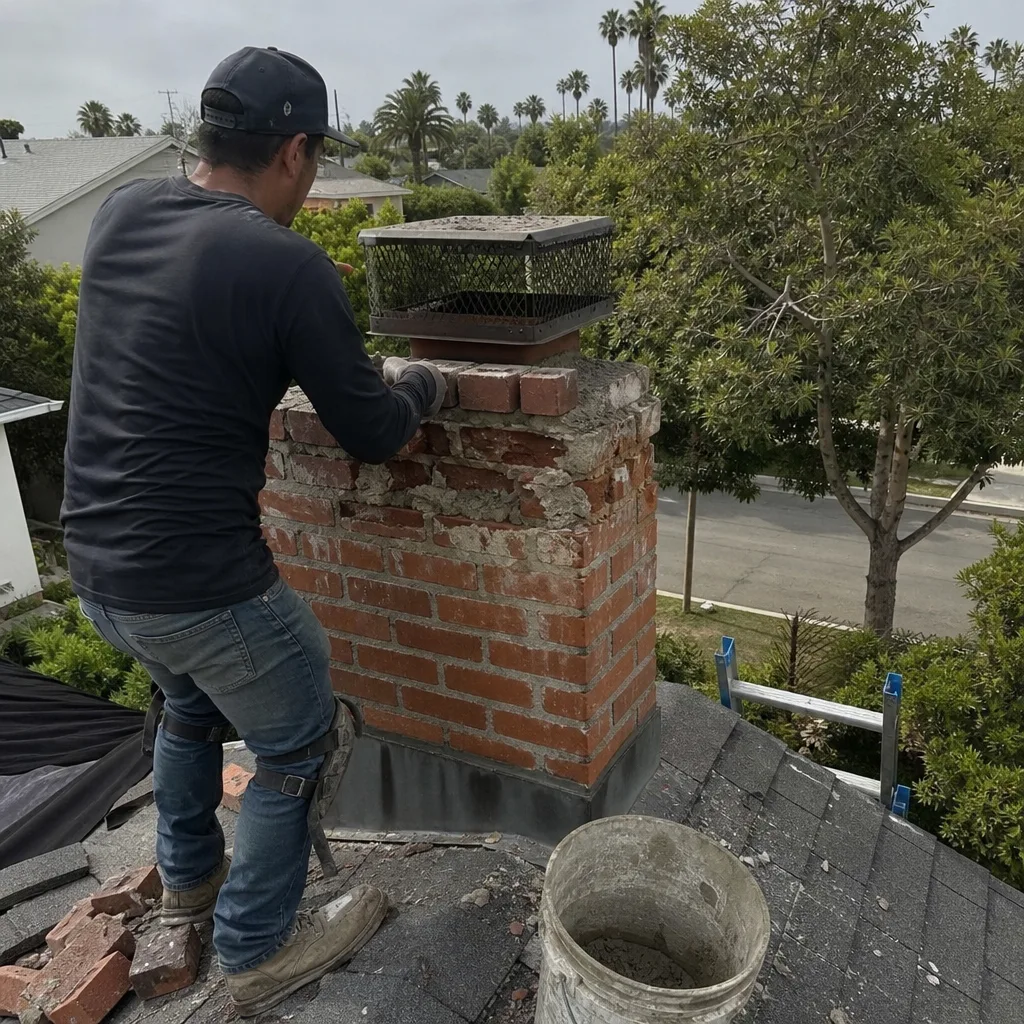
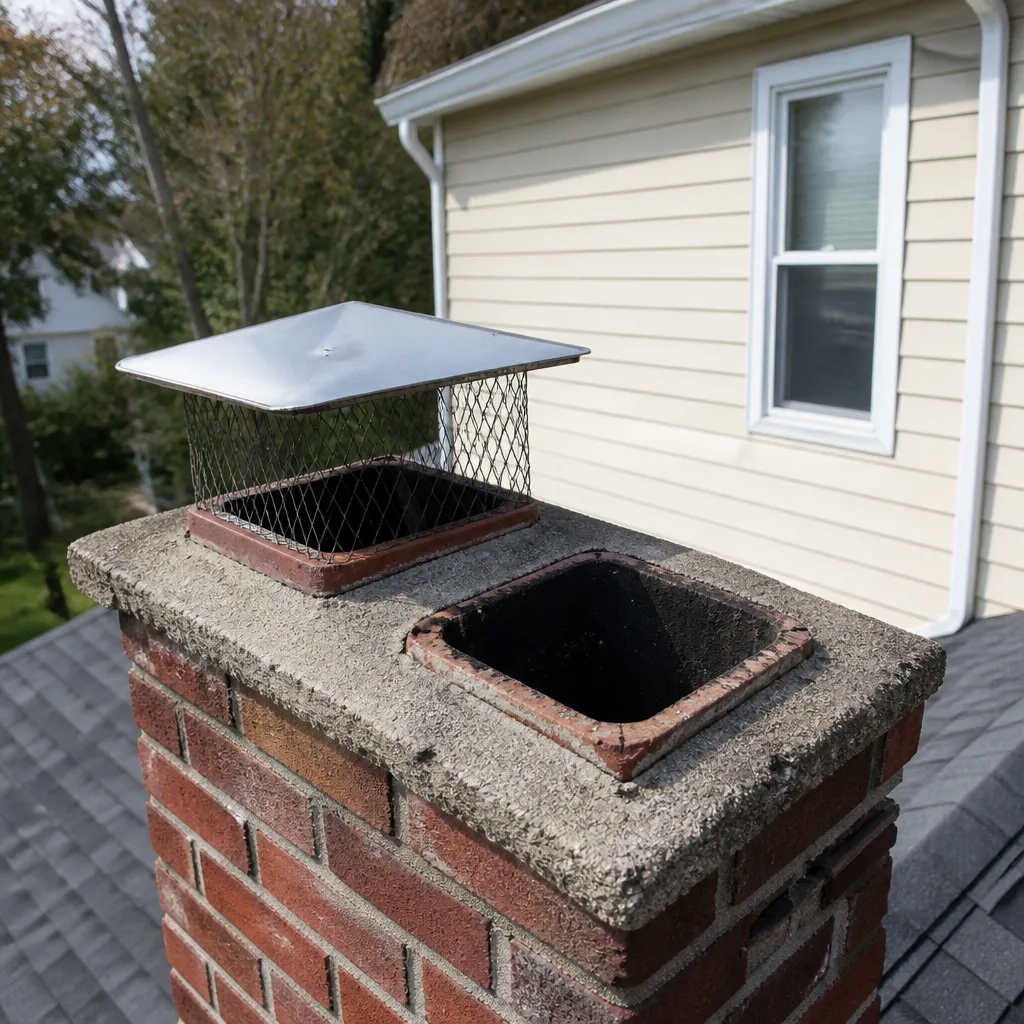
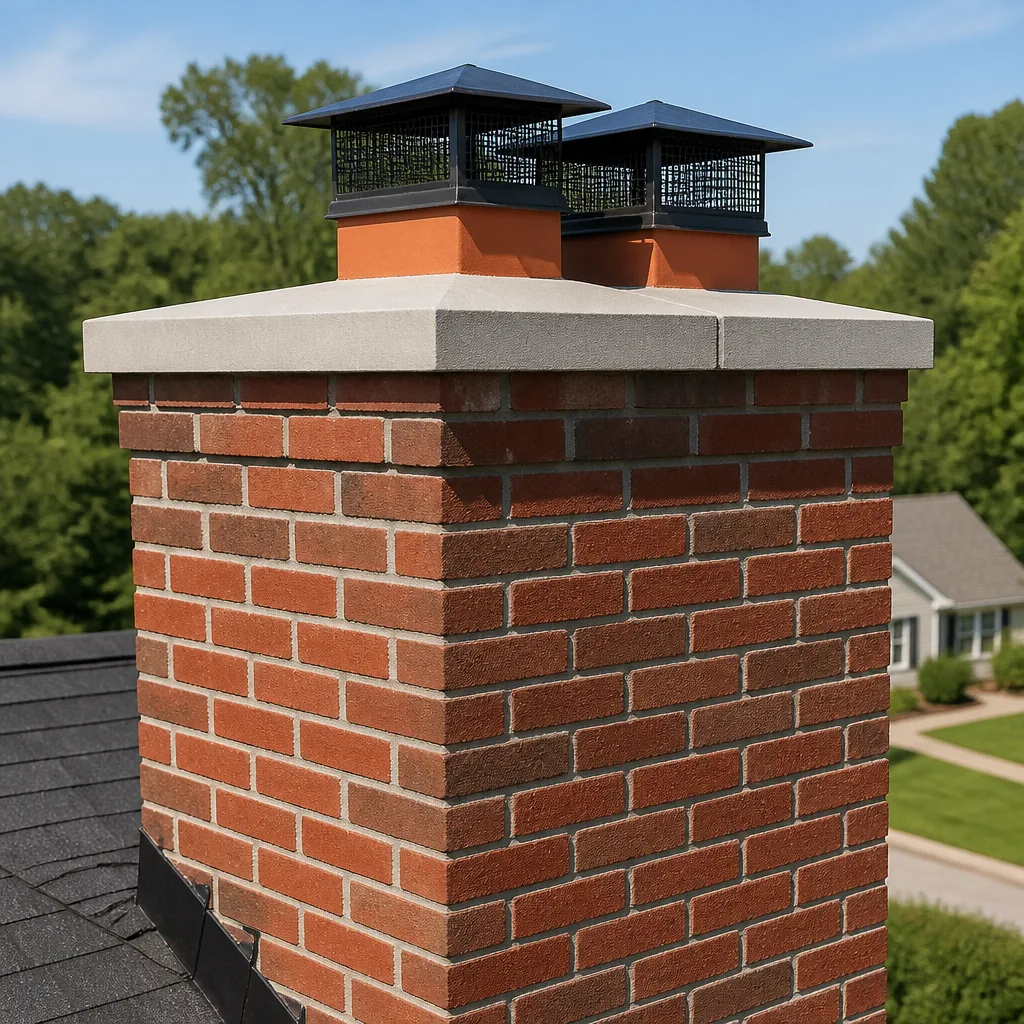
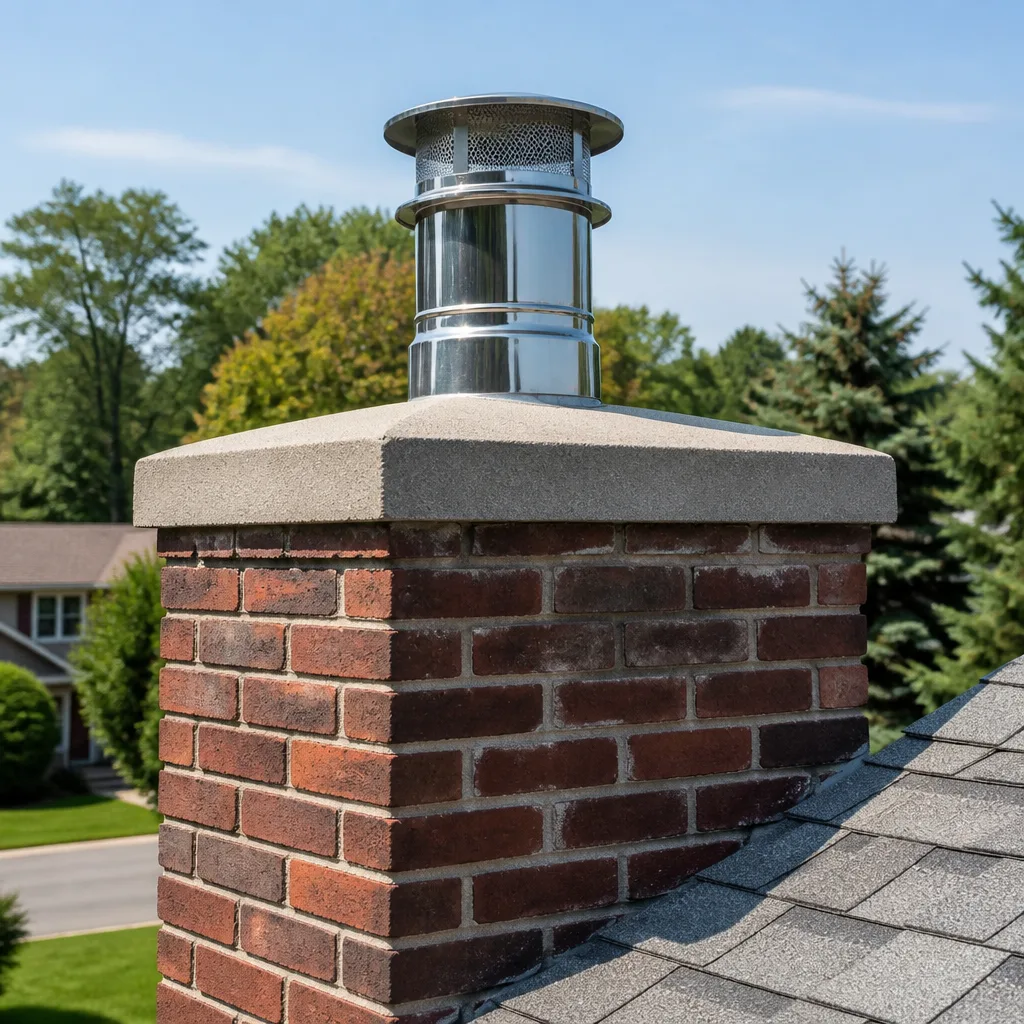
See the difference
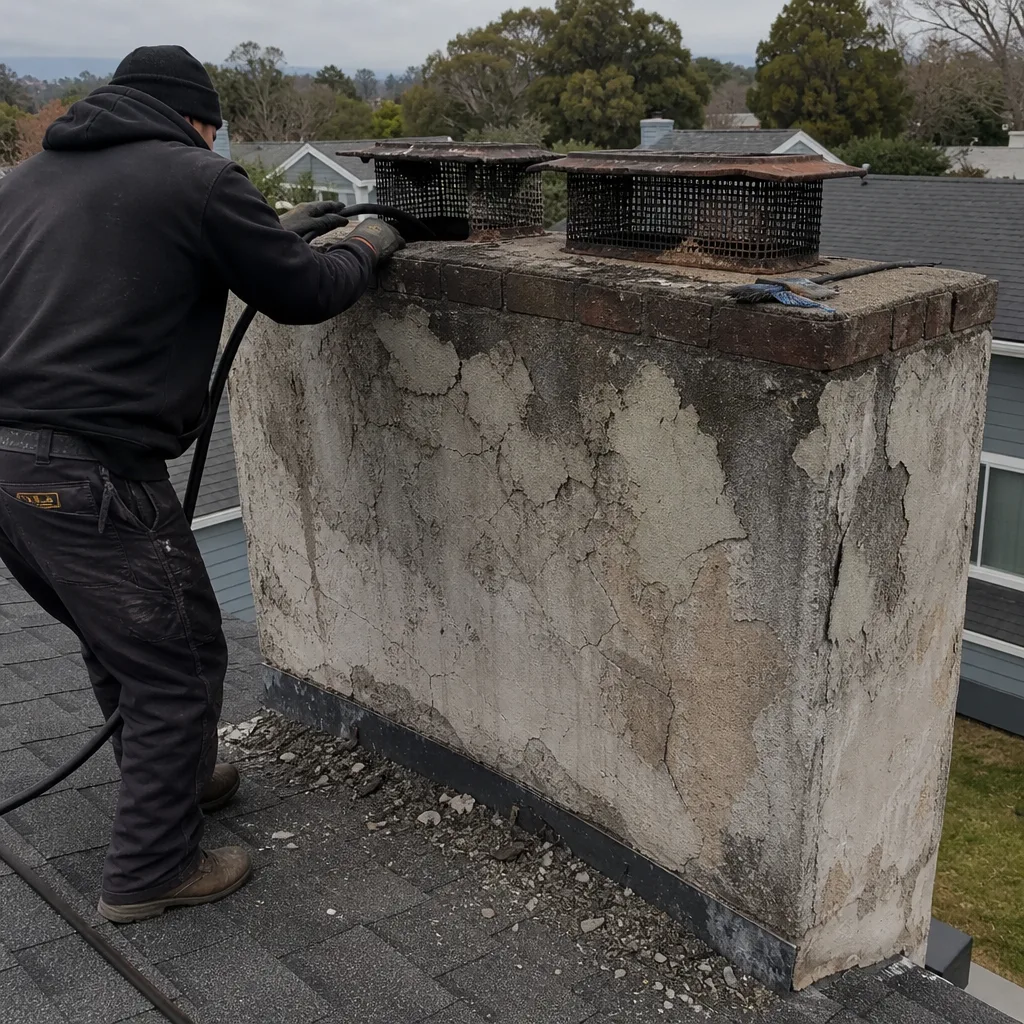 Before
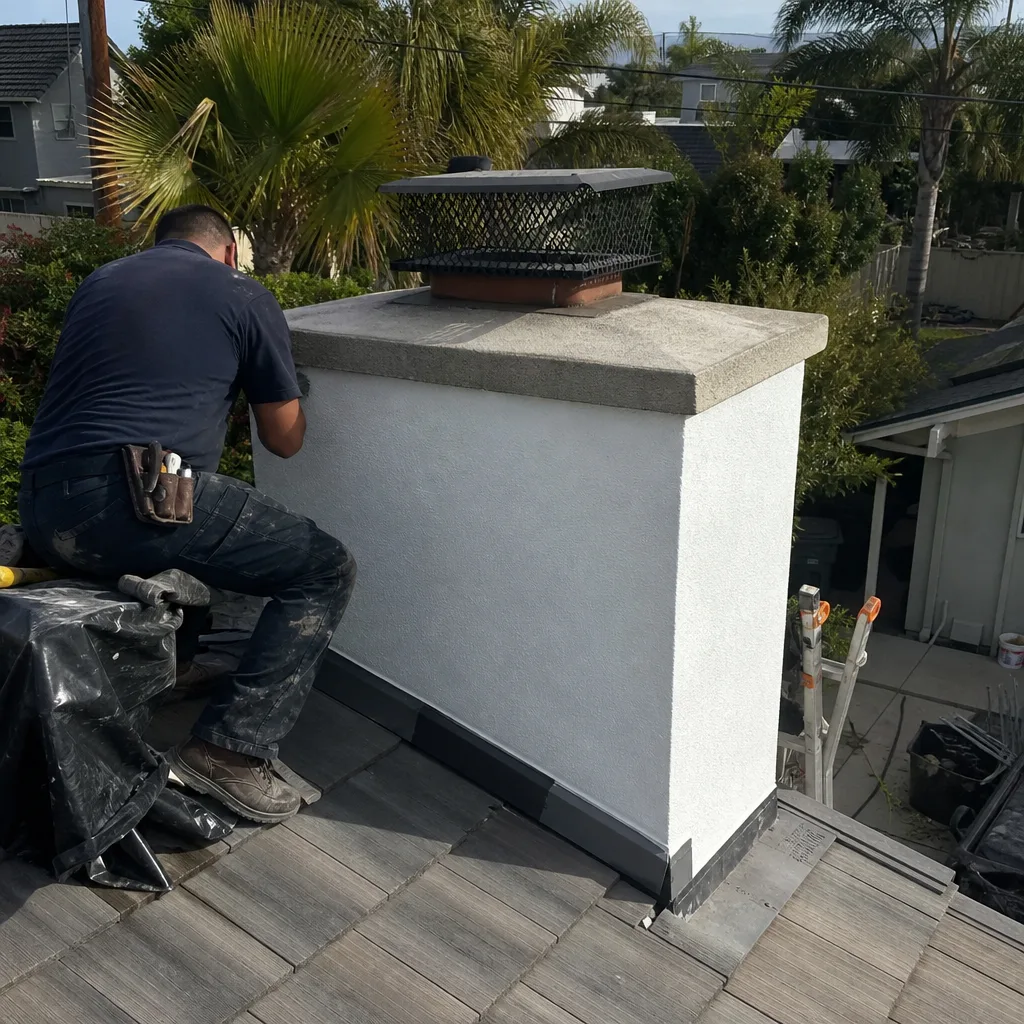 After
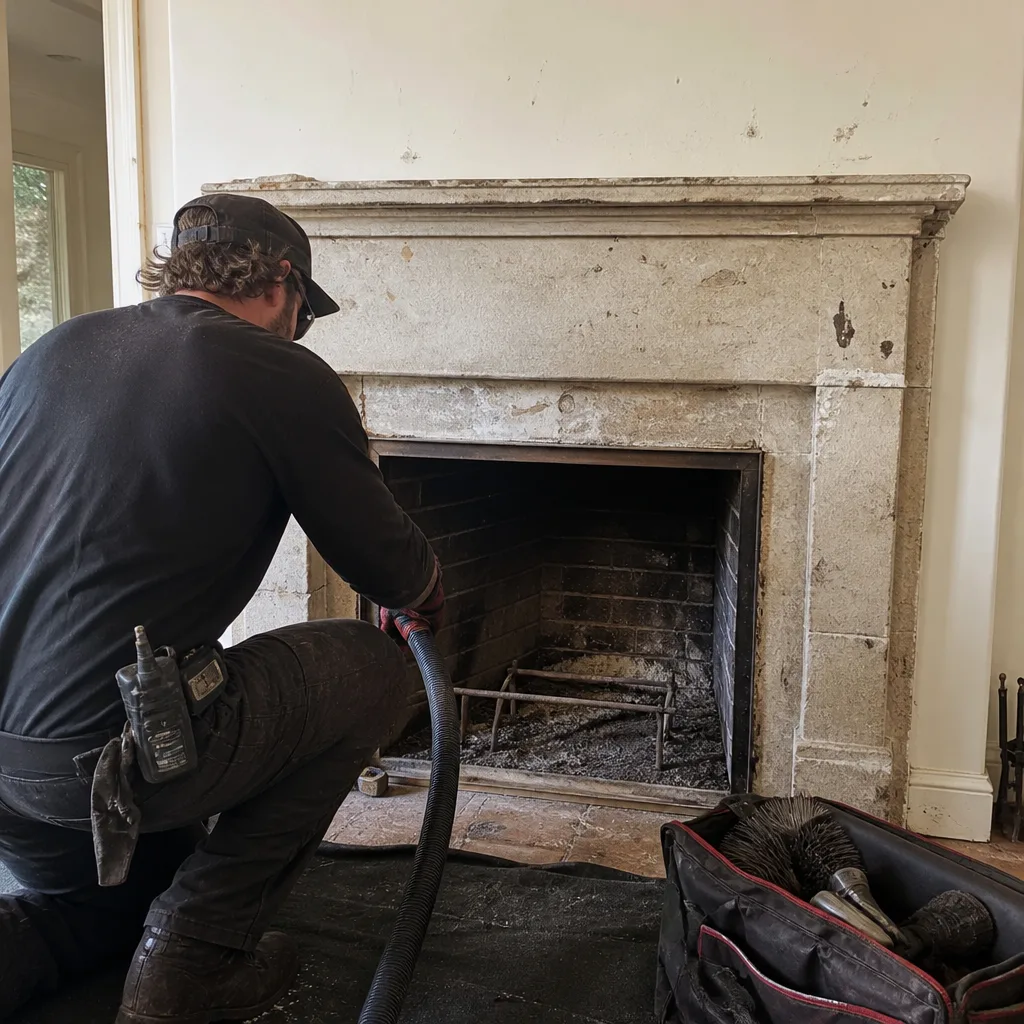 Before
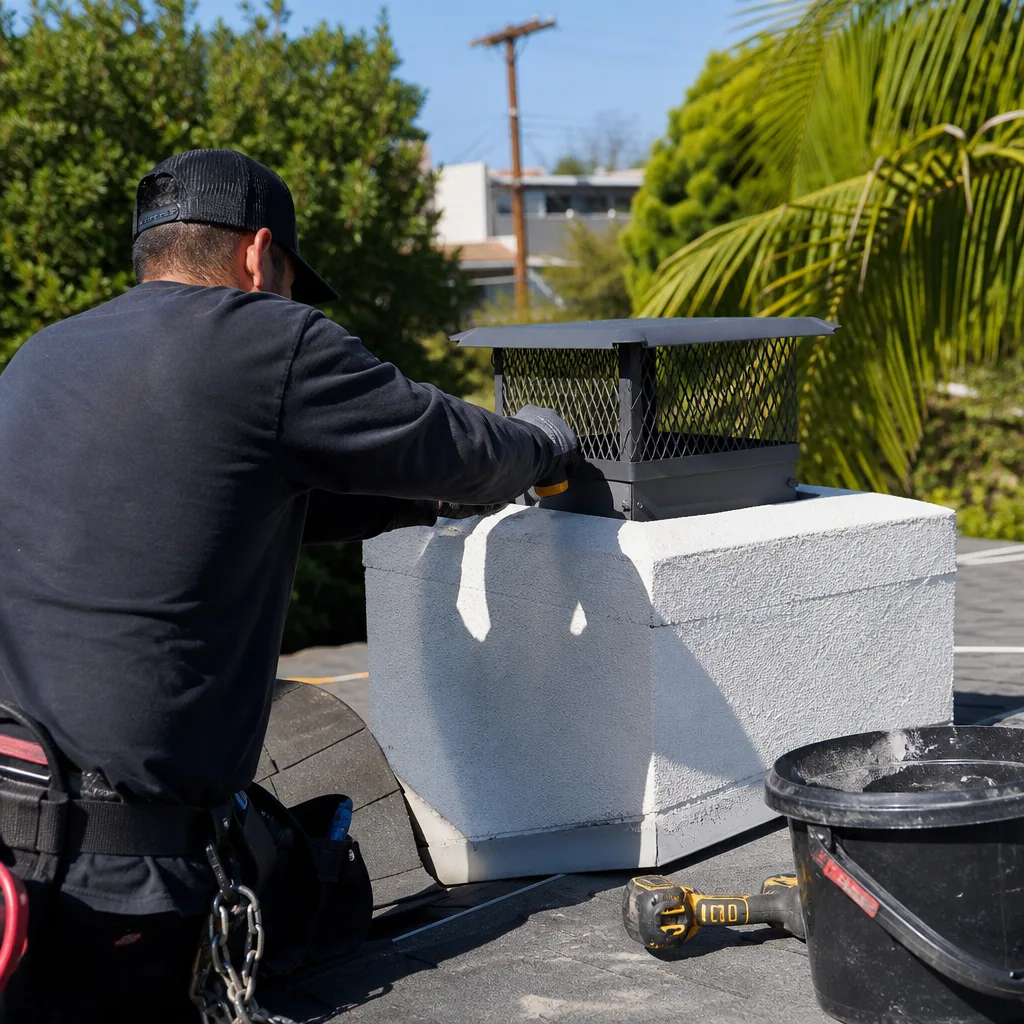 After
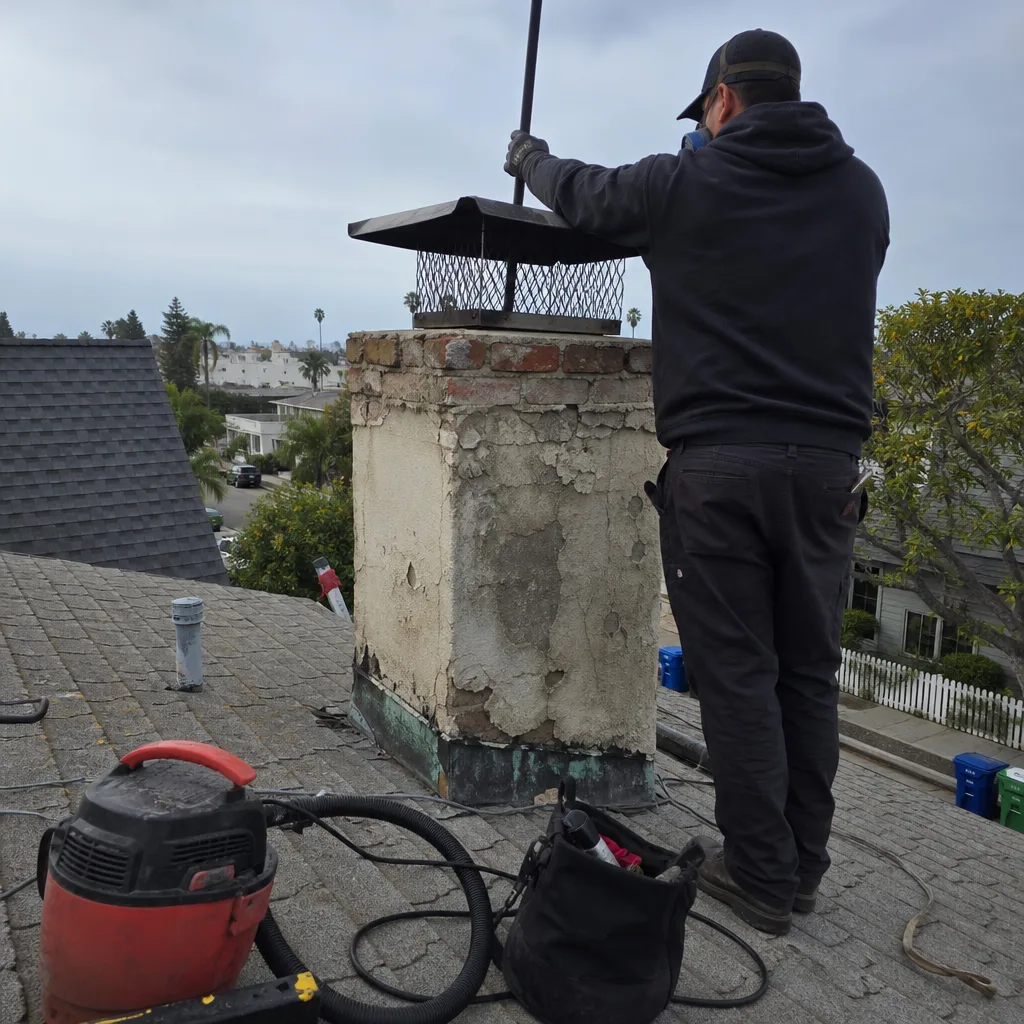 Before
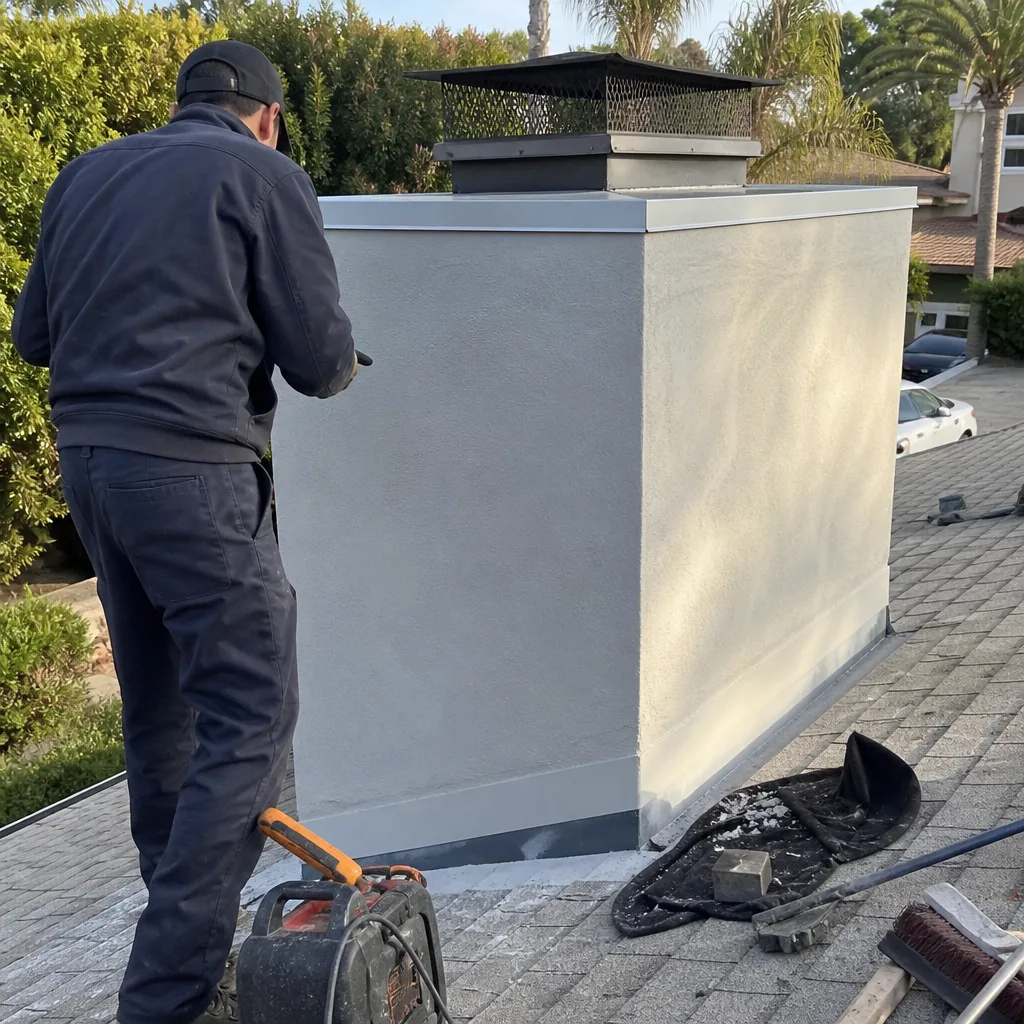 After
When to Call a Professional
The warning signs in this guide are the early communication from your chimney. Some of them you can monitor on your own: a stain you track over a season, a sound you notice, a smell that appears and disappears. But the moment a sign suggests structural compromise, cracked liner, or persistent backdrafting, the professional call is the right call. You can’t see a cracked liner from the ground, and you can’t safely diagnose a draft reversal without a proper pressure test. Steadfast Chimney Sweep offers free estimates in Santa Monica: call (833) 593-2844. We inspect, clean, and repair chimneys AND dryer vents, and we show you the camera footage before we recommend anything.
Frequently Asked Questions
The first sign is often a smell: a stale, smoky odor that appears when the fireplace hasn’t been used for weeks, or when the air conditioner is running. That’s creosote volatilizing in the flue, and it means the deposits have reached a level where they’re off-gassing.
A wood-burning chimney in Santa Monica should be inspected and swept once per year, even if you only burn occasionally. The marine layer adds moisture to the firebox, which makes creosote dry more slowly and adhere more stubbornly. A gas fireplace should be inspected annually too, though cleaning is usually less frequent.
Yes, and summer is actually the most practical time to book a sweep in Santa Monica. You’ll get the chimney ready before burning season, the chimney will be dry, and any repairs discovered during inspection can be completed before the first fire. Steadfast Chimney Sweep does summer sweeps throughout the Santa Monica area: call (833) 593-2844.
Yes. The crown is the concrete slab at the top of the chimney that sheds water away from the flue. A crack in the crown is the primary entry point for water into the masonry, and it gets wider with every rain. Left alone, it leads to spalling, liner damage, and eventually structural repair. A crown repair is inexpensive compared to the damage that follows.
The only reliable way is a video inspection of the flue interior. From the ground or the firebox, you can’t see more than a few feet. A camera shows cracks, gaps, or deterioration along the full length. For many Santa Monica homes, a HeatShield resurfacing can restore a damaged flue without full relining, which is a significant cost savings. Steadfast Chimney Sweep includes camera inspection with every chimney sweep: call (833) 593-2844 for an appointment.
It depends. Efflorescence by itself doesn’t make the chimney unsafe to use that day, but it means water is moving through the masonry, which will eventually compromise the structural integrity. The flue liner should be inspected before you continue burning, because if the water that caused the efflorescence has also cracked the liner, burning is a fire hazard. Don’t guess. Get the flue looked at before the next fire.
The Bottom Line
Chimney warning signs are a language, and most Santa Monica homeowners have never been taught to read it. White mineral staining means water. Flaking brick means the water got deep. A summer smoke smell means your house pressure is reversing the draft. A slow ignition means the firebox is telling you something is clogging. None of these signs are fatal on their own. All of them are cheap to address early and eye-wateringly expensive to ignore. The worst thing you can do is wait for visible smoke or a chimney fire. The best thing you can do is learn the early signs, watch for them through the year, and explore our more guides & resources, then call for a free estimate at (833) 593-2844 when you see something that isn’t right. Santa Monica’s marine air doesn’t wait for burning season to work on your chimney.
Written by the team at Steadfast Chimney Sweep, serving Santa Monica since 2015.