
Last updated November 2, 2026
 Sweep & inspection
 Caps & crowns
 Flue relining
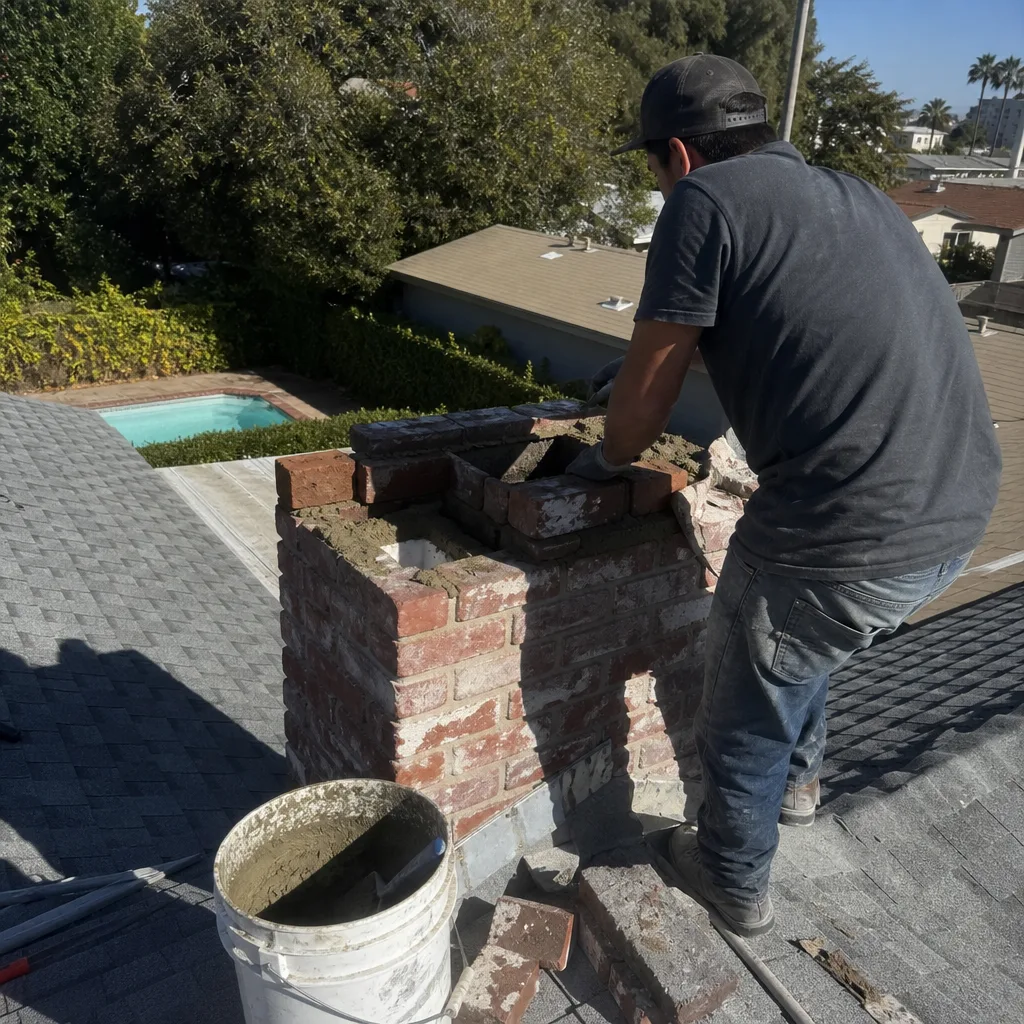
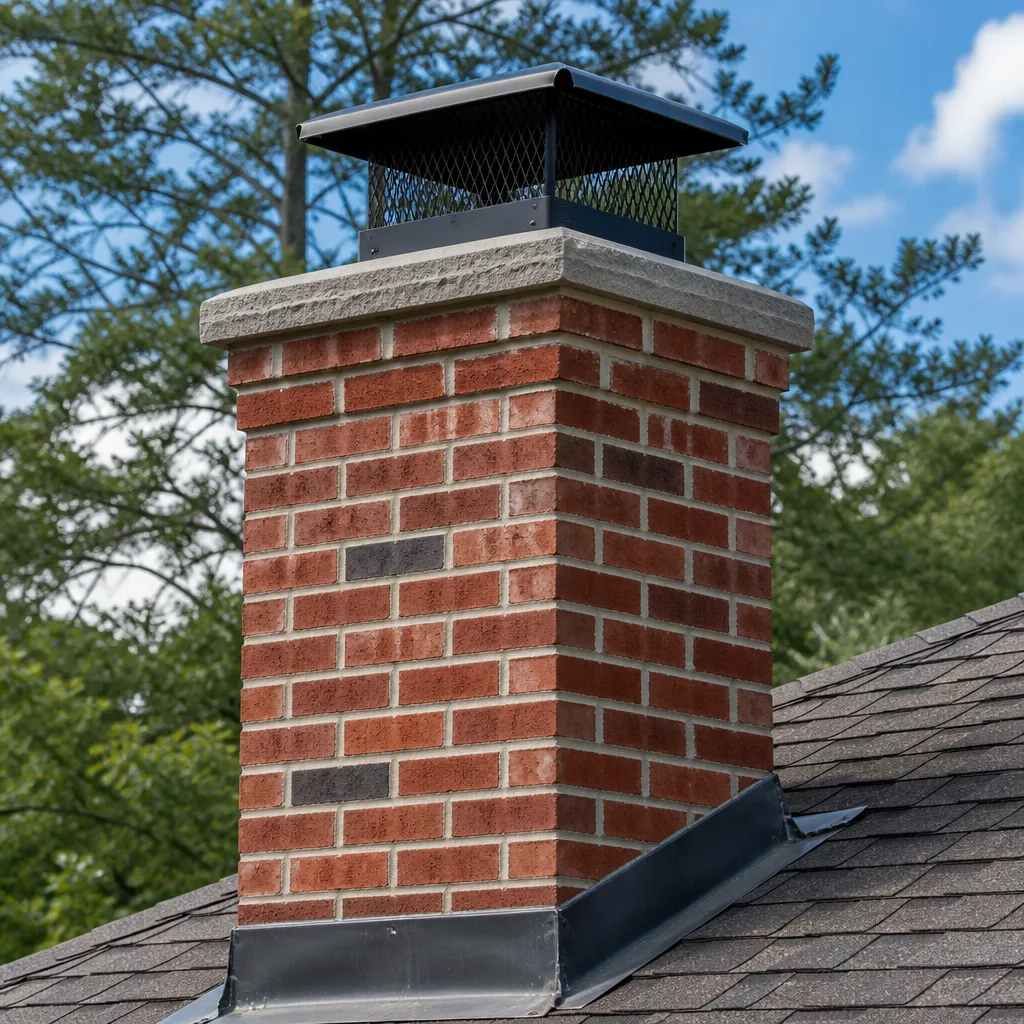 Masonry repair
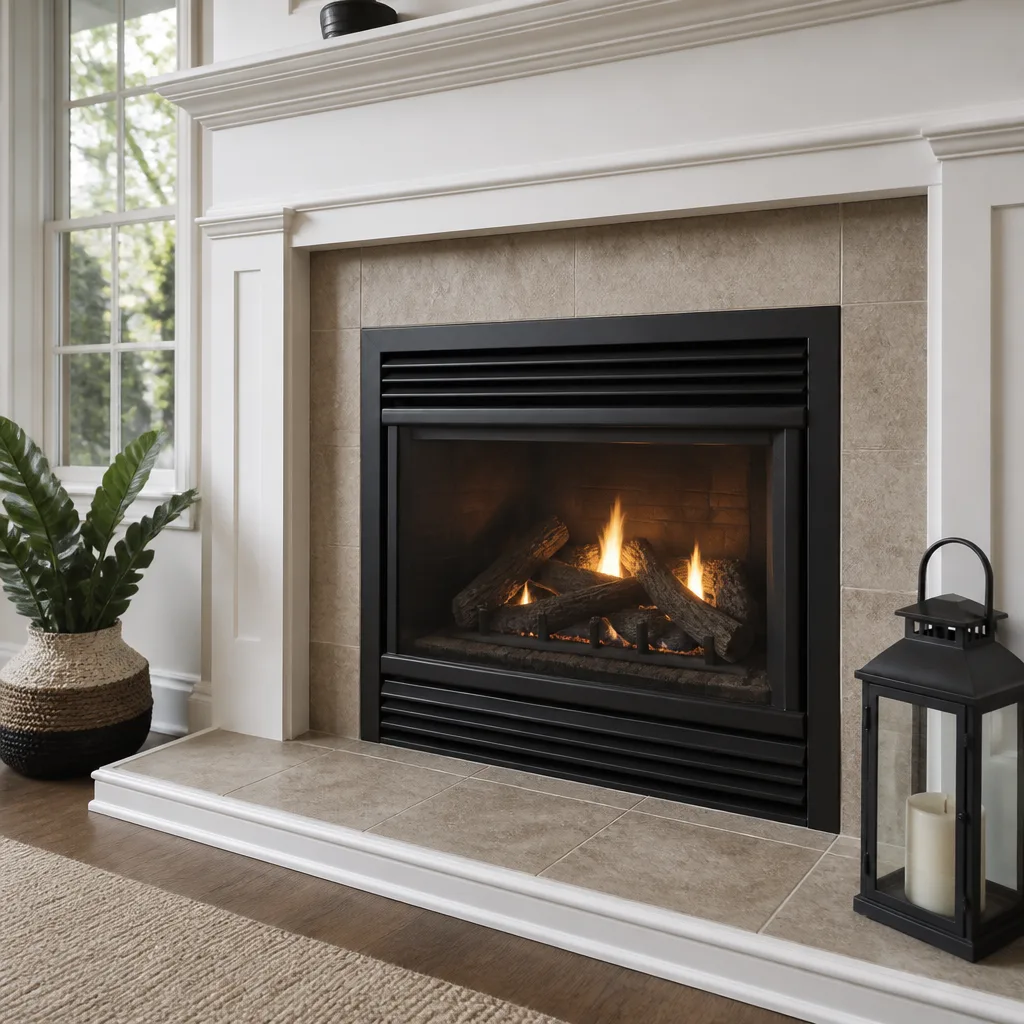 Gas fireplace service
Level 1 sweep and inspection to the NFPA 211 annual standard - flue, crown, cap, and flashing checked and photographed
Chimney sweep logs do not sweep chimneys. They loosen some creosote - which then falls where a brush and vacuum still have to collect it.
How to Hire a Chimney Cleaning Contractor in Santa Monica: A Step-by-Step Guide
A five-star Yelp rating won’t tell you whether a chimney sweep owns a closed-circuit inspection camera or is eyeballing your flue with a flashlight. That difference determines whether a hairline liner crack gets caught before or after it becomes a house fire. Most hiring guides for Santa Monica homeowners stop at “check reviews and get three quotes.” For more guides & resources, this one goes further. We’re going to walk through the credentialing, the inspection equipment, the scope-of-work language, and the contract structure that separate a genuine fire-safety specialist from a guy with a brush and a Shop-Vac. By the time you finish reading, you’ll know how to evaluate a chimney contractor the way someone inside the trade would.
Quick Answer
To hire a chimney cleaning contractor in Santa Monica, verify they hold a valid California C-61/D-34 contractor license and a CSIA or NFI certification, confirm they use a rotary brush system with CCTV camera inspection (not a flashlight), require a written estimate that includes liner inspection, cap assessment, and creosote classification, and ask whether they can repair what they find rather than just report it. Expect to pay $199 to $389 for a standard sweep and Level 1 inspection in the Santa Monica market.
Styles & brands we work with
- Sweep & inspection
- Caps & crowns
- Flue relining
- Masonry repair
- Gas fireplace service
Table of Contents
- Credentials That Actually Matter: CSIA, NFI, and California C-61
- Inspection Equipment: The Camera Question That Exposes Everything
- How to Read a Written Estimate for Scope Gaps
- Red Flags Specific to the Santa Monica Market
- The 12 Questions to Ask Before Booking
- Ongoing Maintenance vs. One-Time Service: What the Contract Should Include
- What Chimney Cleaning Costs in Santa Monica
- The Full Hiring Process, Step by Step
Credentials That Actually Matter: CSIA, NFI, and California C-61
Three credentials appear on chimney contractor websites, and they are not interchangeable. Understanding what each one verifies tells you whether you’re hiring a trained sweep or someone who bought a domain name.
CSIA (Chimney Safety Institute of America) is the most recognized national certification in the chimney service industry. A CSIA Certified Chimney Sweep has passed a proctored exam covering chimney physics, fire codes, inspection methodology, and installation standards. The certification requires continuing education credits to maintain. When you see CSIA on a Santa Monica contractor’s website, ask whether the person who shows up at your door holds the certification or just someone in the office. The certification belongs to individuals, not companies. In our experience, this is the single most important question to ask, because some operations list CSIA affiliation while sending uncertified technicians to job sites.
NFI (National Fireplace Institute) certification covers gas, wood-burning, and pellet appliance installation and service. It matters most when you have a gas insert or gas fireplace rather than a traditional masonry chimney. NFI-certified specialists understand venting requirements for gas appliances, which are different from wood-burning systems and carry different safety implications. If your Santa Monica home has a gas log set or insert, verify the technician holds either NFI Gas Specialist or NFI Master Hearth Professional certification.
California C-61/D-34 license is the state-level requirement for chimney services that go beyond basic sweeping. The C-61 classification is California’s “limited specialty” contractor license category, and the D-34 sub-classification applies specifically to chimney and flue construction, repair, and cleaning. A C-61/D-34 license means the contractor has passed California’s Contractors State License Board requirements, carries a bond, and is accountable to state regulators. This matters in Santa Monica for a practical reason: if a contractor damages your roof flashing or a chimney crown during service, a licensed contractor has a bond you can claim against. An unlicensed operator disappears.
Which ones to require: For a basic sweep, CSIA certification plus a C-61/D-34 license is the right bar. For gas appliance venting, add NFI. If a contractor only has one of these, ask why. The answer tells you something.
Inspection Equipment: The Camera Question That Exposes Everything
The single most revealing question you can ask a chimney contractor is: “What camera do you use for the inspection?” The answer sorts contractors into two groups faster than any review ever will.
A professional chimney inspection in 2025 uses a closed-circuit television (CCTV) camera system designed for flue interiors. These cameras run up the chimney on a flexible cable and record high-resolution footage of every inch of the flue liner. The contractor should show you that footage before you pay, and it should be included in your report. Systems like a Wohler VIS 350 or equivalent allow the sweep to document creosote buildup, identify liner cracks, spot animal nesting, and check for connectivity problems after repairs. This is not optional equipment for a legitimate operation. It is the baseline.
A flashlight and a mirror attached to a stick is not inspection equipment. It’s a squint. The bottom half of a chimney liner is visible by looking up from the fireplace, but the upper section, the crown, the flue cap, and the connector joints are not. Those are exactly the areas where creosote accumulates and where liner failure starts. A contractor who “inspects” without a camera is guessing. And you are the one who pays for the guess.
The brush system matters too. Rotary brush systems, often called whip systems, attach to a drill and spin stiff nylon or polypropylene bristles against the flue walls. They clean more thoroughly than a manual wire brush dragged on a rope, and they do it with less damage to masonry. Ask whether the contractor uses a rotary system or standard sweeping rods. This will tell you whether the operator invested in professional equipment or is working with the cheapest gear available.
Containment rounds out the equipment check. A professional sweep uses a sealed vacuum system with HEPA filtration, not a generic shop vacuum. Chimney soot is fine particulate that can hang in the air of your Santa Monica home for days and settle into rugs, upholstery, and your lungs. A proper negative-air vacuum, such as a Nilfisk or equivalent, keeps the dust where it belongs. Ask about the vacuum system by name. “We use a HEPA-filtered negative air vacuum” is the answer you want. “We’ve got a Shop-Vac” is not.
How to Read a Written Estimate for Scope Gaps
A written estimate is not a price tag. It’s a scope document. If it’s three lines and a total, you’re not looking at a real estimate. You’re looking at a door-knocker’s math scribbled on a carbon pad.
Here’s what a legitimate chimney sweep estimate in Santa Monica should include, line by line:
Required Line Items
- Service description with chimney type. It should specify whether your chimney is masonry, prefab, or a gas-vent system. “Chimney sweep” without identifying the system type means the estimator did not look at your home.
- Sweep method and tools. The estimate should state “rotary brush cleaning” or “manual brush with rods” explicitly. Vague language means the contractor wants room to do less.
- Inspection level. There are three National Fire Protection Association (NFPA) inspection levels. Level 1 is standard and should be included with every sweep. Level 2 is required when the system has changed – new appliance, new liner, after a chimney fire, or before a real estate transfer. Level 3 is invasive and only done after a Level 2 identifies a serious concern. If your estimate does not say “Level 1 inspection included,” ask why not.
- Creosote classification. Creosote is classified as first-degree (flaky soot), second-degree (crusty), or third-degree (glazed, tarlike). The estimate should reference the classification that the sweep will assess. Third-degree creosote requires chemical treatment and is not removable with standard brushing. A contractor who quotes one flat sweep price before seeing the flue is telling you they don’t differentiate between conditions.
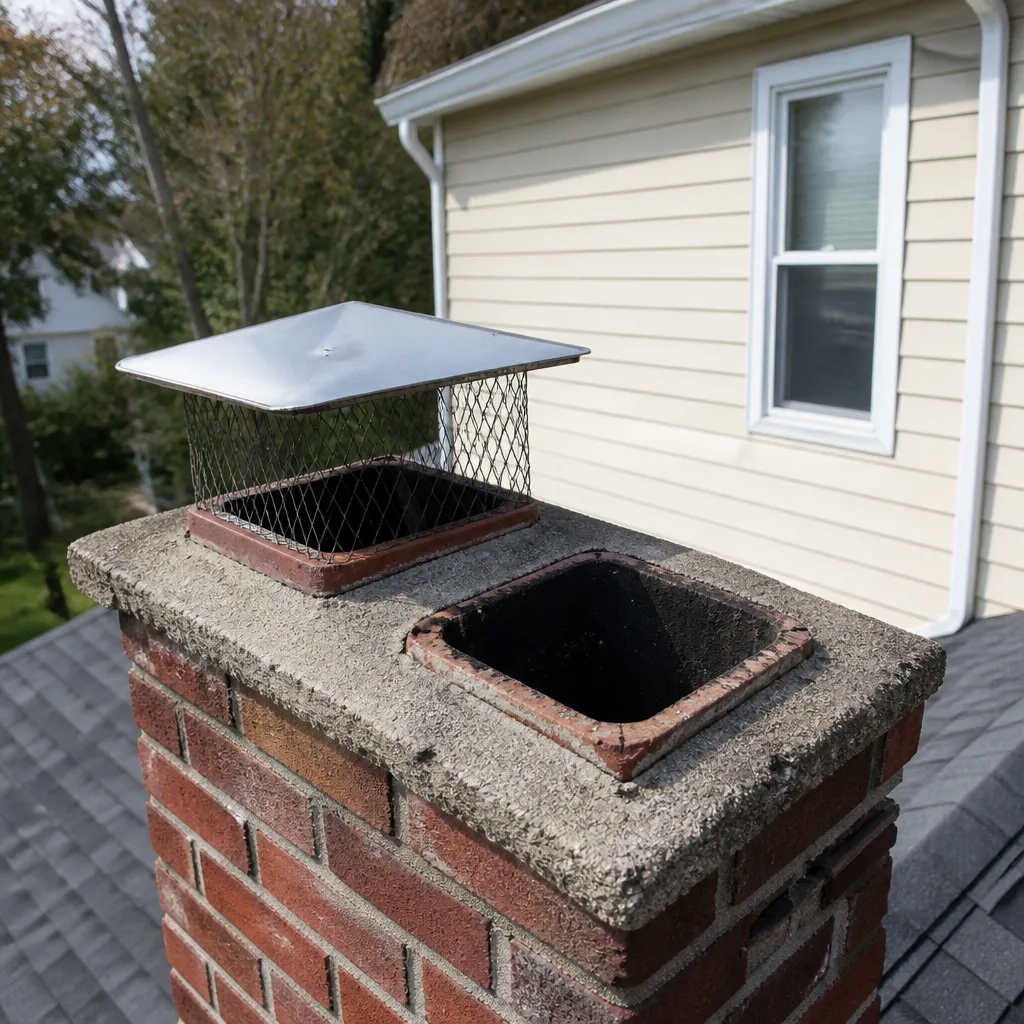
- Cap and crown assessment. Every estimate should include inspection of the chimney cap and crown for damage. Santa Monica’s coastal air accelerates corrosion on metal caps, so this matters more here than inland.
- Disposal and cleanup. Creosote debris and soot should be removed from the property. The estimate should state this explicitly. It should not be an assumption.
- Photo or video report. Camera footage or still photos from the inspection should be noted as part of what you receive. If the estimate doesn’t mention documentation, ask whether you receive inspection images. Contractors who don’t document their findings don’t do so for a reason.
Omissions That Signal a Cut-Rate Operation
A missing liner inspection is the biggest red flag. A chimney sweep that doesn’t check the liner is like a mechanic who changes the oil but never checks the head gasket. The liner is the fire containment system. In Santa Monica, where many homes date to the 1950s and 1960s, clay-tile liners are approaching the end of their service life. Cracks and gaps are common. A sweep should include liner assessment in every inspection, and should offer repair options if damage is found. A contractor who lacks liner-assessment equipment, such as a HeatShield-certified resurfacing capability as one example, cannot address what they find. They can only hand you a problem and leave. That’s worth asking about up front.
If the estimate doesn’t include flue cap inspection, walk. The cap prevents rain, birds, and embers from entering the flue. It’s the cheapest chimney component to replace and the most commonly missing. A contractor who skips it is not inspecting, they’re just brushing.
Red Flags Specific to the Santa Monica Market
Every city has its own chimney contractor pathologies. Santa Monica is no exception. Here’s what we see in this market that you should recognize before you open the door.
Post-rain door-knockers. It happens every winter. A storm blows through, and suddenly there’s a guy on your porch with a clipboard telling you he was in the neighborhood and noticed your chimney cap needs attention. In Santa Monica, roof access is more visible from the street than in canyon neighborhoods, which makes this pitch easier. The play: get you to authorize a “quick inspection” that turns into a long list of urgent repairs. Legitimate chimney contractors in Santa Monica don’t cold-knock after weather events. If a contractor initiates contact based on what he “noticed from the street,” treat it as what it is: a sales lead, not a safety assessment.
“Immediate hazard” pressure tactics. A real chimney hazard is a real hazard. But a contractor who claims to have spotted one within five minutes of arrival, before equipment has been set up or an inspection completed, is working a script. Creosote isn’t visible from the living room floor. Liner cracks aren’t either. If someone is making dramatic claims about your chimney before running a camera up it, ask for the evidence. If they get defensive, they’ve told you everything you need to know.
Lowball flat-rate sweeps with no inspection. A $79 chimney sweep is not a deal. It’s a loss leader. The operator is counting on finding something to upsell, and if they don’t find it, they’re not going to find anything, because “not finding things” is what you get for $79. The labor for a proper rotary-brush sweep with containment equipment in Santa Monica costs more than that before the technician even rings the doorbell. If the price sounds too low to sustain a business, the business model is to sell you something else.
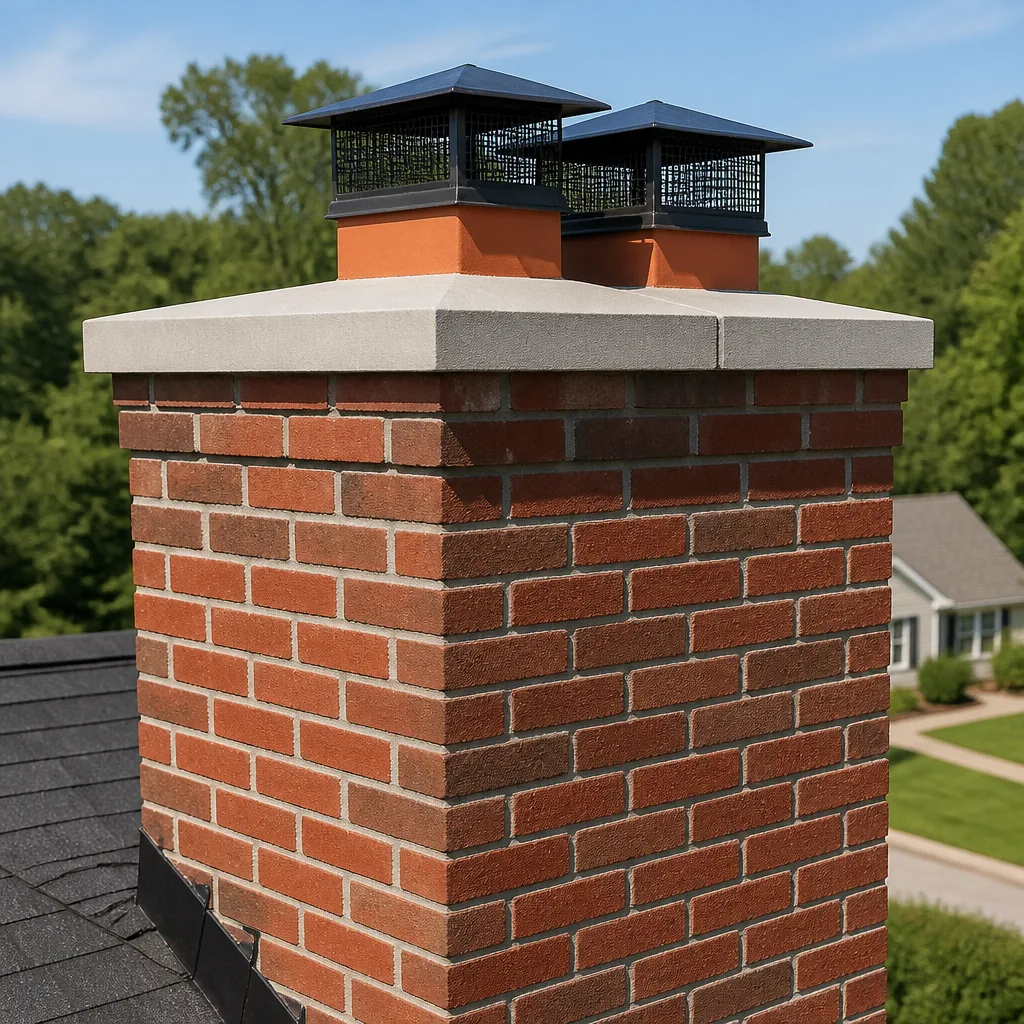
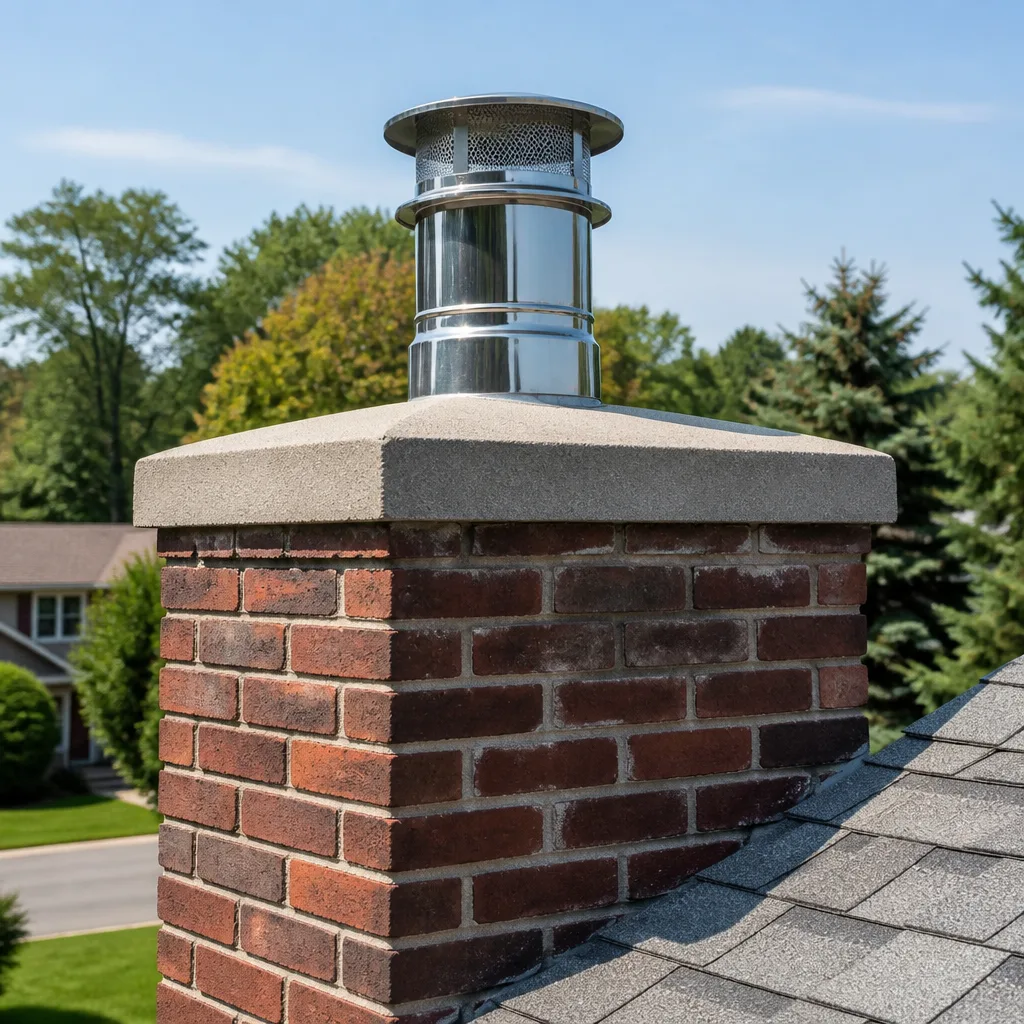
Vinyl-flapper vent covers on masonry chimneys. This is a niche one, but it’s real. Some Santa Monica “handyman-adjacent” operations install inexpensive flapper-type caps designed for factory-built metal chimneys on masonry flues. The fit is wrong, the seal is wrong, and it doesn’t break down the way masonry-rated caps do. Ask what cap system the contractor uses. A proper cap from a manufacturer like Gelco or Olympia Chimney is designed for the chimney type it’s installed on. A generic cap is a sign of a generalist, not a chimney specialist.
Cash-only pricing and no written contract. This should go without saying, but it happens enough in Santa Monica that it’s worth stating. A contractor who wants cash and doesn’t produce a written scope is not a contractor. They’re a transaction. When something goes wrong, and with chimneys something eventually goes wrong, you’ll have no recourse.
The 12 Questions to Ask Before Booking
Print this list. Keep it by the phone. Ask every contractor the same twelve questions, and compare not just the answers but the manner in which they’re given. A professional has no trouble answering any of these without hesitation.
- What’s your California contractor license number, and is it C-61/D-34 classified? Write it down. You can verify it on the CSLB website in 30 seconds. If they won’t provide it, you’re done asking questions.
- Who holds the CSIA certification, and will that person be on-site during my service? A certification on a website is not a certification on a truck. The certified individual should be the one doing the work.
- What camera system do you use for inspection? Listen for a brand or model. Listen for “Wohler,” “Ridgid,” or similar. If you get a vague answer about “seeing everything clearly,” that’s a flashlight operation.
- What brush system do you use? “Rotary whip brush” is the right answer. “Standard rods and brushes” is acceptable for older chimneys. “Whatever works” is not.
- What kind of vacuum do you bring? A HEPA-filtered negative-air vacuum designed for fine particulate is correct. A generic shop vacuum moves the dust around.
- Do you include a Level 1 inspection with every sweep? It should be included by default. Anyone who charges extra for the minimum inspection level is not following NFPA guidelines.
- Will you show me the camera footage before you write the report? You should be able to see what the sweep sees. If the answer is no, there’s a reason they don’t want you looking.
- What do you do if you find a liner crack? This is the question that separates the full-service contractor from the sweep-and-run. A company like Steadfast Chimney Sweep’s Chimney Repair in Santa Monica can address what the inspection finds. If the answer is “we’ll recommend someone else,” that’s honest but less efficient. If the answer is “we don’t really do that,” you just identified a cleaning-only operation, and you should factor that limitation into your evaluation.
- What cap or crown products do you install? The answer should be specific manufacturer names designed for masonry chimneys. Generic answers suggest generic parts.
- What does your written estimate include? Compare against the list in the previous section. If the estimate is one line, the contractor is one-dimensional.
- What’s your policy if you find a problem that needs immediate attention? The right answer is “we show you the camera footage and let you make the call.” The wrong answer is “you need to decide today.”
- Do you handle dryer vent cleaning? Most people asking this question will get a “no,” because most chimney sweeps don’t. But if you have a gas fireplace and a clothes dryer, both are exhaust systems. A full-service operation like our Dryer Vent Cleaning in Santa Monica service addresses both in one appointment. It’s not a required credential, but it indicates whether you’re dealing with a specialist who thinks about fire safety comprehensively or a one-service operator.
Ongoing Maintenance vs. One-Time Service: What the Contract Should Include
Some homeowners want a one-time sweep before burning season. Others want a relationship. Both are valid, but the contract you sign should reflect the difference.
For a one-time sweep: You need a service agreement that includes the scope items covered earlier – sweep method, inspection level, equipment used, disposal, and documentation. The contract should state the price, and it should state that camera footage will be provided. It should also state what happens if a blockage or animal is found: how the discovery is communicated, and what the next step will be. A one-page agreement covering these points is normal. A two-line “sweep for $” slip is not a contract.
For ongoing maintenance: The National Fire Protection Association recommends annual inspection and sweep as needed. For Santa Monica homes with regular wood-burning use, that means a sweep most years. What you need from a maintenance relationship is a record-keeping arrangement: each year’s inspection report with camera images, a creosote assessment, and a note on any condition changes since the last visit. Our Seasonal Chimney Cleaning Care for Santa Monica: Year-Round Homeowner’s Guide explains how to time these visits. That continuity is the entire point of staying with one contractor. You’re building a baseline so that five years from now, when a technician says “this liner has deteriorated since last year,” there’s photographic evidence. If your contractor is capturing and storing that footage, you have a maintenance partner. If they’re just sweeping and leaving, you’re re-establishing the baseline every year.
The contract should also address repair scope if repairs become necessary. Does the contractor perform the repairs themselves or refer them out? Does the estimate for repairs include materials specifications – brand, model, and rating – or just a price for “new liner”? A professional-grade contractor will specify what they’re installing because the material matters. Repair crews that use the same materials professional installers specify, such as DuraFlex liner systems or HeatShield resurfacing compounds, can tell you exactly why they chose that product for your chimney. A contractor who can’t explain the material choice is installing whatever’s cheapest.
What Chimney Cleaning Costs in Santa Monica
Santa Monica pricing for chimney cleaning runs higher than the Los Angeles County average. For a detailed Chimney Cleaning Cost Breakdown: The Santa Monica Homeowner’s Reference for 2026, see our dedicated guide. Coastal moisture accelerates creosote adhesion, older housing stock presents more inspection complexity, and the simple cost of doing business in this ZIP code shows up in every trade’s pricing. Here’s what you should expect to pay.
| Service | Typical Santa Monica Range | What It Should Include |
|---|---|---|
| Standard sweep with Level 1 inspection | $199 – $329 | Rotary brush cleaning, camera inspection, cap assessment, photo report |
| Sweep with Level 2 inspection | $349 – $549 | Everything in Level 1 plus attic and crawlspace inspection, interior wall check |
| Creosote treatment (third-degree) | $150 – $300 add-on | Chemical application, containment, follow-up assessment |
| Chimney cap replacement | $250 – $600 installed | Masonry-rated cap, proper mounting, warranty from manufacturer |
| Video-only inspection | $150 – $250 | Camera run with report, no sweeping |
These ranges apply to single-story masonry chimneys of standard height, which covers most of Santa Monica’s housing stock. Multi-story homes, steep roof pitches, and chimneys with difficult access add to the price. A $79 sweep in this market is not the same service at a better price. It is a different service, and the difference will cost you.
The Full Hiring Process, Step by Step
Here’s the entire process, from first research to the follow-up phone call, ordered the way an industry insider would do it.
Step 1: Verify licensing before making contact
Go to the California Contractors State License Board website. Type in the contractor’s name or license number. Confirm that the license is active, the classification includes C-61/D-34, and there are no outstanding actions. Do this before calling. It saves you from falling in love with a contractor who isn’t legally allowed to work on your chimney.
Step 2: Email the 12 questions
Send the question list from the previous section in an email. A legitimate contractor will answer them in writing, usually within a day or two. A contractor who calls and wants to “just talk” isn’t necessarily avoiding the questions, but written answers create a record. If the answers are vague or evasive, that’s your answer.
Step 3: Request a written estimate
Ask for the estimate before scheduling. Compare it against the line-item list from the estimate section of this guide. If it’s missing the inspection level, the cap assessment, or the disposal note, ask for those to be added in writing before you book.
Step 4: Ask for the previous customer’s report
This is the question almost no one asks, and it’s the most valuable one available. Ask to see a sample inspection report from a previous job, with the customer’s name redacted. You’ll learn more from reading one sample report than any review. Look for: Does it include camera stills? Does it reference the inspection level? Does it assess the liner, the cap, and the crown? Does it state the creosote classification? A contractor who produces a detailed written report for every customer will be happy to show you a sample. One who doesn’t will stall.
Step 5: Book, then watch how the technician works
The day of the appointment is proof of concept. Watch what the technician brings inside. A rotary brush on a drill, a HEPA vacuum, and a camera system are the right equipment. If the technician brings in a manual brush and a tarp, you’re getting the low bid regardless of what you paid. Ask to see the camera feed. A real professional wants you to see what they see. A real specialist will talk you through what’s on the screen.
Step 6: Read the report, then call with questions
Wait a day, then review the report. If you don’t receive photographs or video stills, call and ask for them. If you don’t receive a report at all, call and complain. The report is your proof that the service happened. It’s also your next year’s baseline. If the contractor uses a record-keeping system that stores past reports and images, you’ve found a maintenance partner and not just a vendor.
For homeowners in Santa Monica who want the full Chimney Sweep in Santa Monica experience – cleaning, inspection, and repair capability in one appointment – there are a few operations in the area that operate this way, including ours at Steadfast Chimney Sweep home. We are not the only option in Santa Monica, but we are one of the few that offers HeatShield resurfacing capability for damaged flues without requiring full relining.
Common Mistakes to Avoid
- Hiring on price. The $79 sweep in Santa Monica is a lead generation cost. The operator gets in the door, finds something expensive, and pressure-sells from inside your living room. A detailed, professional sweep costs what it costs because the equipment costs what it costs.
- Accepting a flashlight inspection. If the contractor doesn’t own a CCTV inspection camera, whatever else they claim to check is unreliable. The upper flue, the cap, and the crown are not visible from the fireplace opening.
- Not asking “what happens if you find something?” This one question reveals whether you’re hiring a cleaner or a chimney specialist. If the contractor can’t repair what they find, you’re hiring two vendors instead of one.
- Skipping the written report. A sweep with no documentation is a warm feeling, not a service. Your insurance company, your real estate agent, and your future self all need the written record.
- Falling for post-rain door-knockers. Santa Monica’s rainy season is short and dramatic, which makes it perfect for drive-by operators. Legitimate chimney companies in this market book appointments. They don’t wander neighborhoods with clipboards.
- Assuming all caps are the same. A proper masonry chimney cap from a manufacturer like Gelco or Olympia Chimney is designed for masonry flues and coastal air exposure. A hardware-store generic is a placeholder, not a solution.
- Treating the dryer vent as a separate project. Your dryer vent is a chimney for lint. It carries combustible material away from the heat source. If you’re hiring someone to address chimney fire safety, and that same company also offers Dryer Vent Cleaning in Santa Monica, scheduling both in one visit is the most efficient path to addressing the two most common exhaust-related fire hazards in the home.
See the difference
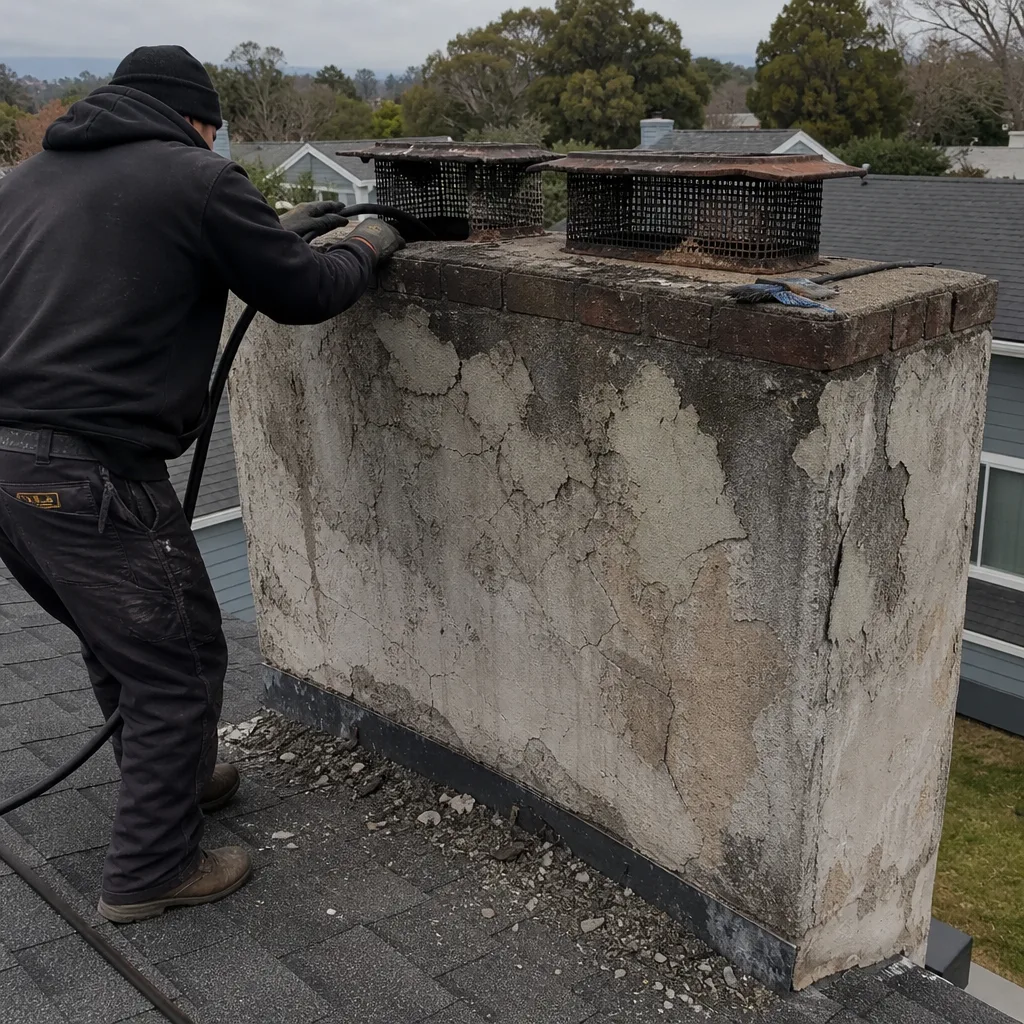 Before
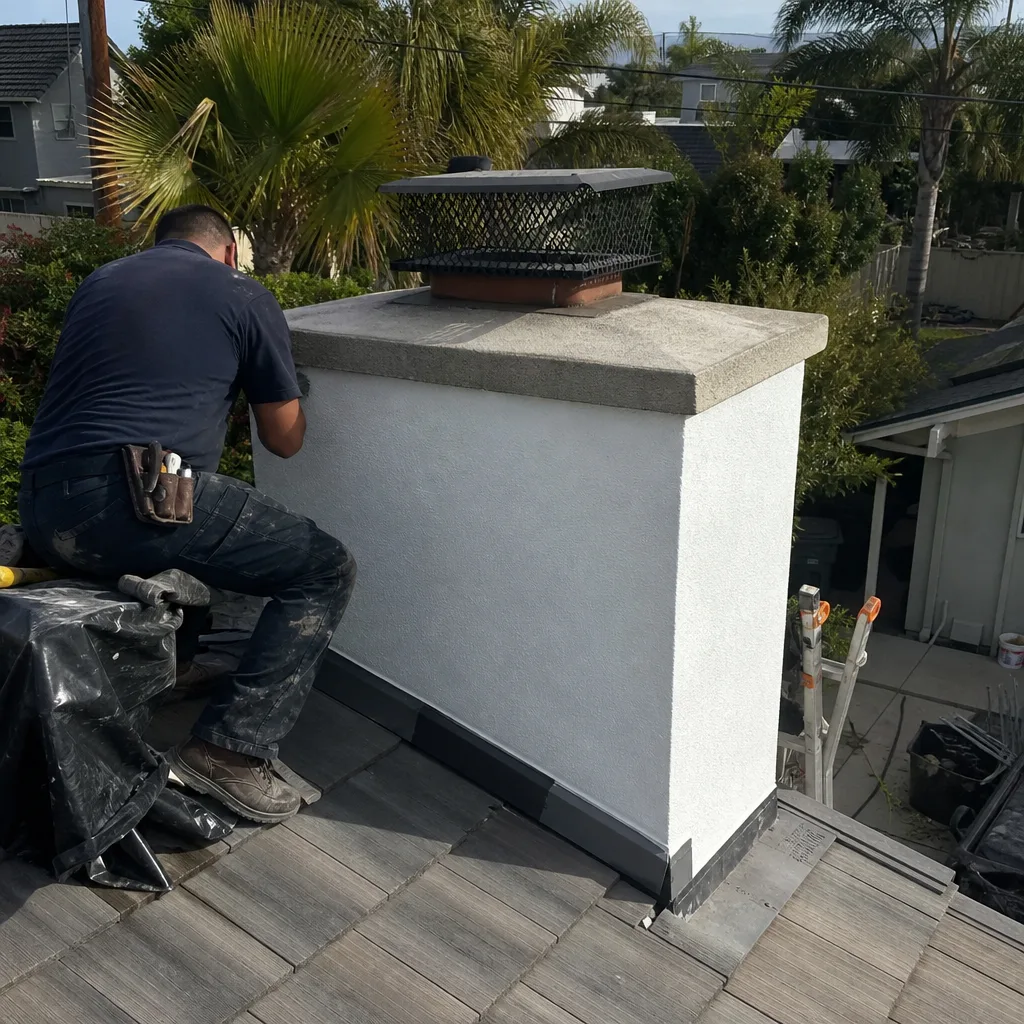 After
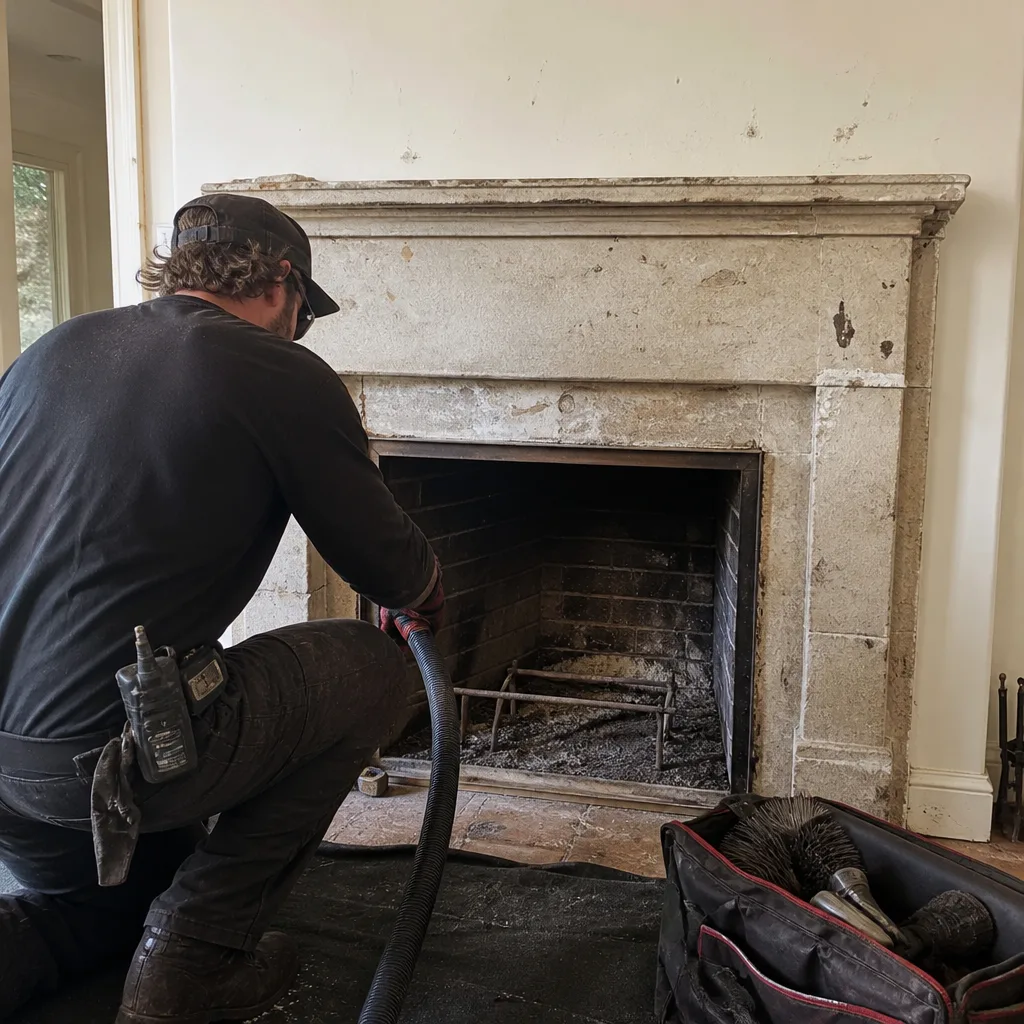 Before
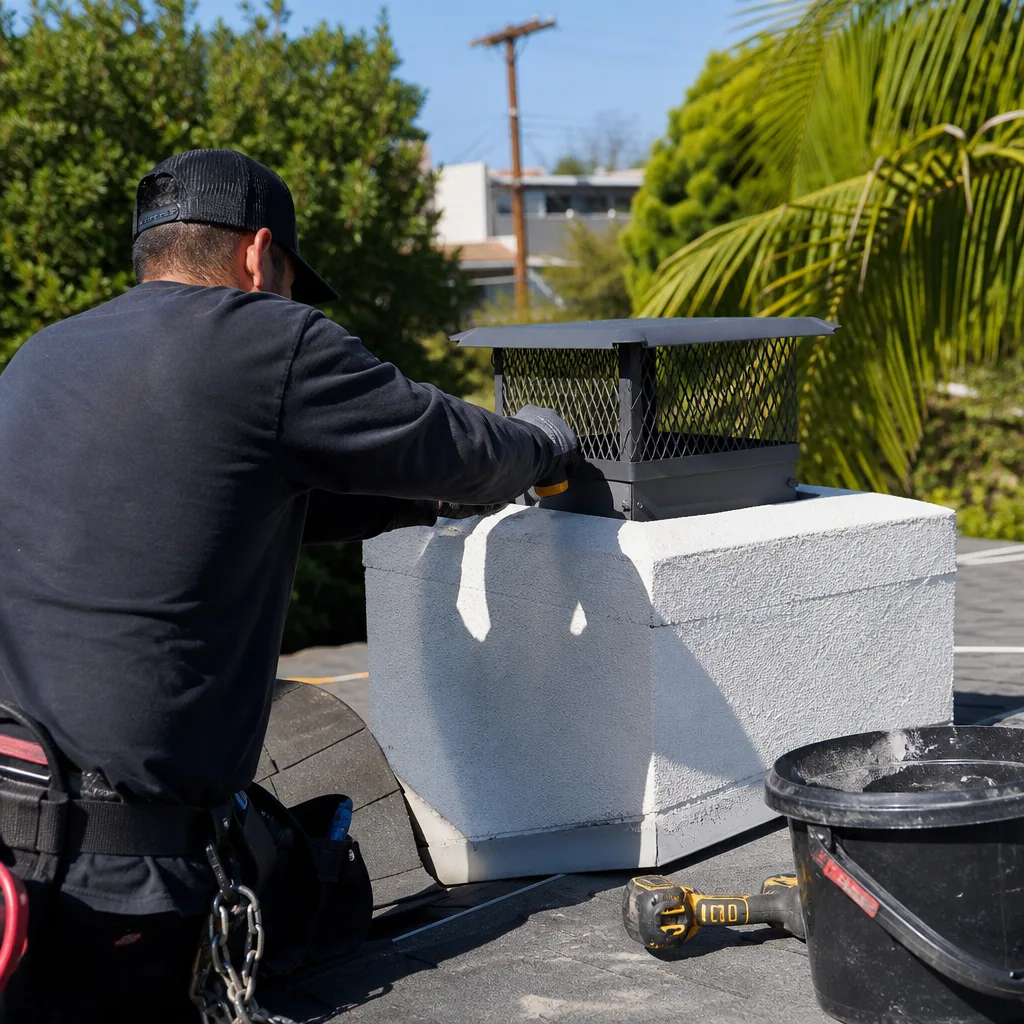 After
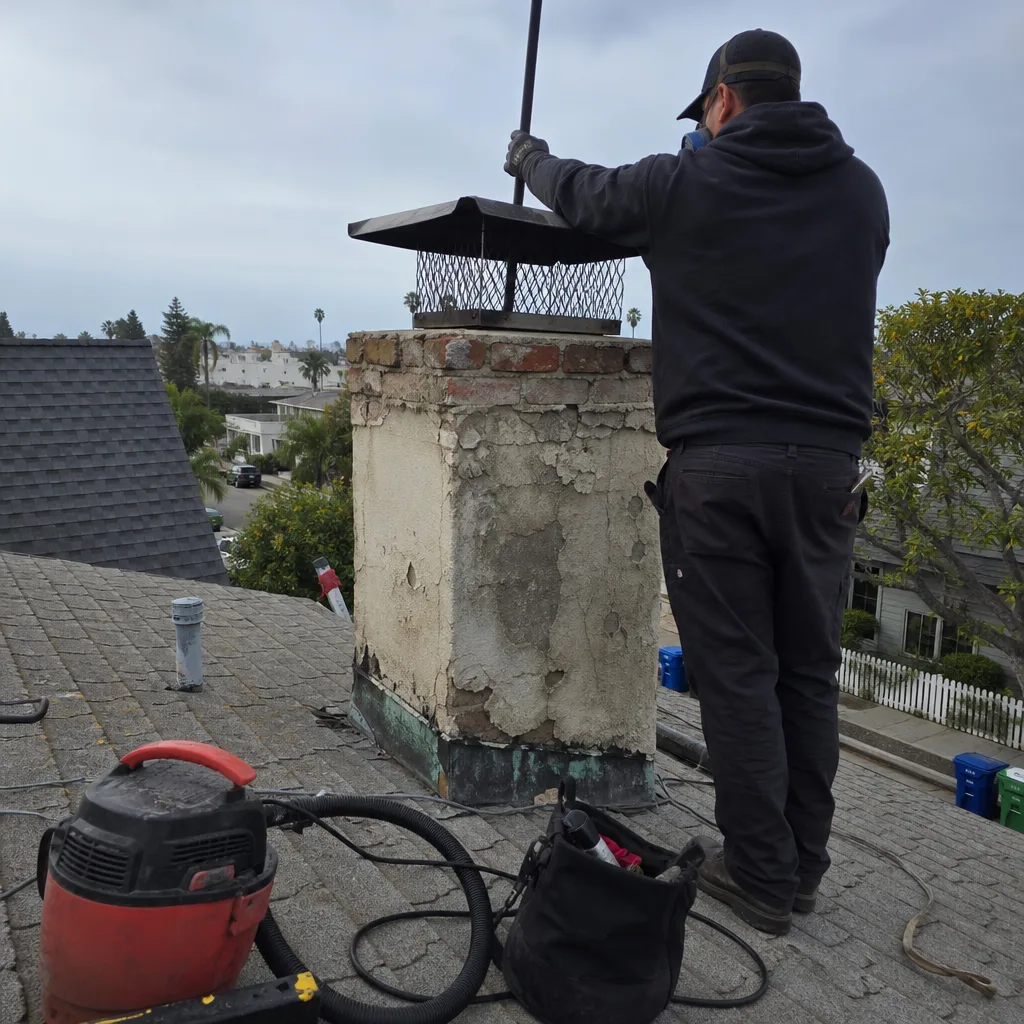 Before
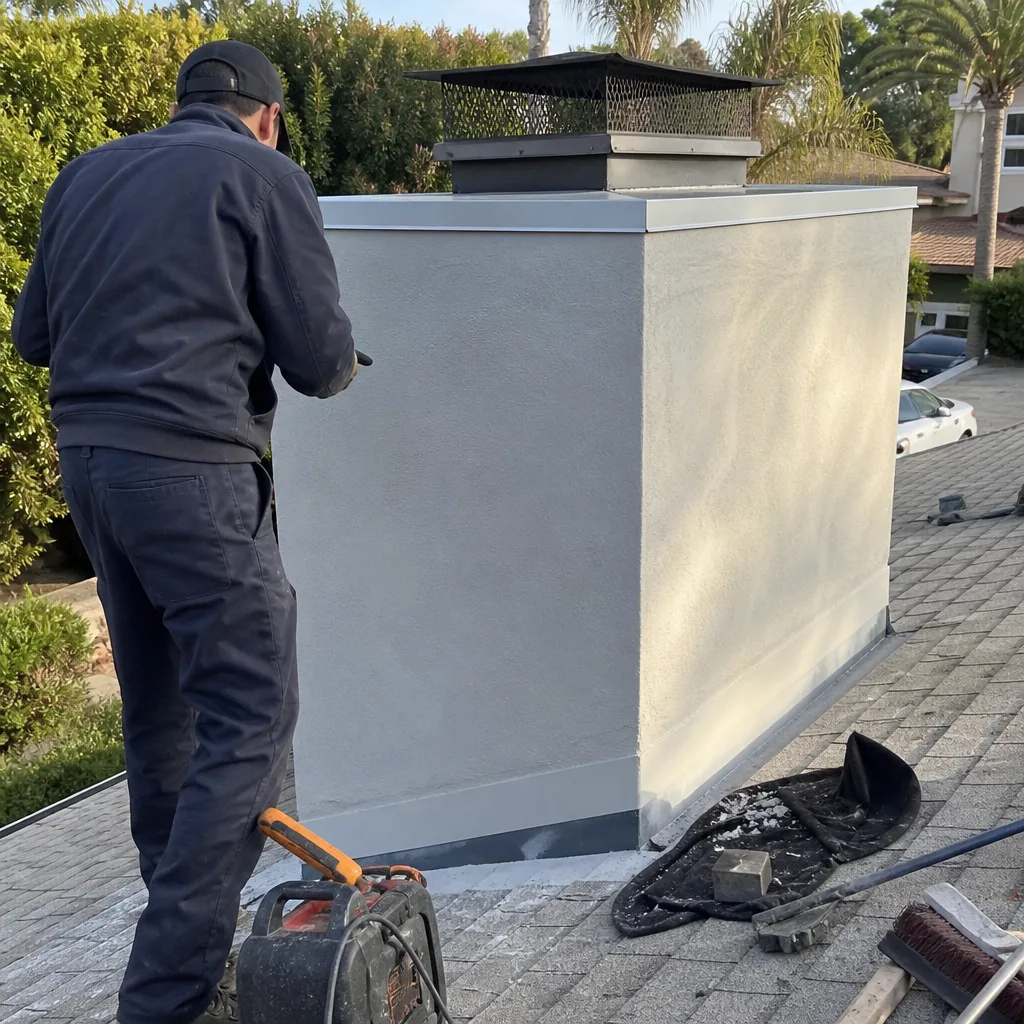 After
When to Call a Professional
Call a professional chimney contractor in Santa Monica if you haven’t had your chimney inspected in the last 12 months, if you’ve purchased a home with an unknown chimney maintenance history, if you smell smoke inside the house after a fire, if you see flaking masonry around the chimney exterior, or if your last sweep didn’t include camera inspection. See our Chimney Cleaning Emergency Preparedness Guide for Santa Monica Homes for warning signs to watch for. These are not conditions to wait on. A chimney fire doesn’t announce itself ahead of time. It happens when creosote reaches ignition temperature, and the first sign is often the fire itself. Steadfast Chimney Sweep offers free estimates in Santa Monica – call (833) 593-2844 to book an appointment.
Frequently Asked Questions
A standard chimney sweep with Level 1 inspection in Santa Monica typically costs between $199 and $329. The range reflects the height of the chimney, the type of flue, and the amount of creosote present. Call (833) 593-2844 for a specific quote based on your chimney – estimates are free.
The National Fire Protection Association recommends an annual inspection for every chimney, with sweeping done as needed. In Santa Monica, where wood-burning fireplaces get used primarily in the cooler winter months, most homeowners need a sweep every one to two years depending on burn frequency. Anyone who burns unseasoned wood or fires daily needs annual sweeping at minimum.
A Level 1 inspection examines the portions of the chimney that are accessible without special equipment. A Level 2 inspection adds attic access, crawlspace access, and interior wall examination using a CCTV camera. A Level 2 is required when the chimney system has changed – after a liner replacement, an appliance swap, a chimney fire, or before a property sale. If you’ve just bought a home in Santa Monica, ask for a Level 2.
Yes. An uncapped chimney is open to rain, which accelerates masonry deterioration in Santa Monica’s coastal air, and to animals, which build nests that block the flue. A masonry-rated cap costs a fraction of the repairs caused by water intrusion. If your chimney lacks a cap, prioritize getting one installed.
It depends on the contractor’s capability. Some chimney sweeps only clean, and when they find a liner crack during inspection, they hand you a report and a referral. Others have repair capability. HeatShield resurfacing, for example, can restore a damaged flue interior without full relining – a repair option that only trained applicators can offer. Ask the contractor up front: if your inspections finds damage, can they fix it? The answer tells you whether you’re hiring a full-service specialist or a sweep-and-depart operation.
Lint buildup in a dryer vent is the leading cause of dryer fires in residential homes. Your dryer vent is a chimney for lint – it carries combustible material away from an active heat source. If it’s blocked, that material accumulates inside the vent and behind the dryer, where the heating element can ignite it. Dryer vent cleaning is one of the cheapest fire-prevention services you can buy, and it belongs on the same maintenance calendar as your chimney inspection.
The Bottom Line
Hiring a chimney contractor in Santa Monica is not hard, but it does require asking questions that most guides skip. Verify the C-61/D-34 license before calling. Ask about the camera system by brand. Require the written estimate to include the inspection level, the sweep method, the cap assessment, and the disposal note. Compare sample inspection reports the way you’d compare contractor bids. And most importantly, ask what the contractor can actually fix if the inspection finds a problem. A sweep report means nothing if no one can repair what’s found. Choose a Santa Monica contractor who shows their work, documents their findings, and can follow through on repairs. That’s the whole game.
Written by the team at Steadfast Chimney Sweep, serving Santa Monica since 2015.