
Last updated November 2, 2026
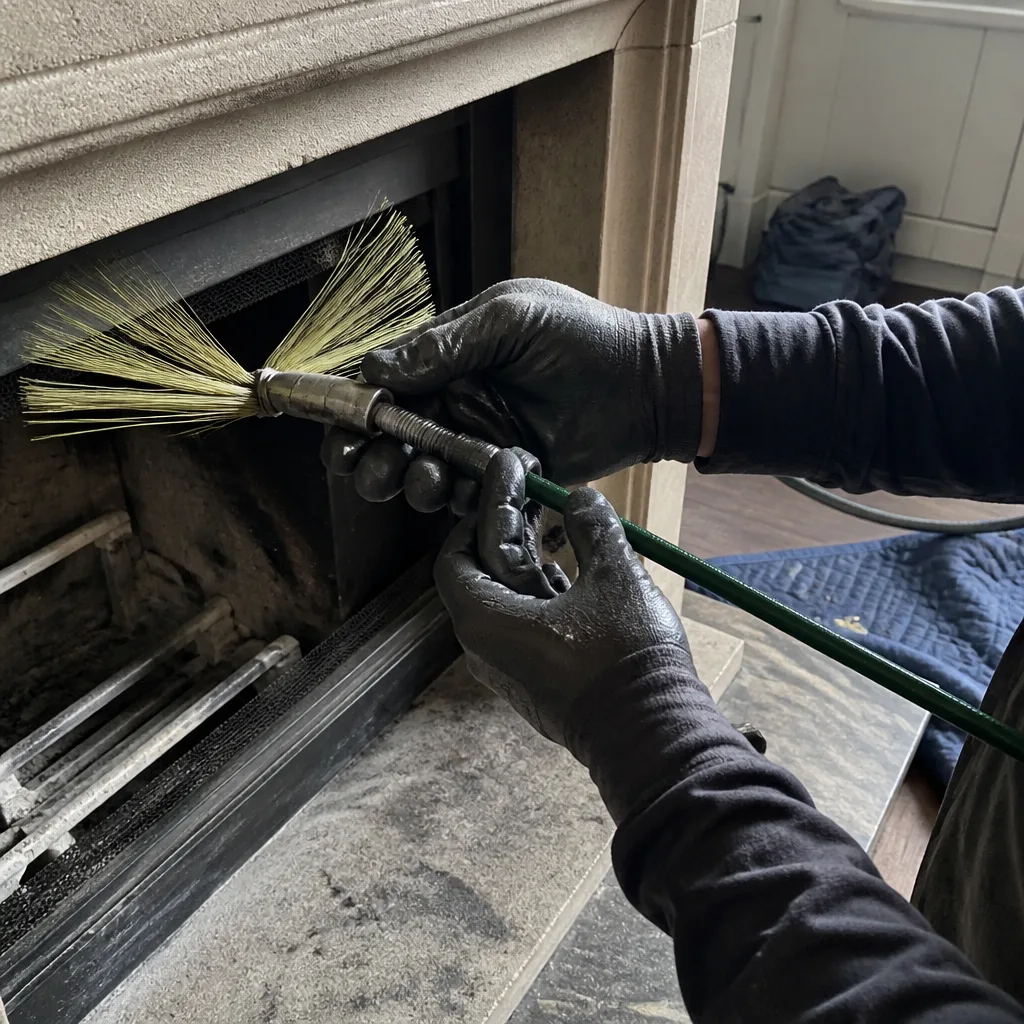
 Sweep & inspection
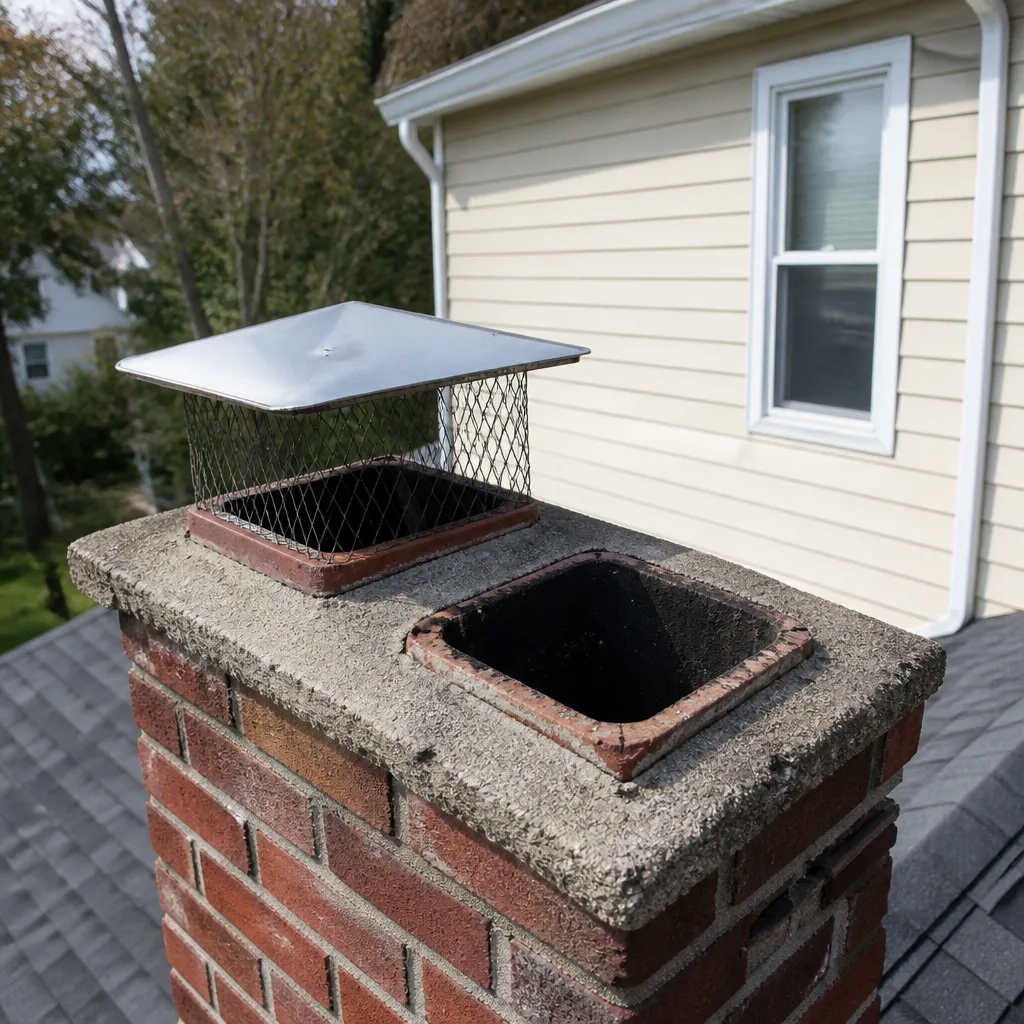
 Caps & crowns
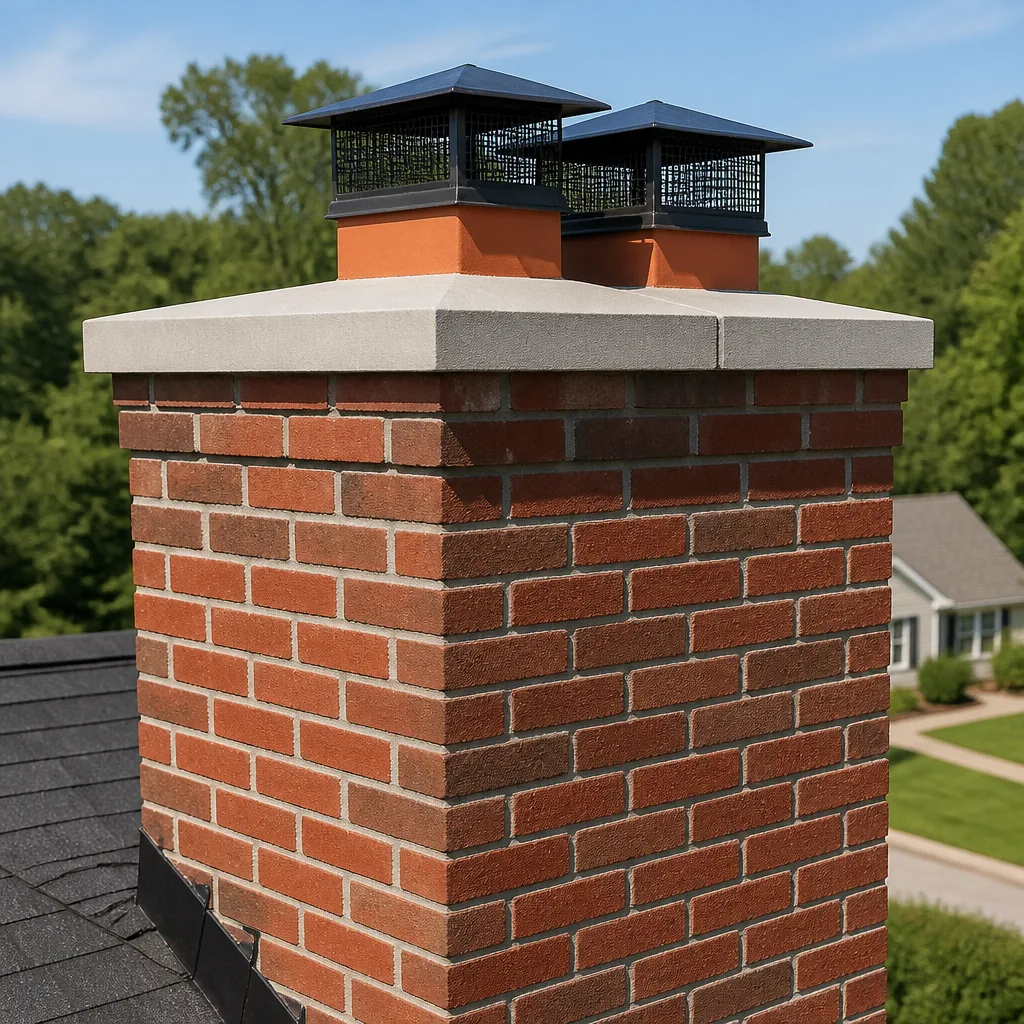
 Flue relining
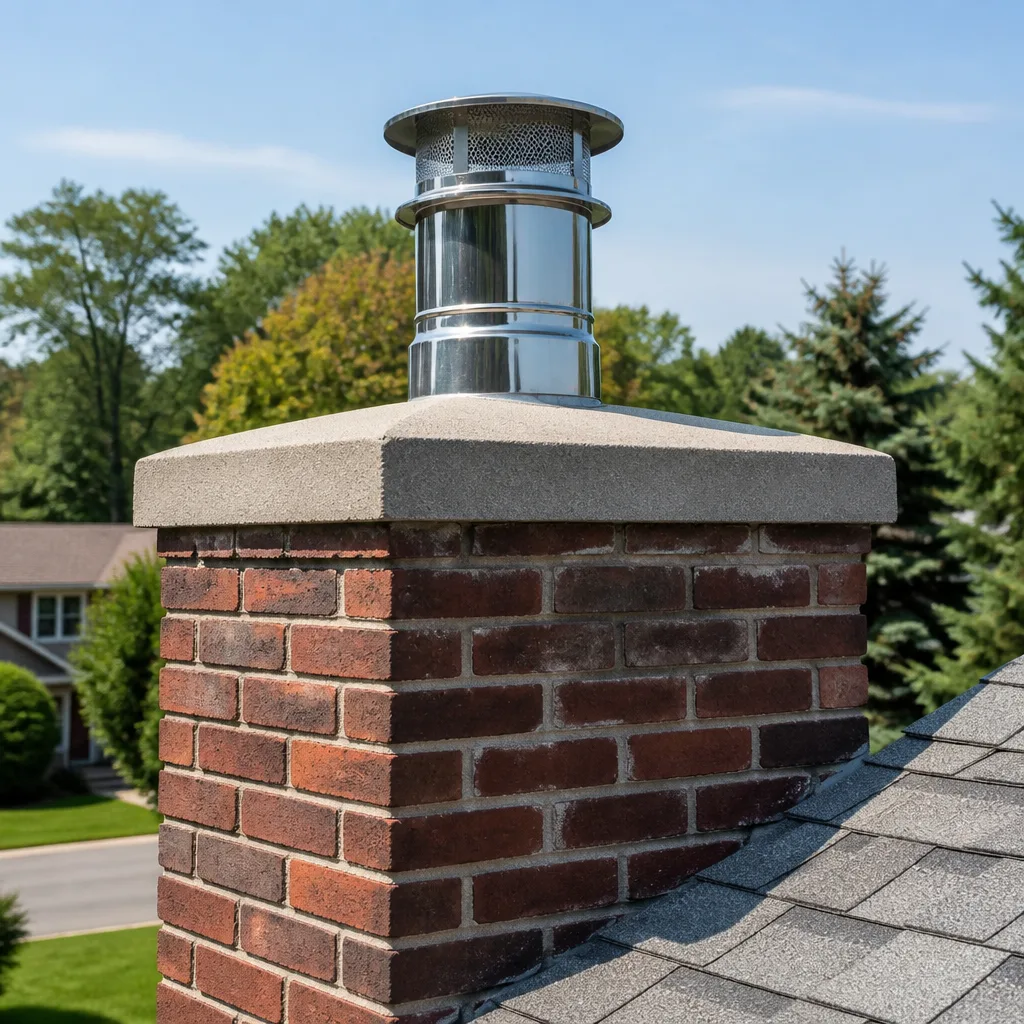
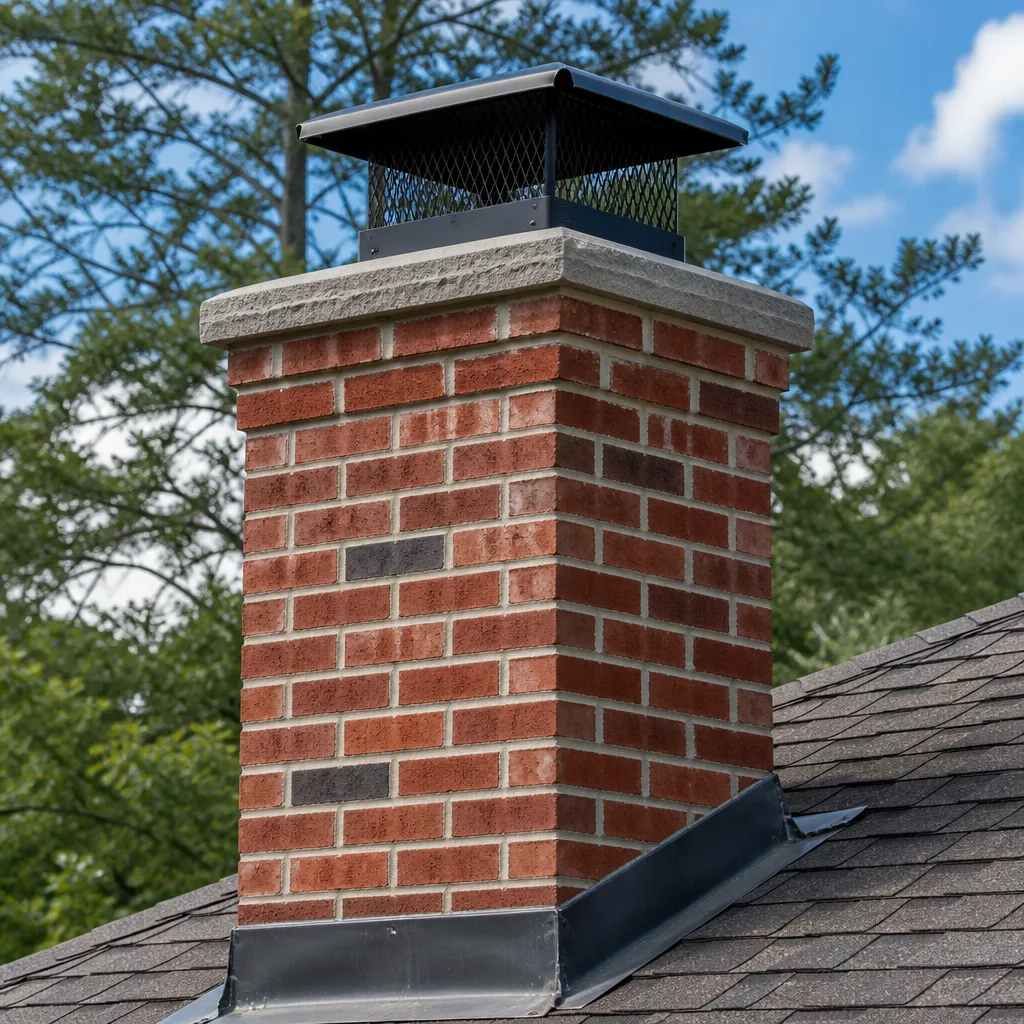 Masonry repair
 Gas fireplace service
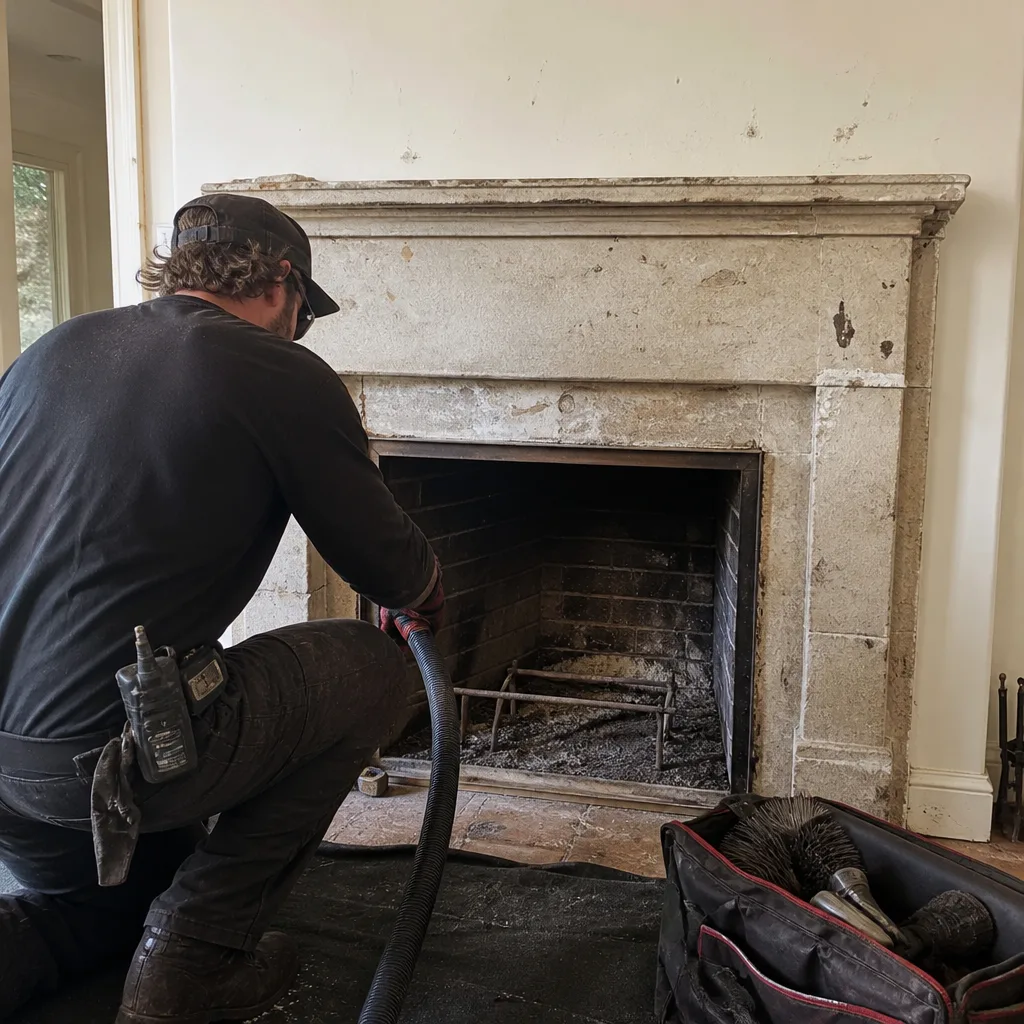
Level 1 sweep and inspection to the NFPA 211 annual standard - flue, crown, cap, and flashing checked and photographed
Chimney sweep logs do not sweep chimneys. They loosen some creosote - which then falls where a brush and vacuum still have to collect it.
Chimney Sweep Maintenance Checklist for Santa Monica Homeowners
Most chimney maintenance guides read like they were written for a house in Vermont. Wood stove in the basement, snow on the roof, a fire going from October through March. Santa Monica is different. Our chimneys face salt air, coastal UV, and long stretches of disuse while the fireplace sits dormant and the ocean breeze works its way into the flue. But the biggest gap we see in Santa Monica isn’t seasonal. It’s documentation. When a chimney problem leads to an insurance claim or a disclosure issue during a sale, the homeowner who kept a dated maintenance log is in a completely different position than the one who says “we had it swept a few years ago, I think.” This guide gives you a Chimney Sweep Troubleshooting: Common Problems and How to Fix Them-style checklist that does two things: it catches real problems before they become expensive, and it creates the paper trail your insurer and a future buyer will actually want to see. We’ll cover what you can check yourself, what requires a trained eye, and when in Santa Monica’s calendar each task makes the most sense.
Quick Answer
A chimney maintenance checklist for Santa Monica homeowners should divide tasks into owner-observable checks (visible spalling, damper operation, smoke behavior during a test burn, cap presence) and technician-required inspections (Level 1 or Level 2 camera inspection, creosote measurement, liner integrity testing, HeatShield evaluation). Log every observation with a date, photograph what you see, and schedule professional sweeping based on usage frequency rather than the outdated “every fall” rule. A Chimney Sweep in Santa Monica should also check the chimney crown and exposed masonry for coastal moisture intrusion, which is the most common chimney failure point in our climate.
Styles & brands we work with
- Sweep & inspection
- Caps & crowns
- Flue relining
- Masonry repair
- Gas fireplace service
Table of Contents
- Owner-Observable vs. Technician-Required Checks
- Santa Monica Climate Factors That Change the Checklist
- Documentation: The Checklist That Pays Off Twice
- Replacement Intervals vs. Inspect-and-Decide Items
- A Seasonal Timing Map for Santa Monica
- Stucco, Crown, and Coastal Exposure: What to Look For
- The Dryer Vent Is a Chimney Too
- The Complete Steadfast Chimney Sweep Maintenance Checklist
Owner-Observable vs. Technician-Required Checks
Before we get into the full list, let’s separate what you can actually evaluate from what needs professional equipment and training. This distinction matters more than most guides admit. A homeowner looking at a dark patch inside the flue cannot tell whether it’s a quarter-inch of creosote or a harmless shadow. But that same homeowner can absolutely notice a damper that won’t stay open, a cap that’s missing, or a chimney crown with visible cracks. The checklists below work together: your observations give the technician useful information, and the technician’s findings give you the documented record your insurer wants.
What you can check yourself:
- Damper operation: does it open fully, stay open, and close tightly? A damper that’s stuck halfway open lets ocean air into the house year-round.
- Visible chimney cap: stand across the street and look. If the cap is gone, tilted, or rusted through, rain and birds get in.
- Smoke behavior during a burn: smoke should rise cleanly. If it curls back into the room, or you smell it in the house hours later, that’s a drafting problem.
- Spalling on the exterior: brick faces flaking off, mortar lines crumbling, or small piles of sandy grit at the base of the chimney are signs of water damage.
- Efflorescence: white chalky deposits on the brick or stucco surface mean water is moving through the masonry.
- Animal activity: scratching sounds, nesting material visible at the top, or a smoldering smell on startup often means birds or rodents took up residence.
What requires a certified technician:
- Creosote measurement and removal. Creosote deposits are categorized by degree, and third-degree glazed creosote can’t be brushed off. It’s a genuine fire hazard that takes specific tools and training to address.
- Liner inspection. A cracked clay tile liner or separated flue section is only visible with a camera. In our experience, this is the finding that most often changes the scope of a job.
- Clearance and code verification. The distance between the flue and combustible framing changes with liner type. A technician measures this correctly.
- HeatShield evaluation. Not every damaged liner needs full replacement. A trained applicator can determine whether HeatShield resurfacing is appropriate, which can save thousands compared to relining.
Santa Monica Climate Factors That Change the Checklist
Standard chimney maintenance advice assumes the biggest threat to a chimney is heavy use in cold weather. Here, the biggest threat is water and salt air working on masonry during months when the fireplace isn’t being used at all. A chimney in Santa Monica sits exposed to marine layer fog for a good portion of the year. That fog delivers constant, fine moisture that penetrates small cracks in the crown and brickwork. Salt from the ocean breeze accelerates corrosion on metal components: caps, dampers, flashing, and chase covers all degrade faster here than they would ten miles inland. A homeowner in Mar Vista or West LA can follow a generic checklist and probably be fine. Someone a few blocks from the bluffs in Santa Monica needs to be more attentive to exterior components, because those are the parts failing first.
The other Santa Monica-specific factor is usage pattern. Most of our clients burn wood or run a gas fireplace only occasionally: holiday gatherings, unseasonably cool evenings, maybe a few nights in January. That pattern creates a specific problem. Infrequent, short fires produce more condensation inside the flue than long, hot fires do. The flue never gets hot enough, for long enough, to fully dry out. Over a season, that means more acidic moisture sitting against the liner, and more creosote forming at lower temperatures. A chimney that gets used twenty times a year in short bursts can actually need more frequent attention than one that burns daily but hot.
Documentation: The Checklist That Pays Off Twice
Here’s the part most checklists skip entirely, and it’s the part that matters most when something goes wrong. Your maintenance checklist is only as useful as the record it creates. A note that says “chimney looks okay” carries no weight with an adjuster. A dated entry that says “March 14, 2025: inspected crown, found hairline crack on east side, photos attached, scheduled repair” is documentation. That’s the difference between an insurance claim that gets paid and one that gets denied for “lack of maintenance.”
How to log maintenance events so they’re actually useful:
- Date every entry. Not just the month. Write the full date: November 12, 2025. A series of dated entries establishes a pattern of care over years.
- Photograph what you describe. A photo of the crack, the cap, the damper, the creosote before and after cleaning. Photos have timestamps built in. Store them in a folder labeled “chimney” and don’t delete them.
- Keep every service receipt and inspection report. When a technician does a Level 2 inspection, that report is a legal document. File it with the home’s other maintenance records.
- Write down the brand names of any components installed or repaired. A cap from Gelco, a liner section from Olympia Chimney, a HeatShield application date: these specifics matter when a future issue arises and someone asks “what exactly was done here?”
- Log even the small stuff. Damper adjustment, crown sealing, animal exclusion. Each entry builds the case that the chimney was maintained, not just used.
When you sell the house, this log answers the disclosure question “any known issues with the chimney?” with something better than a shrug. You have a history to show. Buyers in Santa Monica read disclosures carefully, and a documented chimney history is a genuine selling point. Chimney Repair in Santa Monica is a service that often comes up during escrow negotiations, and a clean maintenance log makes those conversations much simpler.
Replacement Intervals vs. Inspect-and-Decide Items
Some chimney components have predictable service lives. Manufacturers publish expected lifespans for their products, and ignoring those intervals is how small problems become structural ones. Other items simply need to be looked at on a schedule and replaced only when they show wear. Knowing which is which – something our Choosing the Right Chimney Cleaning Brand: A Buyer’s Guide for Santa Monica covers in detail – keeps you from spending money on replacements nobody needs, while also keeping you from letting a known-lifespan component run past its safe window.
Components with manufacturer-recommended replacement intervals:
| Component | Typical Service Life in Coastal Climate | Notes |
|---|---|---|
| Chimney cap (galvanized) | 5-8 years | Salt air corrodes galvanized steel faster than inland. Stainless options from Olympia Chimney last longer. |
| Chimney cap (stainless) | 15+ years | Higher upfront cost, significantly better coastal performance. |
| Damper assembly | 10-15 years | Top-sealing dampers outperform throat dampers in Santa Monica because they keep marine fog out of the flue. |
| Clay tile liner sections | 50+ years if protected, much less if water gets in | Water is the killer. A cracked crown shortens liner life dramatically. |
| Flexible stainless liner (e.g., DuraFlex) | 15-25 years | Premature failure almost always traces to installation error or animal intrusion. |
| Chase cover (prefab chimneys) | 10-15 years | Inspect for rust-through. Many Santa Monica prefabs we see have original chase covers well past their service life. |
Inspect-and-decide items:
- Flashing: no set replacement interval. It fails when it fails. But it should be visually checked at least once a year, and more often if you’re close to the coast.
- Masonry joints: repoint when mortar crumbles or cracks appear. No lifespan to track, but deferred repointing leads to spalling brick, which is expensive.
- HeatShield resurfacing: decision based on camera findings. HeatShield can restore a damaged flue interior without full relining, but it’s only appropriate for certain liner conditions. An evaluation tells you whether you’re a candidate.
- Gaskets and seals on prefab units: check yearly, replace when they compress or crack. Inexpensive parts that cause real drafting problems when they fail.
A Seasonal Timing Map for Santa Monica
The old advice, “sweep before winter,” doesn’t map well onto coastal life. Santa Monica doesn’t have winter in the way that advice assumes. Instead, we map maintenance to actual usage patterns and weather windows. Here’s when we recommend each task.
- September to October: schedule your annual sweep and inspection. This gets you ready for the holiday season, the time most Santa Monica homeowners actually use the fireplace. It also gives you a clean baseline before the rainy season. If the inspection finds a problem, you have time to fix it before the first storm.
- November to December: burn a test fire. After the sweep, light a small fire on a clear evening. Watch the smoke. Check for any smell in the house the next morning. This confirms the system is drafting correctly before guests arrive.
- January to February: mid-season check. If you’ve been burning regularly, shine a flashlight up the flue (from inside, looking up past the damper) and check for obvious buildup. A quarter-inch of dark material is normal. Heavy, shiny, tar-like deposits are not. If in doubt, a quick visit costs less than a chimney fire.
- March to April: exterior inspection window. After the rain ends, walk around the chimney and check the crown, flashing, and brickwork. This is the best time to spot water damage in Santa Monica because the rainy season is just behind you and any new cracks will be visible. Schedule repairs before the summer fog settles in.
- May to August: the dormant season. Your chimney is a hollow column of masonry exposed to fog and salt air. This is when animals move in and moisture seeps into the crown. If you don’t have a top-sealing damper, the chimney is breathing marine air into the house all summer. Consider whether that bothers you. It should. A top-sealing damper fixes it.
Stucco, Crown, and Coastal Exposure: What to Look For
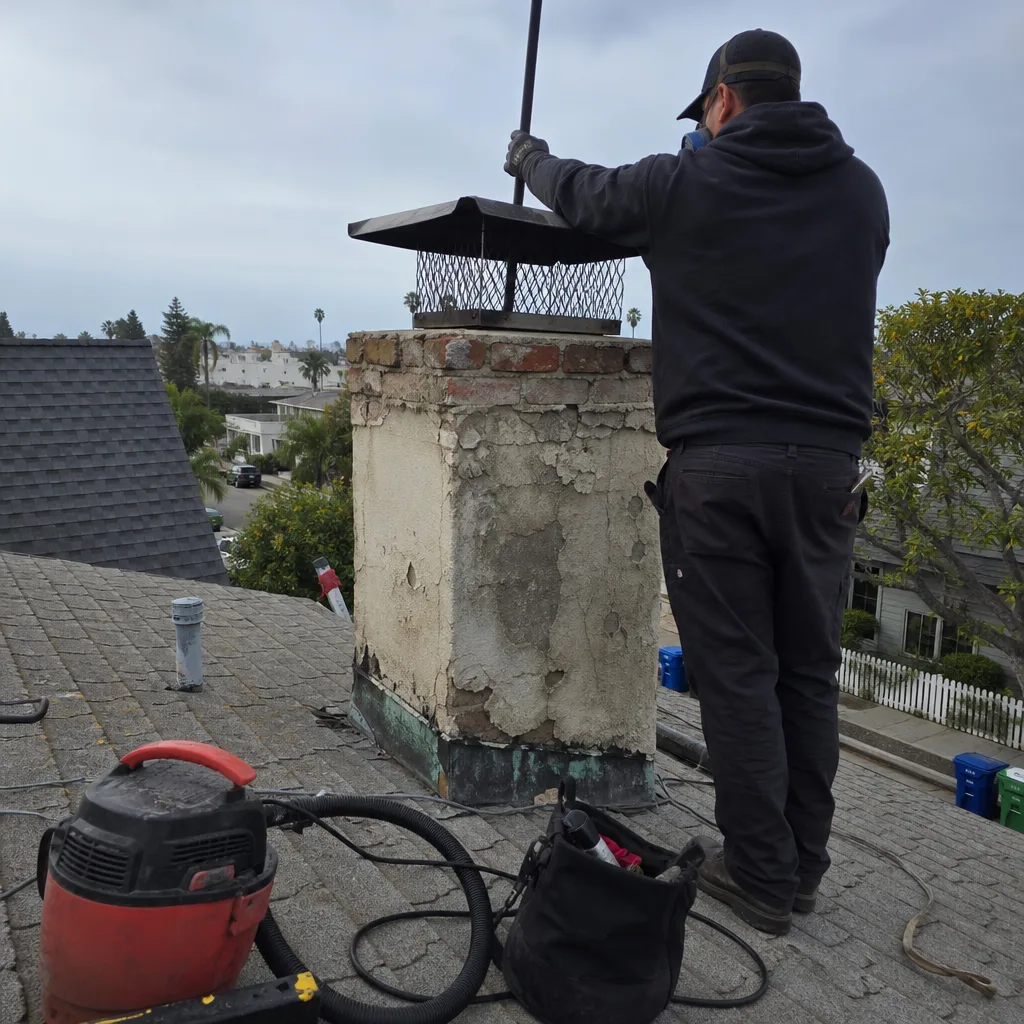
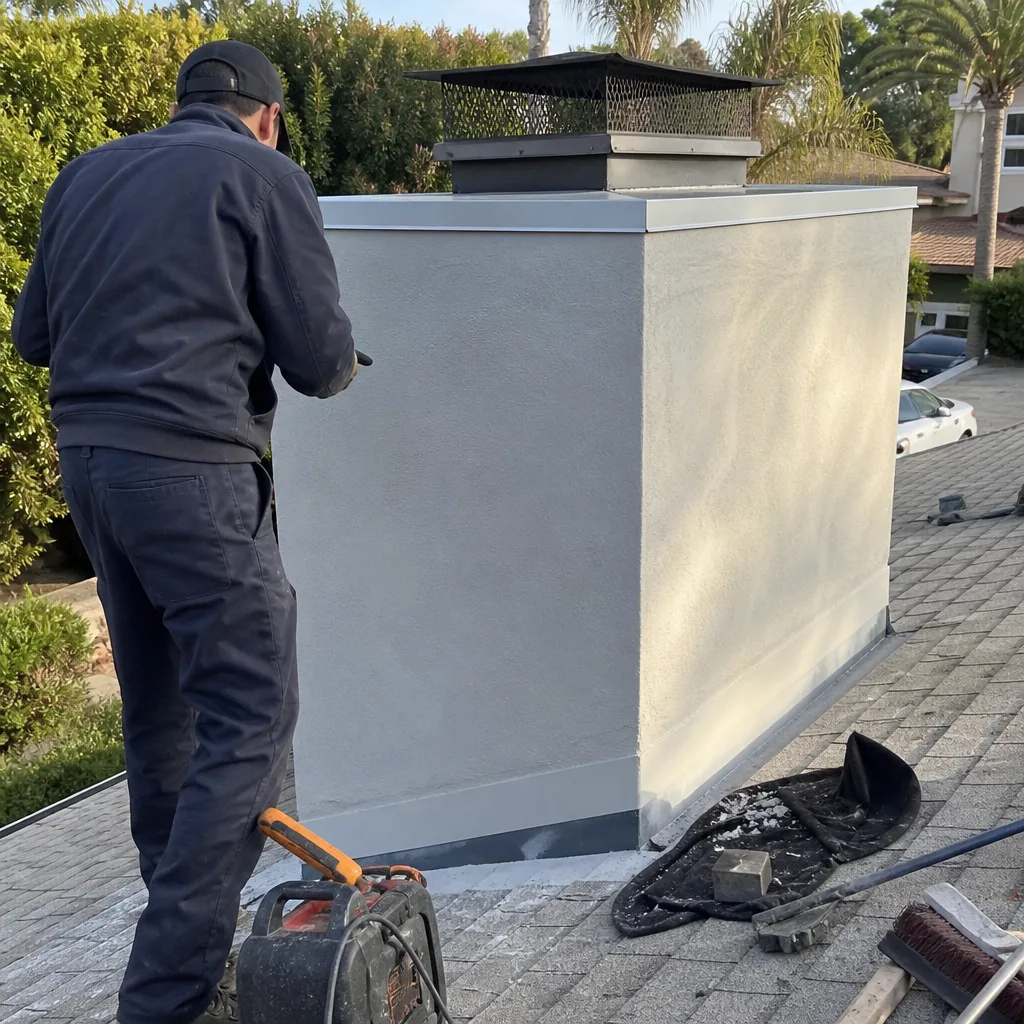
A significant number of Santa Monica homes have stucco exteriors, and stucco interacts with chimneys differently than brick veneer or siding. The transition point where the chimney meets the roofline and where the crown meets the flue is where water finds its way in. Stucco cracks are easy to see, but they’re also easy to dismiss as cosmetic. Around a chimney, they’re not cosmetic. A crack in stucco near the chimney means water is getting behind the surface, and that water is sitting against the chimney structure. Over time, that’s how spalling begins.
What to check on Santa Monica stucco homes specifically:
- Crown condition: the concrete slab on top of the chimney. It should slope away from the flue to shed water. A flat crown pools water. A cracked crown channels water into the masonry. Either one is a problem that gets worse every fog cycle.
- Stucco cracks radiating from the chimney: any crack wider than a hairline should be noted. These often appear where the chimney meets the wall, which is a flashing failure zone.
- The flashing line: where the roof meets the chimney, the metal should be intact, without exposed gaps or rust-through. Poor flashing is the number one source of chimney leaks, not the masonry itself.
- UV degradation: coastal UV is intense, and it breaks down stucco sealants and exterior caulking faster than you’d expect. Plan on resealing penetrations more frequently than a homeowner in a wetter, cloudier climate would.
Here’s what we see regularly in Santa Monica: a chimney crown that was poured correctly when the house was built, but decades of fog and light rain have opened hairline cracks across the surface. The homeowner doesn’t notice because the cracks are thin and the house isn’t leaking visibly. But water is getting in, and it’s slowly dissolving the mortar. By the time spalling brick or a flaking stucco patch appears, the repair is structural. Catching it at the crack stage means sealing the crown instead of rebuilding it. That’s the difference between a few hundred dollars and a few thousand.
The Dryer Vent Is a Chimney Too
Your clothes dryer pushes hot, lint-laden air out through a duct that works on the same basic principle as a chimney. It’s an exhaust column. When it gets clogged, the results are similar too: heat builds up where it shouldn’t, and a house fire can start inside a wall cavity. Dryer Vent Cleaning in Santa Monica belongs on the same checklist as chimney maintenance because household safety doesn’t care which exhaust system failed. Lint blockages are one of the most common causes of residential structure fires in the United States, and they’re almost entirely preventable with routine cleaning.
How to add dryer vent checks to your chimney maintenance routine:
- Check the exterior vent flap: when the dryer is running, the flap should be forced open by airflow. If it barely moves, the vent is restricted.
- Track drying times: if a load that used to take forty minutes now takes over an hour, that’s a symptom of restricted airflow, not necessarily an aging dryer.
- Feel the duct: accessible sections should be cool or warm, not hot. A hot duct means heat is trapped and lint is doing the trapping.
- Keep a cleaning interval: a household of two or three people in Santa Monica should have the dryer vent cleaned every 12 to 18 months. Larger households or heavier laundry use mean every 6 to 12 months.
We bring this up in a chimney guide because the two systems fail in the same way, but homeowners think about them completely differently. People know a chimney gets swept. Almost nobody thinks about the dryer vent until the dryer stops drying. By then the lint has been accumulating for years, and the duct needs full replacement rather than a simple clearing.
The Complete Steadfast Chimney Sweep Maintenance Checklist
Here is everything from this guide boiled down to a single actionable list. Print it, keep it near your home records, and date every item you complete.
Every Time You Use the Fireplace
- Open the damper fully before lighting. Confirm it catches and stays open.
- Light a small piece of newspaper and hold it in the firebox. Smoke should pull upward. If it doesn’t, don’t light the fire; the flue needs attention.
- After the fire, note any smell that lingers into the next day. No smell is normal. Smoke smell means a drafting or damper problem.
Monthly (Quick Visual Checks)
- Look at the chimney from the street. Is the cap in place? Any visible tilt or rust?
- Check the base of the chimney for grit, flaking brick, or white deposits.
- Notice whether the damper closes tightly when not in use. A damper that doesn’t seal is letting fog into the house.
Annually (Professional Service)
- Book a chimney sweep and inspection, ideally in September or October. Steadfast Chimney Sweep home services full chimney systems, not just the flue.
- Have the technician document creosote levels, liner condition, and any repair recommendations in writing.
- Request a dryer vent cleaning if you haven’t had one in the last 18 months. It can be done the same visit.
- File the inspection report and photos with your home records.
As Observed (Any Time)
- Exterior cracks in stucco or masonry: note the location and size, photograph, and schedule repair before the next rainy season.
- Animal activity: if you hear or see evidence of animals in the chimney, have an exclusion assessment done. Do not attempt to remove animals yourself.
- Sudden drafting problems or smoke backup: stop using the fireplace and schedule an inspection. This is not a “wait and see” situation.
Common Mistakes to Avoid
- Using the “we barely use it” logic to skip annual service. In Santa Monica, light use creates its own problems. Low, short fires produce more condensation and acidic creosote than long, hot ones. Less use doesn’t mean less maintenance.
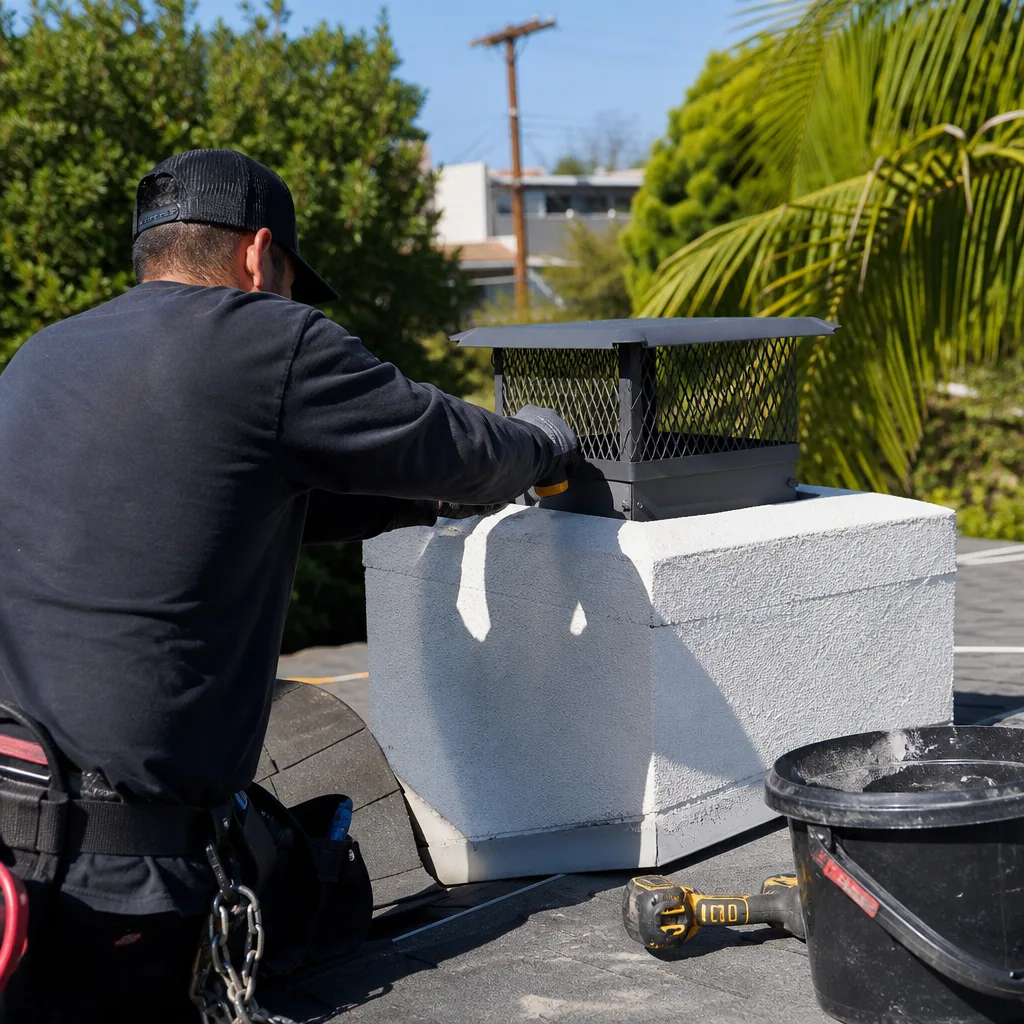
- Ignoring the chimney cap. A missing or degraded cap is the single most common entry point for rain, birds, and rodents. Replacing a cap is cheap compared to repairing animal damage or a waterlogged flue.
- Painting over stucco cracks near the chimney. Paint hides the crack for a season, but water keeps moving behind it. The crack needs sealing, not covering.
- Thinking a smoke test is sufficient. A smoke test tells you the flue is drawing, but it says nothing about creosote thickness behind the walls. Camera inspection is the only way to see the liner.
- Letting the dryer vent ride. Homeowners in Santa Monica often have their chimney inspected but never think about the dryer vent. Both are exhaust systems. Both can burn your house down. Check both.
- Keeping service records in a drawer, not a file. A receipt without a date, a scope of work, and photos doesn’t help in a claim. Build the file.
- Waiting for a leaking roof to inspect the chimney. By the time water is coming through the ceiling, the chimney damage may have been underway for years. Annual exterior checks catch the early stages.
See the difference
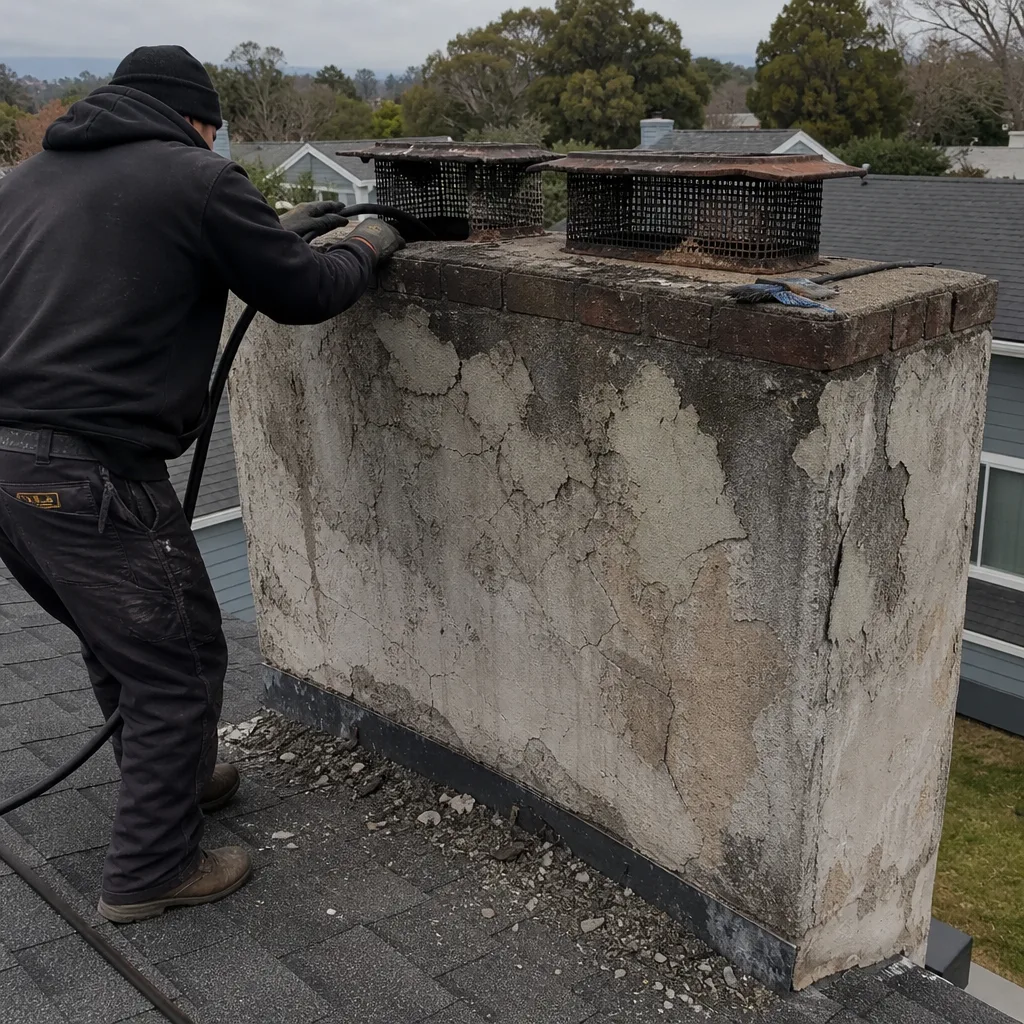 Before
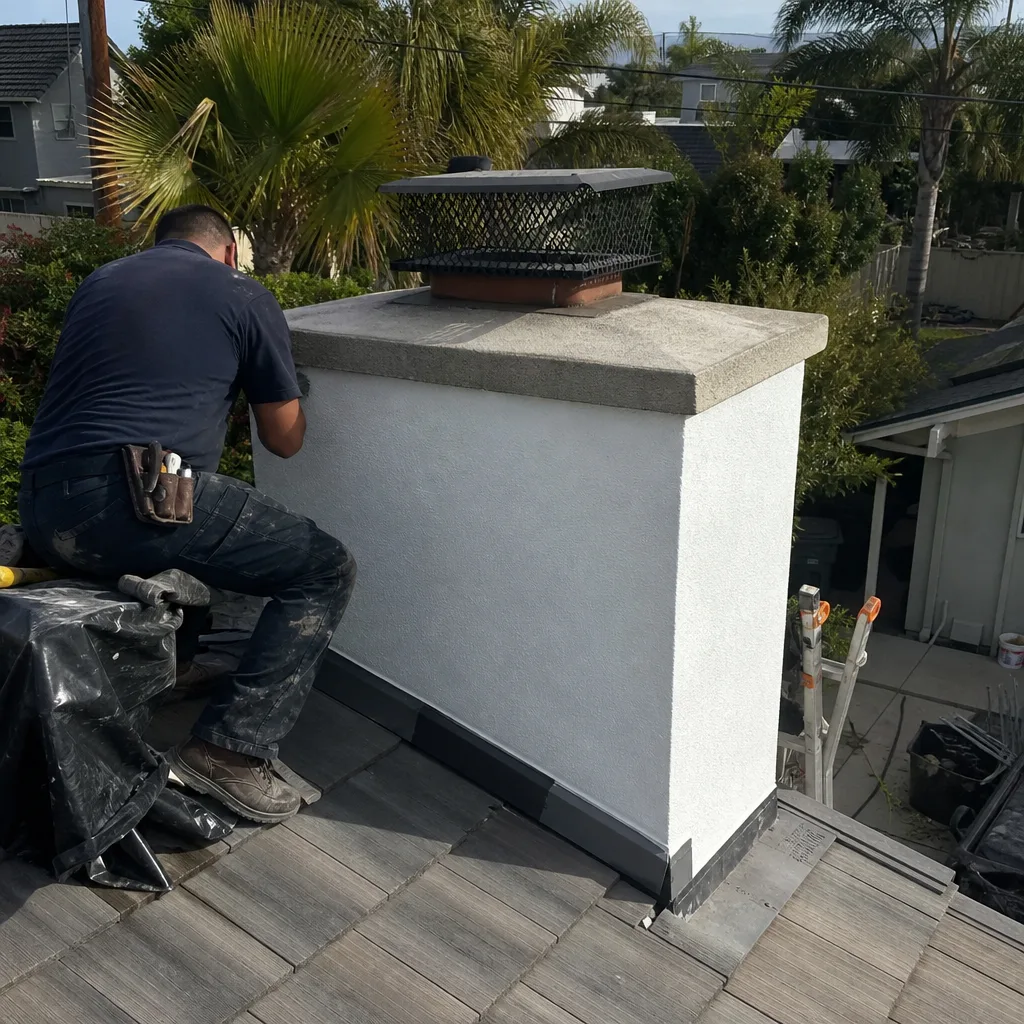 After
 Before
 After
 Before
 After
When to Call a Professional
Some situations should never wait for the next annual appointment. If you see glaze-like, shiny deposits inside the flue, that’s third-degree creosote and it’s a genuine fire hazard. If smoke comes back into the room during a burn, stop using the fireplace immediately. If you hear animals and can’t confirm they’re gone, or if you see large cracks appearing in the crown or masonry, the structural integrity of the chimney is in question. And if you’ve never had a camera inspection performed, you don’t actually know what’s inside your flue. Steadfast Chimney Sweep offers free estimates in Santa Monica. Call (833) 593-2844 and we’ll assess the system and tell you plainly what needs work and what can wait.
Frequently Asked Questions
Most Santa Monica homeowners should have a professional sweep and inspection once per year, scheduled in September or October before holiday usage picks up. Homes that burn only occasionally may stretch this to every 18 months, but the inspection should still be annual because exterior components degrade from coastal weather regardless of use.
A standard chimney sweep and inspection in Santa Monica typically falls in the $180 to $350 range, depending on the size and condition of the system. Repairs like crown sealing, cap replacement, or HeatShield resurfacing are quoted separately. Call (833) 593-2844 for an exact quote. Estimates are free.
Not necessarily. Minor liner deterioration can sometimes be addressed with HeatShield resurfacing, which restores the flue interior without removing the old liner. However, certain damage patterns, including separated sections or severe spalling, require full relining with a product like DuraFlex. Get a camera inspection and a written report before agreeing to any liner work.
In a Santa Monica coastal climate, the most likely failure is water intrusion through the crown or flashing, leading to spalling brick or deteriorated mortar. Creosote also accumulates even with light use, and third-degree glazed creosote becomes a fire hazard that ordinary brushing can’t remove. Skipping maintenance doesn’t save money; it defers smaller costs until they become structural ones. Call (833) 593-2844 for a free assessment and find out what, if anything, your chimney needs.
Dryer vents can be partially maintained by the homeowner with a brush kit, but the interior sections of the duct and the connection at the wall are easy to damage without proper equipment. Chimney sweeping is a different matter entirely. Accessing the crown and working with creosote requires training and safety gear. We recommend professional service for both.
California real estate disclosure law requires sellers to disclose known material defects, but it does not require a chimney inspection. However, many Santa Monica buyers request one as a condition of sale, and a documented maintenance history with dated receipts and photos tends to make the transaction smoother. If you’re preparing to sell, having a Level 2 inspection performed before listing is a strong position to be in.
The Bottom Line
A chimney maintenance checklist that only covers annual sweeping is doing half the job. For Santa Monica homeowners, the real checklist covers exterior components battered by coastal conditions, interior conditions that develop from infrequent, low-temperature fires, and the documentation that turns a maintenance routine into an insurance and resale asset. Log your observations with dates and photos. Schedule the professional inspection before holiday season. Replace components with manufacturer-recommended lifespans before they fail. Treat the dryer vent as part of the same fire-safety system. And when the report comes back with a recommendation, get a second answer on whether repair is needed now or can wait. Steadfast Chimney Sweep is a Chimney Repair in Santa Monica company that can actually fix what the inspection finds. Call (833) 593-2844 for a free estimate and a straight answer about your chimney.
Written by the team at Steadfast Chimney Sweep, serving Santa Monica since 2015. For more guides & resources, visit our blog.