
Last updated November 3, 2026
 Sweep & inspection
 Caps & crowns
 Flue relining
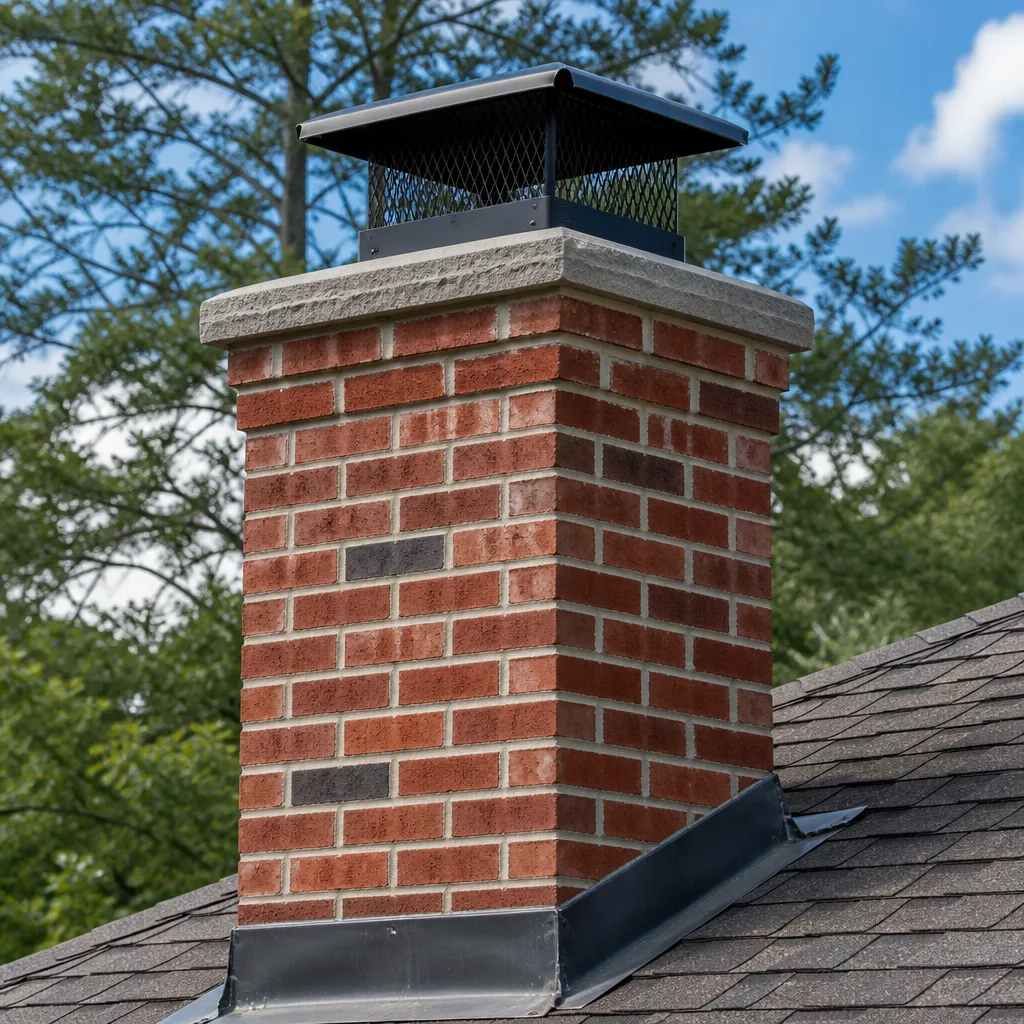 Masonry repair
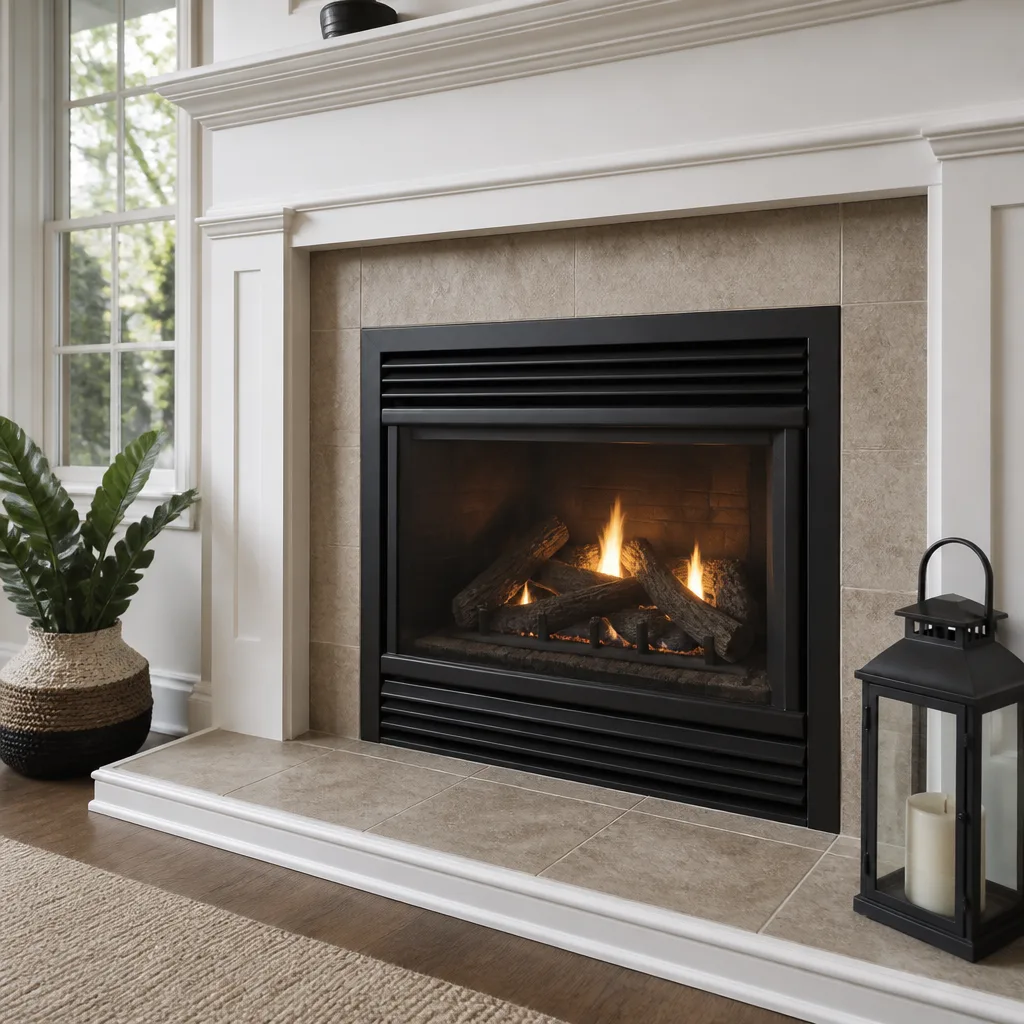 Gas fireplace service
Level 1 sweep and inspection to the NFPA 211 annual standard - flue, crown, cap, and flashing checked and photographed
Chimney sweep logs do not sweep chimneys. They loosen some creosote - which then falls where a brush and vacuum still have to collect it.
The Complete Chimney Sweep Guide for Santa Monica Homeowners
A chimney that only burns six cords of wood a year can still fail a safety inspection. Not from heavy use, but from sitting damp and unchecked through Santa Monica’s foggy off-season. The salt air, the marine layer, the months where the fireplace is more furniture than fire source: those are the conditions that quietly age a chimney from the inside out. This guide explains what actually happens to chimneys in this specific coastal climate, when to schedule service, what an inspection should include, and how to know whether a repair recommendation is legitimate or an upsell. If you own a home in Santa Monica with a wood-burning fireplace, gas insert, or a dryer vent running through a wall, this is the reference you’ll come back to.
Quick Answer
A chimney sweep in Santa Monica typically costs between $180 and $320 for a standard cleaning and Level 1 inspection, and most homes with regular fireplace use need this service once per year. Santa Monica’s marine layer moisture and salt air create faster mortar deterioration and liner oxidation than inland Los Angeles climates, so even low-use chimneys should be inspected annually. The sweep itself takes 45 to 90 minutes, produces no mess inside your home, and should always include a camera-ready written report of what was found.
Styles & brands we work with
- Sweep & inspection
- Caps & crowns
- Flue relining
- Masonry repair
- Gas fireplace service
Table of Contents
- How Often Should a Chimney Be Swept in Santa Monica?
- What the Coastal Climate Does to Chimneys
- Level 1 vs. Level 2 Inspection: Which One Do You Need?
- What Happens During a Professional Sweep
- Creosote in Low-Use Chimneys: What “We Barely Use It” Really Means
- Santa Monica Architecture and Chimney Access Challenges
- What Post-Sweep Repairs Actually Require: Professional Materials Explained
- Dryer Vents: The Other Chimney in Your Santa Monica Home
How Often Should a Chimney Be Swept in Santa Monica?
The National Fire Protection Association (NFPA 211) says chimneys should be inspected annually and swept when creosote buildup reaches 1/8 inch or more. For Santa Monica homeowners, the inspection schedule shouldn’t change just because the fireplace gets light use. Our recommendation: schedule a combined sweep and inspection every 12 months, ideally in late September or early October, before the first cold evening makes you want a fire. For full details, see our Complete Guide to Chimney Cleaning in Santa Monica.
Here’s why the timing matters locally. Santa Monica’s rainy season is compressed into a handful of storm weeks between November and March, but the marine layer provides humidity year-round. A chimney that sits through May Gray and June Gloom with even a small creosote deposit will absorb moisture. Creosote mixed with moisture becomes more acidic and more corrosive to liner and mortar. Waiting until January to inspect means the chimney has already spent months in those damp conditions.
Annual sweep checklist for Santa Monica homes:
- Inspect the flue liner with a camera before and after brushing
- Remove creosote from the smoke chamber, damper, and firebox
- Check the chimney cap and spark arrestor for rust or salt corrosion
- Inspect the crown for hairline cracks (common in coastal freeze-thaw cycles, even mild ones)
- Verify the damper opens, closes, and seals properly
- Check exterior brick and mortar for spalling or efflorescence
Gas fireplace inserts change the frequency question slightly. Gas produces no creosote, but it does produce water vapor and acidic condensate. We still recommend annual inspection for gas units because the venting system, cap, and moisture barriers degrade in this climate regardless of fuel type. A blocked or corroded gas vent is a carbon monoxide risk, not a creosote risk, and it deserves the same annual attention.
For homes in the Wilshire-Montana area with older masonry chimneys, we frequently see mortar joints that were last re-pointed in the 1990s and are now deteriorating faster than expected due to salt-driven capillary action from the ocean breeze. Homes north of Wilshire get more marine layer exposure than those further inland near Bundy or Centinela. It’s not a dramatic difference, but after years of servicing Santa Monica neighborhoods, we can tell you the fog belt chimneys need more attention to crown sealing and cap corrosion.
What the Coastal Climate Does to Chimneys
Chimneys in Santa Monica age differently than chimneys in Pasadena, Sherman Oaks, or Claremont. The difference isn’t the fire. It’s the air.
Salt air is the most aggressive factor. Sodium chloride particles ride inland on ocean breezes and settle on exterior masonry. When moisture from the marine layer condenses on brick and mortar, the salt solution gets drawn into the porous surface through capillary action. As the moisture evaporates, salt crystals form inside the pores and expand, fracturing the material from within. This is the same process that rusts cars faster near the coast, applied to chimneys. Brick that looks fine from the driveway can be structurally softened within a few feet of the cap.
The second factor is the marine layer itself. Santa Monica’s fog doesn’t just roll in and out; it lingers. Chimneys with even minor crown cracks pull that moisture into the flue through convection and gravity. The flue stays damp. For a masonry chimney with a traditional clay tile liner, that persistent dampness causes efflorescence: white mineral deposits that signal water moving through the masonry. Efflorescence isn’t cosmetic. It means the chimney is actively absorbing and moving water, which means freeze-thaw cycles, spalling, and accelerated mortar breakdown.
The third factor is disuse. In colder climates, chimneys run hot and dry for months at a time. That heat does harm too, but it also evaporates moisture from the flue surface. Santa Monica fireplaces go dormant in March and stay dormant until October. Seven months of ambient humidity, salt air, and no thermal drying is the exact opposite of what masonry likes. The result is a chimney that has been quietly aging through the entire off-season.
How coastal aging shows up in a typical Santa Monica inspection:
- Chimney cap rust-through in 4-7 years (versus 10-12 inland)
- Crown hairline cracks appearing within 5 years of replacement
- Stage 1 creosote that’s damp and sticky rather than dry and flaky
- Mortar erosion at the weather-facing side of the stack
- Liner surface oxidation on stainless steel, especially near the top 3 feet
When we work with Santa Monica homeowners, the conversation almost always starts with “we don’t use it much, so it should be fine.” Our inspection data says otherwise. The flues that concern us most are often the ones that looked fine three years ago and haven’t been touched since. Low-use chimneys are where coastal deterioration hides longest.
Level 1 vs. Level 2 Inspection: Which One Do You Need?
The chimney industry uses three levels of inspection defined by the NFPA. Most Santa Monica homeowners will need a Level 1 most years and a Level 2 in specific circumstances. Knowing the difference helps you understand what you’re paying for and when a technician is recommending the right scope.
Level 1 Inspection is the default. It covers all accessible areas of the chimney: the firebox, damper, smoke chamber, flue interior (with a camera when available), and the exterior chimney structure from the roof or ground. No special access equipment is required. A Level 1 inspection is bundled with a standard sweep and is appropriate when the chimney is in continued use with no changes to the system, no performance problems, and no recent events that could have damaged the flue.
Level 2 Inspection is required under specific conditions:
- After a chimney fire, even a small one
- After an earthquake that could have shifted the structure (relevant after any 4.0+ tremor felt in Santa Monica)
- When the property is sold or transferred
- When the fuel type changes (for example, converting from wood to gas logs)
- When the flue has been relined or repaired
A Level 2 adds access to concealed areas: attics, crawlspaces, and the roof surface around the chimney. It typically includes video scanning of the full flue length and a structural assessment of the chimney from the roofline down. For Santa Monica buyers during escrow, a Level 2 chimney inspection is almost always the right call. Many home inspectors do a basic visual pass on the fireplace. They’re not looking through a borescope at the flue interior.
What about Level 3? That’s necessary when a Level 1 or Level 2 reveals a suspected problem that requires destructive access: removing a section of wall, chimney breast, or masonry. Level 3 is rare and almost always follows a major chimney fire or long-term hidden deterioration.
For most homeowners, the annual rhythm is a Level 1 with the sweep, and a Level 2 at time of purchase, after a seismic event, or when you notice a performance change like smoke backing into the room, visible soot streaks above the firebox, or a damp smell from the hearth area.
What Happens During a Professional Sweep
A properly performed chimney sweep in Santa Monica should be methodical, contained, and backed up with visual evidence. Here’s the sequence we follow, step by step, so you know what to expect when someone works in your home.
- Furniture and floor protection. Canvas drop cloths go down from the entry to the fireplace. The hearth gets covered. A HEPA vacuum setup is positioned before any brushing starts.
- Initial visual assessment. The technician examines the firebox, damper, and accessible flue from below before cleaning. The goal is to catch structural issues that affect how we sweep.
- Camera scan of the flue, pre-clean. We run a borescope through the flue to see creosote type and thickness, liner condition, and any blockages. This gives us a “before” record and tells us whether the flue needs power brushing or standard hand brushing.
- Damper protection and vacuum setup. The damper is sealed or protected, and the vacuum is positioned to catch falling debris before it enters the room.
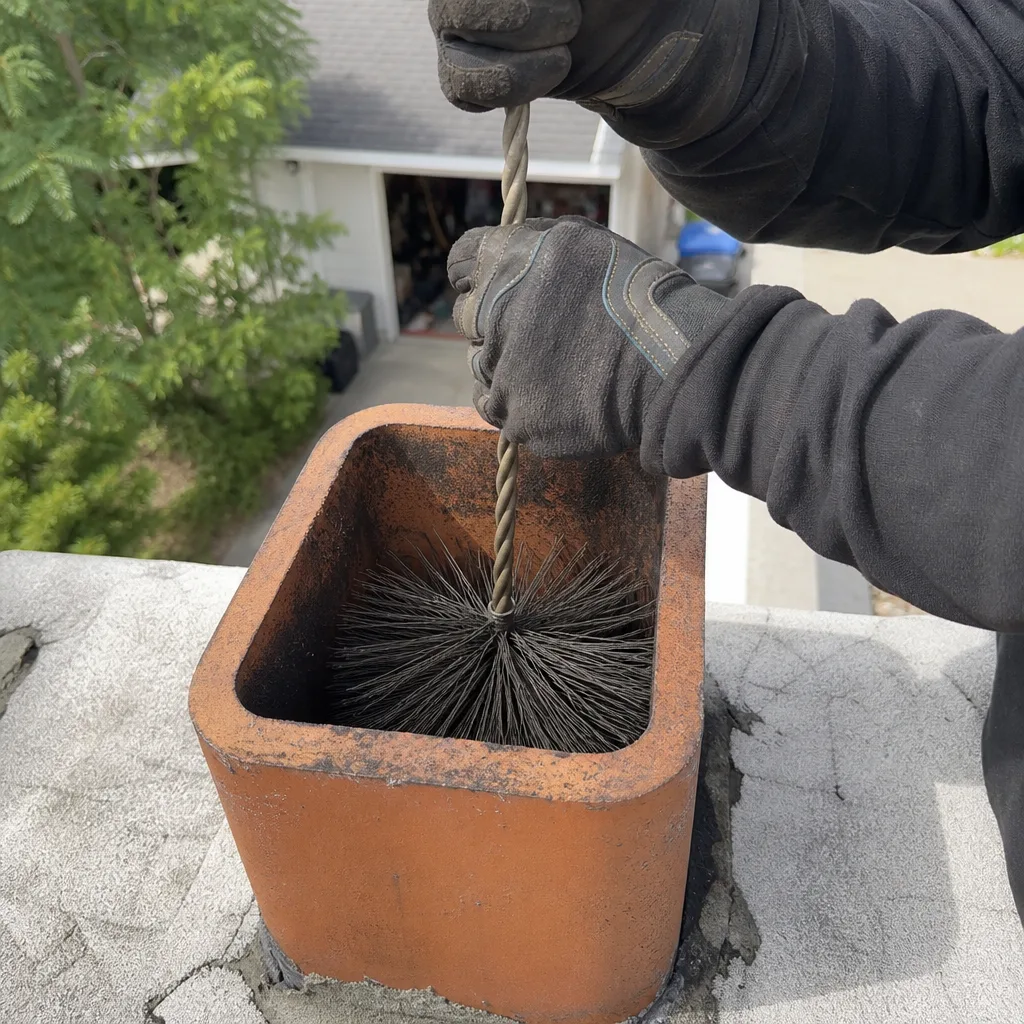
- Brushing from the top down. The technician goes to the roof, removes the cap if present, and brushes the full flue length with a properly sized wire or poly brush. Each pass is controlled to avoid damaging the liner.
- Smoke chamber and firebox cleaning. The brush handles the flue. The smoke chamber and firebox need manual attention with hand tools and the vacuum. This is where a lot of soot hides.
- Post-clean camera scan. Another pass with the camera. The homeowner sees the difference. More importantly, the technician can spot damage that was hidden under creosote.
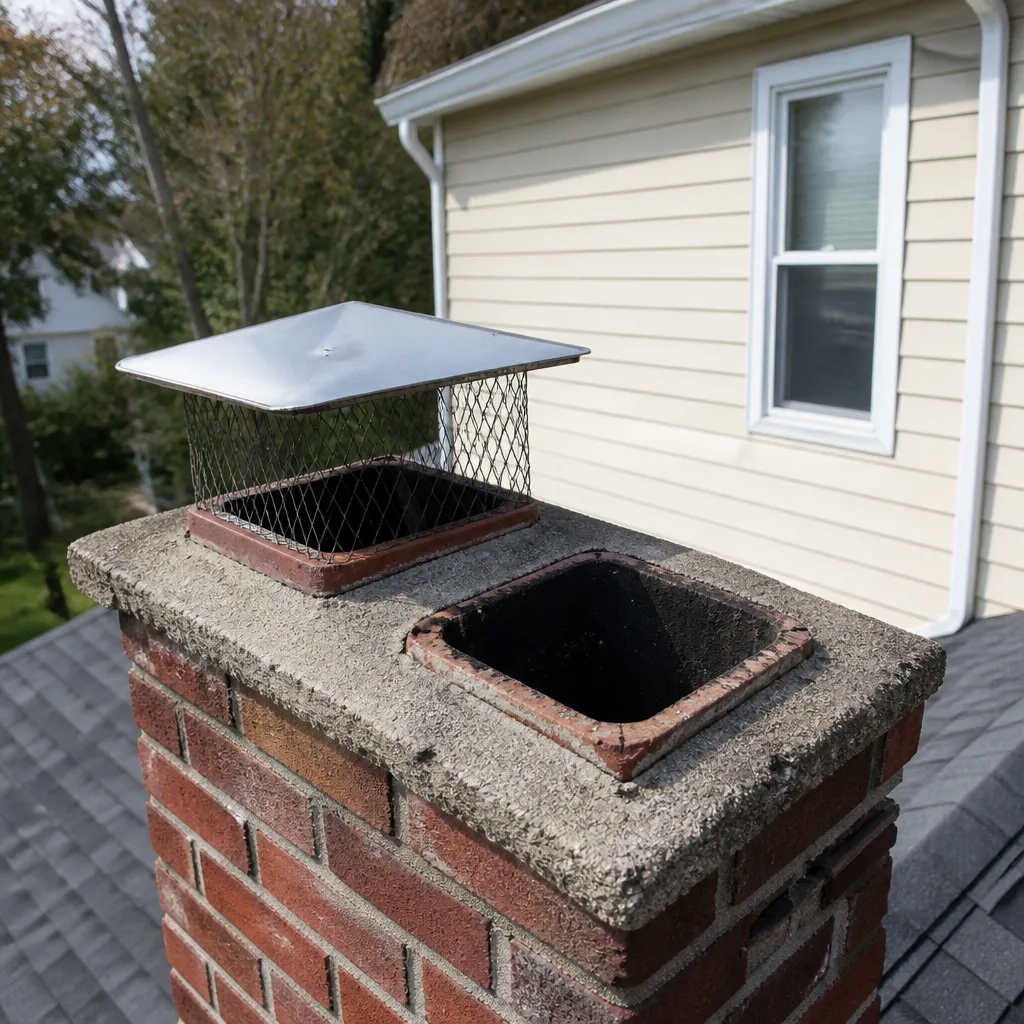
- Cap and crown check. While on the roof, the technician inspects the cap, spark arrestor, crown, and flashing. Photos document every issue.
- Report and recommendations. A written report with photos, findings, creosote amount and type removed, and specific recommendations if work is needed. You keep the report.
Total time: 45 to 90 minutes for a typical single-flue chimney with roof access. The process should be entirely contained. A professional sweep leaves no soot in your living room. If a company can’t show you camera photos of your flue before and after, that’s a red flag. A sweep report means nothing if no one can fix what’s found. We’re a Chimney Repair in Santa Monica company too, so when our inspection uncovers a problem, we don’t hand you a deficiency report and wish you luck. We quote the fix and, in many cases, complete it the same visit.
Creosote in Low-Use Chimneys: What “We Barely Use It” Really Means
Creosote forms in three stages, and the stages matter. In Santa Monica’s low-use chimneys, the pattern we see is not the dry, flaky stage 1 buildup you read about in generic chimney guides. It’s stage 1 that’s become sticky and tar-like from moisture absorption, or stage 2 that has formed in localized bands near the top of the flue where condensation is worst.
Here’s the problem: a homeowner who burns six to ten fires per year produces relatively little creosote in volume. But because the chimney stays cold most of the year, the creosote that does form sits in a cool, damp environment. Creosote is hygroscopic: it absorbs water from the air. In Santa Monica’s 70-80% humidity, thin deposits become sticky and adhesive. They trap more soot. They hold moisture against the liner. And over three or four years of this cycle, the flue can have more dangerous buildup than a heavy-use chimney in a dry climate that gets swept annually.
The three stages, explained plainly:
- Stage 1: Light, dust-like soot. Removable with standard brushing. Not immediately dangerous, but in damp climates it becomes sticky and should be removed before it cures into stage 2.
- Stage 2: Flaky, tar-like deposits. Harder to remove, sometimes requiring power brushing or chemical treatment. Stage 2 is where chimney fire risk starts climbing.
- Stage 3: Hardened, glazed tar. This is fuel. A stage 3 flue is a fire waiting for an ignition source. Removal often requires chemical treatment followed by power brushing, and in severe cases, relining.
When a Santa Monica homeowner tells us they’ve skipped several years because “we barely use it,” the camera often shows stage 1 that has converted to sticky stage 2 in the upper third of the flue. The firebox might look clean. The flue is not. This is why we recommend the annual inspection cycle regardless of burn count. It’s also why a sweep report means nothing if no one can fix what’s found: we see this pattern enough that we know what the camera will show before we even run it.
Santa Monica Architecture and Chimney Access Challenges
Santa Monica’s housing stock creates specific chimney access patterns that homeowners should understand. The two dominant styles here are Spanish Colonial/Mission Revival and mid-century modern. Each presents different sweeping and repair challenges.
Spanish Colonial and Mission Revival homes (the stucco-heavy, barrel-tile-roof style that defines the Sunset Park and North of Montana neighborhoods) often have wide masonry chimneys with decorative caps. The visual weight is part of the charm. The practical reality: those wide stacks often conceal narrow flues with complex offsets. The smoke path twists and turns more than in a straight-run chimney. More turns means more creosote deposition points and more difficulty getting brushes cleanly through the full path. It also means more vulnerability to water intrusion through the barrel tiles and stucco joints where the chimney meets the roofline. When we sweep these homes, we’re paying special attention to the smoke chamber area. That’s where Santa Monica Spanish-style chimneys collect creosote out of sight of the firebox.
Mid-century modern homes (the post-and-beam and low-profile ranch inventory concentrated in the Ocean Park and Sunset Park neighborhoods) often feature tall, slender chimney stacks. These were built in the 1950s through 1970s with clay tile liners that are now 50 to 70 years old. Clay tile liners crack from thermal shock and age. Once cracked, they allow heat transfer to the surrounding structure and let moisture into the masonry. A 1960s era chimney in Ocean Park with its original clay liner has almost certainly developed some degree of liner deterioration. The good news: these chimneys tend to be straight-run, which makes them easier to sweep and easier to reline. But the liner age means we’re frequently recommending at minimum a camera scope to check for cracks before any fire is lit for the season.
Roof access is another Santa Monica variable. Spanish tile roofs are fragile. A technician who doesn’t know how to move across clay tile without breaking it will cost you a roof repair. A professional sweep company working these roofs routinely uses ladder stabilizers, roof pads, and proper footwear to distribute weight. We’ve repaired enough broken tiles for homeowners whose previous sweep company left tracks across the roofline. It doesn’t have to happen.
What Post-Sweep Repairs Actually Require: Professional Materials Explained
The most common question after a sweep is: “Do I really need that repair, and what does it cost?” Santa Monica homeowners are rightly skeptical of repair recommendations, because they’ve heard stories about scare-tactic upsells. Here’s how to evaluate what a chimney professional tells you, and what professional-grade materials actually mean in a coastal environment.
The truth is that many residential chimneys in Santa Monica do need work. Not because homeowners are neglectful, but because the climate accelerates the aging curve. The repair question isn’t whether the chimney has issues. It’s whether the issues found require action now, action later, or observation.
Common post-sweep findings and what they mean:
- Hairline crown cracks: Minor cracks can be sealed. This is maintenance, not emergency. But in Santa Monica’s moisture environment, unsealed cracks get worse every season. A $200 crown seal now prevents a $1,800 crown rebuild later.
- Damaged clay tile liner: In an older mid-century home, this is a common finding. Clay liners can’t be patched. The options are relining with a stainless steel system or resurfacing with HeatShield.
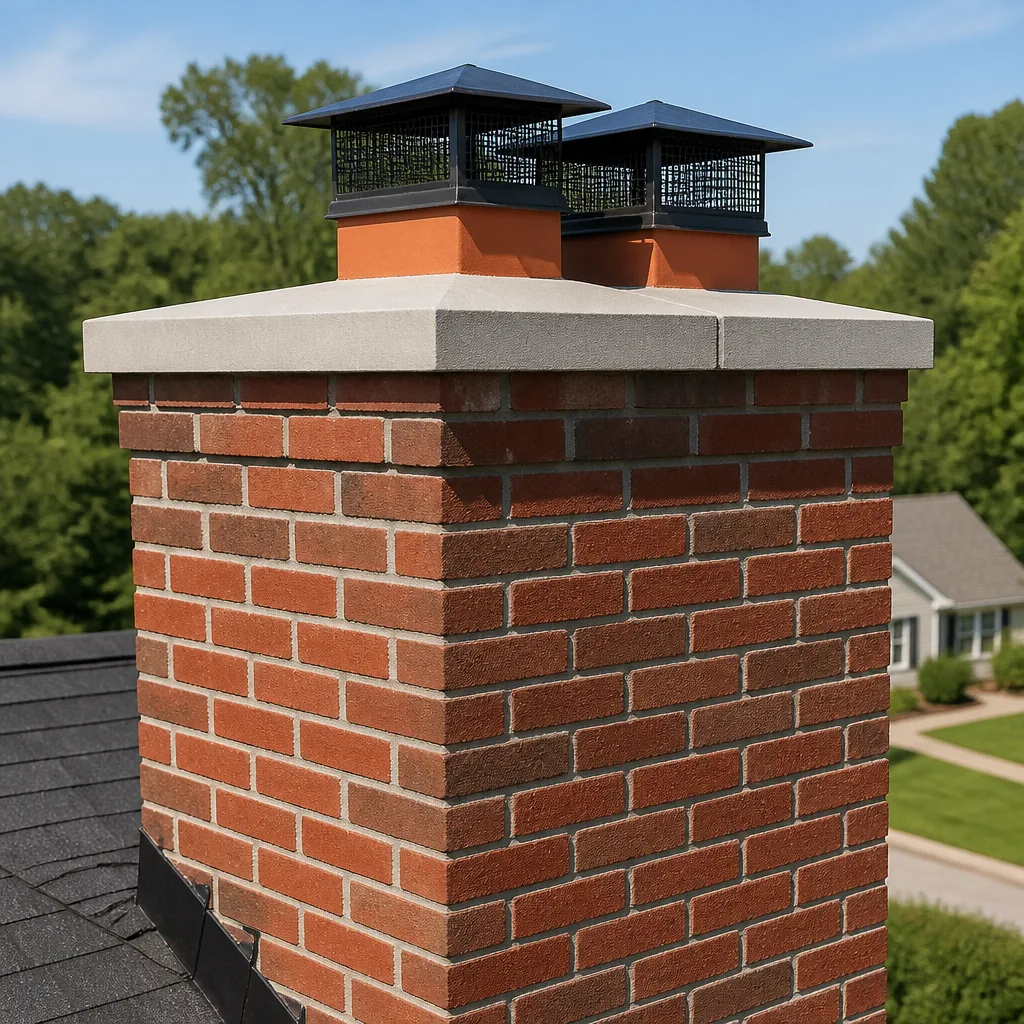
- Rusted chimney cap: Coastal rust is expected. Replacement is straightforward and inexpensive. The cap is your first line of defense against water intrusion and animal entry.
- Crumbling mortar in the firebox or smoke chamber: This needs repair but rarely constitutes an emergency. The risk is fire penetration into surrounding framing.
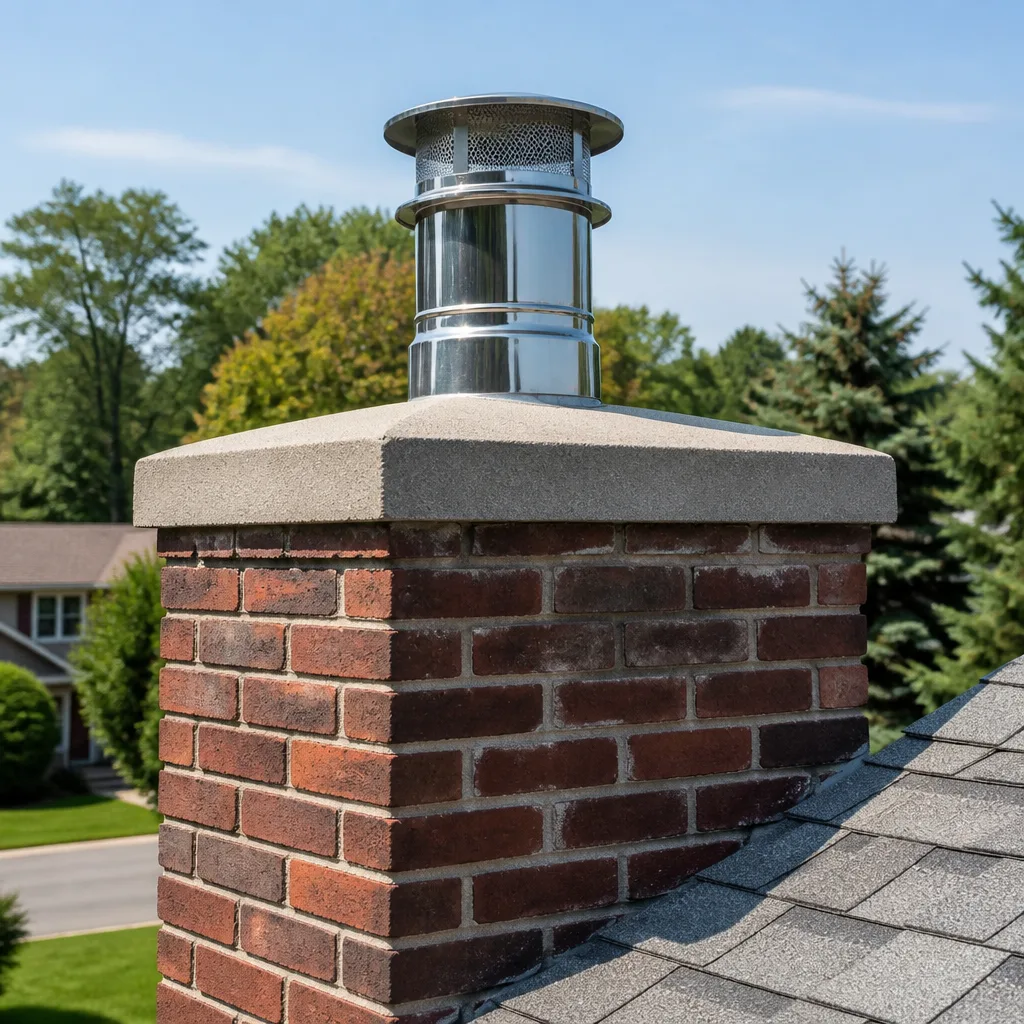
For liner damage, Steadfast Chimney Sweep uses two approaches. For moderate damage, HeatShield resurfacing can restore a damaged flue without full relining. This is a ceramic coating applied to the flue interior that seals cracks, fills gaps, and restores the liner’s insulation value. It’s not a product every sweep company is certified to apply. For more severe damage or full relining, we install DuraFlex flexible liner systems, which are stainless steel and carry lifetime warranties from the manufacturer. This matters in a salt air environment because surface corrosion is a real threat to off-brand metals. The professional-grade products we use, including components from Gelco and Olympia Chimney, are specified by chimney professionals for exactly these conditions. A generic discount liner rusts here. That’s the material reality of living within breathing distance of the Pacific.
We recommend homeowners always ask one question when a repair is proposed: “Can you show me the problem on the camera?” If the answer is no or defensive, get a second opinion. If the answer is yes, watch the footage and make the call with your own eyes. Nothing we recommend is based on anything other than what the camera shows, and the report comes with the photos.
Dryer Vents: The Other Chimney in Your Santa Monica Home
Your dryer vent is a chimney for lint. That’s not a metaphor. A dryer vent is a vertical or horizontal exhaust system that moves hot, combustible particles through an enclosed space. The operational physics are similar to a chimney, and so are the failure modes. Lint builds up. Airflow decreases. Heat accumulates. Now you have fuel and heat in the same place.
Dryer vent fires are one of the leading causes of residential fires in the United States, and most of them occur in homes where the vent has never been cleaned. In Santa Monica, the same coastal moisture that affects chimneys affects dryer vents too: humid air makes lint sticky, which causes it to adhere to vent walls instead of blowing clear. A short vent run from a laundry closet to an exterior wall is less vulnerable than a long, multi-turn run through a crawlspace or attic. Many Santa Monica homes built in the 1920s and 1930s have laundry areas that were retrofitted into awkward spaces with vent runs that snake through foundations. Those are the ones that need attention.
Signs your dryer vent needs cleaning:
- Clothes take more than one full cycle to dry
- The exterior vent flap doesn’t open fully when the dryer is running
- A burning smell in the laundry area
- Excessive lint visible around the dryer or on the exterior exhaust
- The dryer itself feels unusually hot to the touch
Steadfast Chimney Sweep includes Dryer Vent Cleaning in Santa Monica as a core service, not an add-on. We sweep the vent, remove the lint, and document the before and after. The same camera technology we use for flues works perfectly for vent interiors. For a household that runs the dryer multiple times per week, annual cleaning is the recommendation. Less frequent use still warrants inspection.
Common Mistakes to Avoid
- Skipping the inspection because the chimney looks clean from the living room. The firebox can look pristine while stage 2 creosote builds in the smoke chamber and upper flue. The camera tells a different story than the naked eye.
- Using a discount sweep service that can’t repair what it finds. A low-price cleaning is fine until the technician hands back a report listing three needed repairs and no ability to do them. Now you’re paying twice for the same access. Steadfast Chimney Sweep home was built to handle the full scope: clean it and fix it.
- Ignoring the chimney cap after replacing it. In Santa Monica, salt air corrodes caps faster than homeowners expect. A cap that rusted through in five years means water was getting in for at least two of them. Check it annually.
- Sealing off an unused fireplace without professional input. Sealing the top of a chimney traps moisture inside. If you’re retiring a fireplace permanently, the flue needs to breathe or be fully removed. Otherwise, you’re creating a moisture containment chamber.
- Burning unseasoned wood or driftwood from the beach. Driftwood contains salt. Burning salt-saturated wood releases chloride compounds into the flue that accelerate metal corrosion and create bizarre-colored flames and unusual creosote chemistry. Never burn beach wood.
- Treating a chimney sweep as a standalone chore rather than part of annual fire safety. The chimney and the dryer vent should be on the same maintenance calendar. One visit can cover both, and that’s the more efficient way.
See the difference
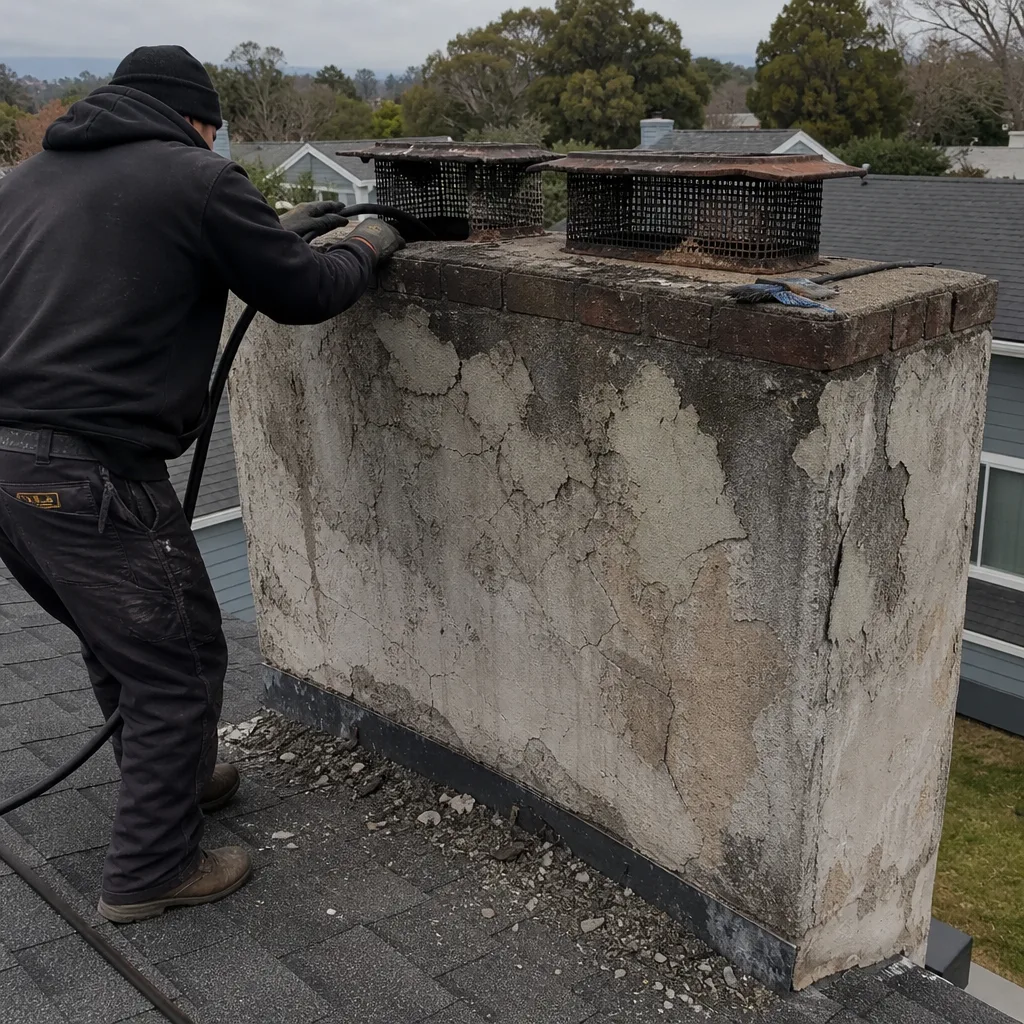 Before
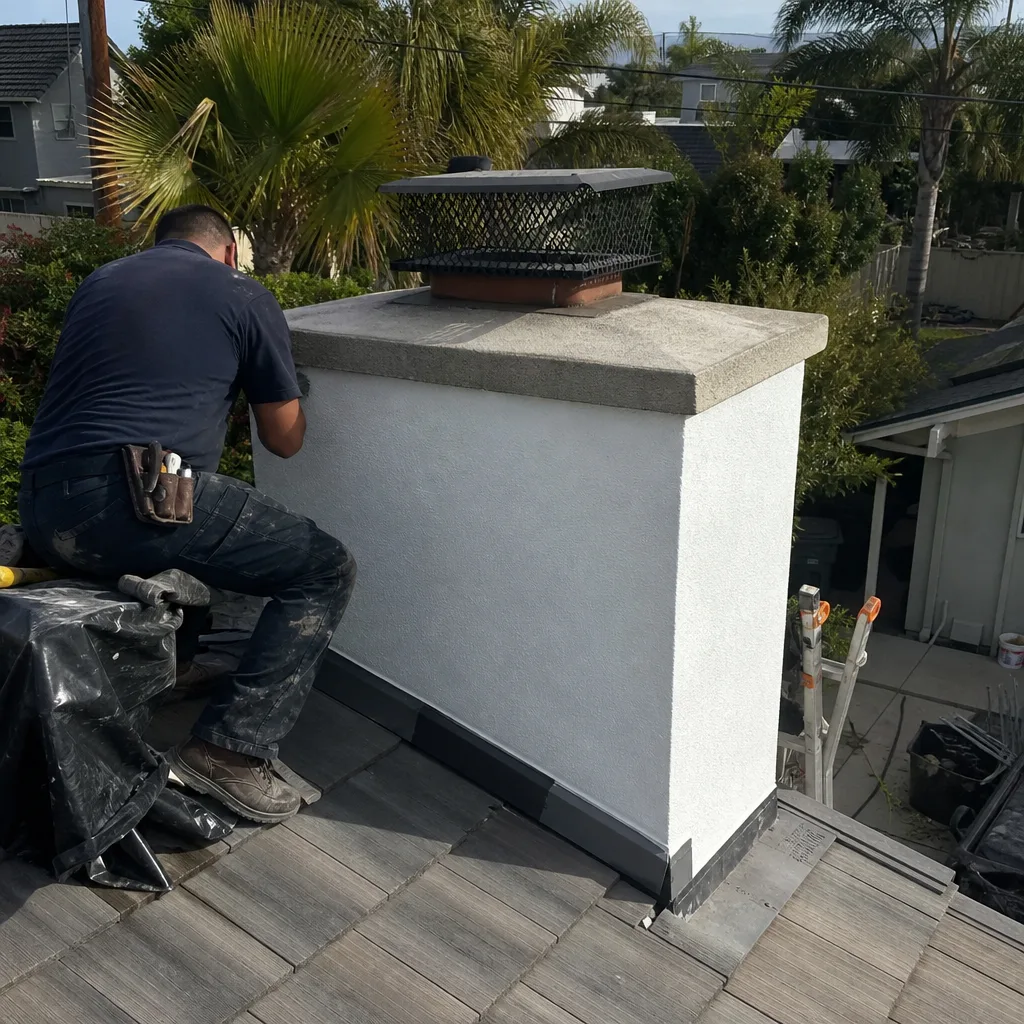 After
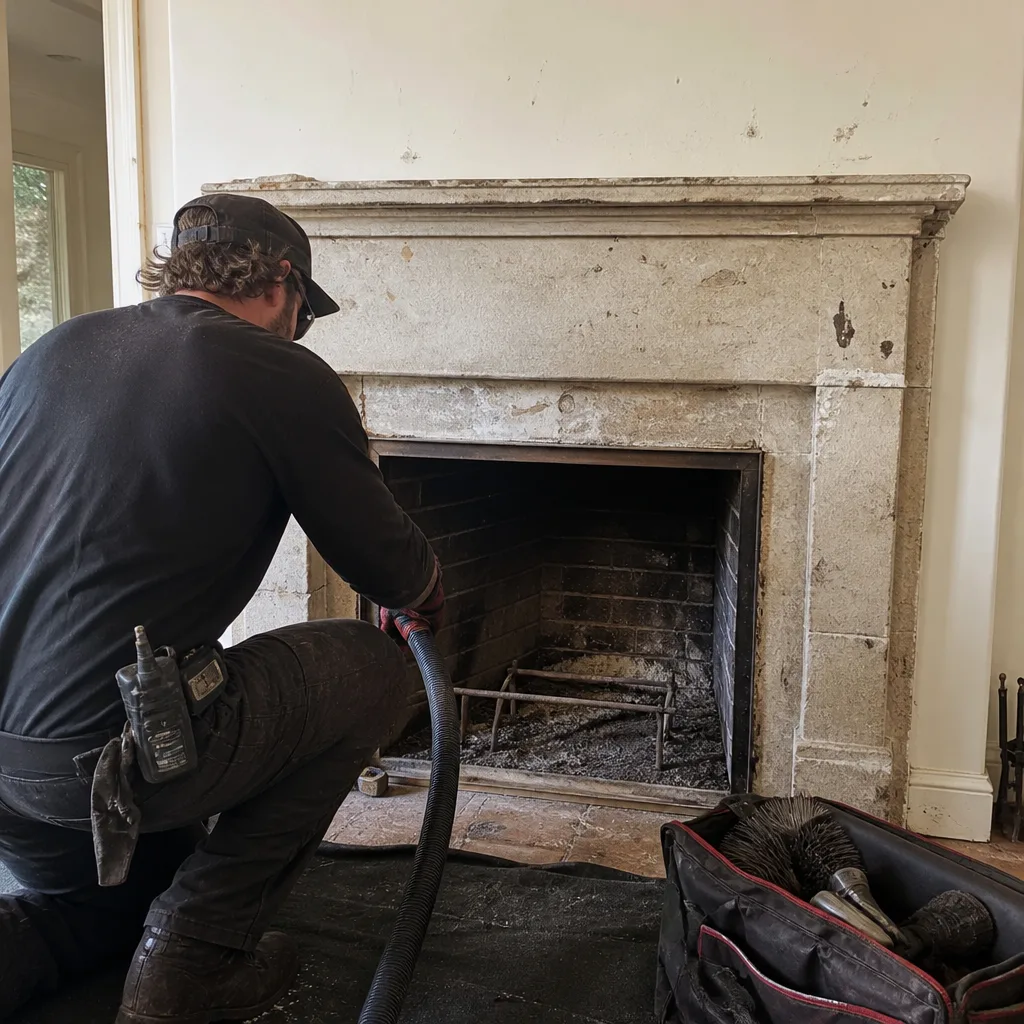 Before
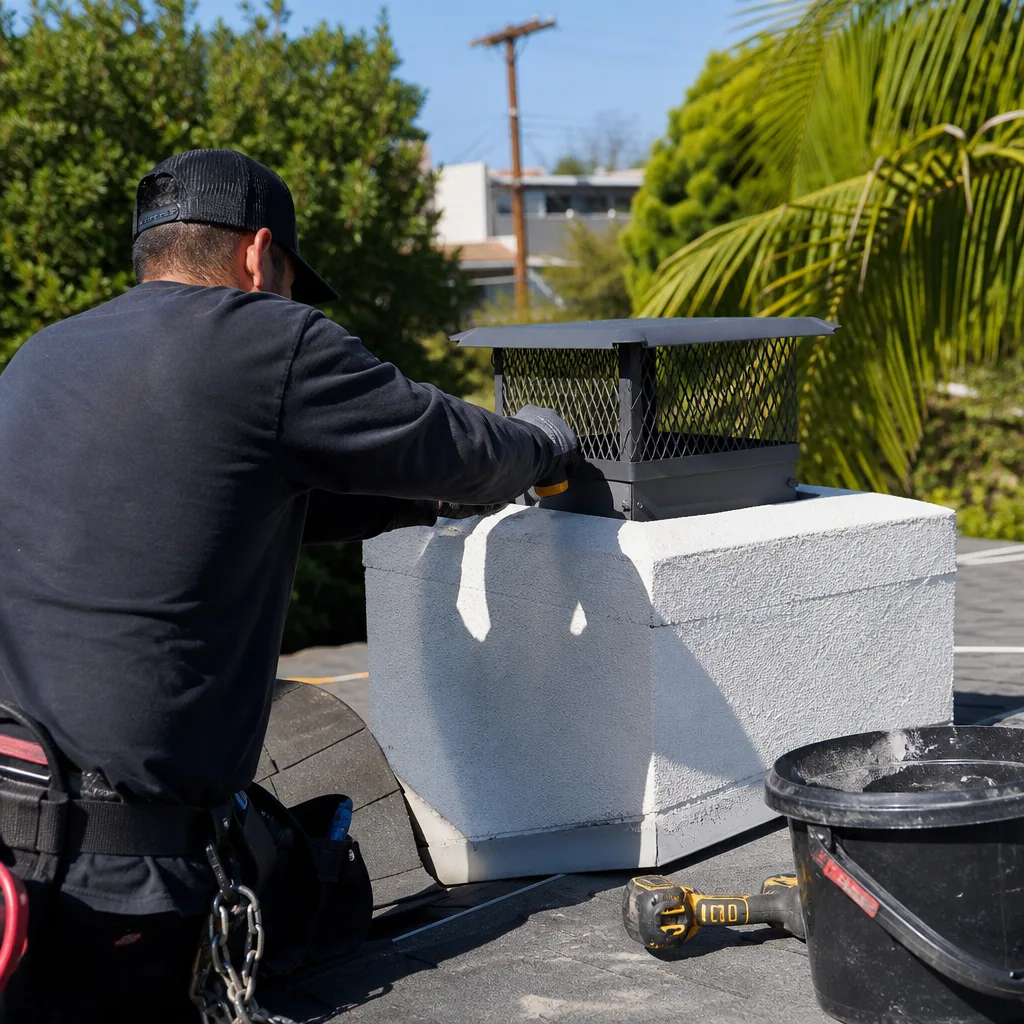 After
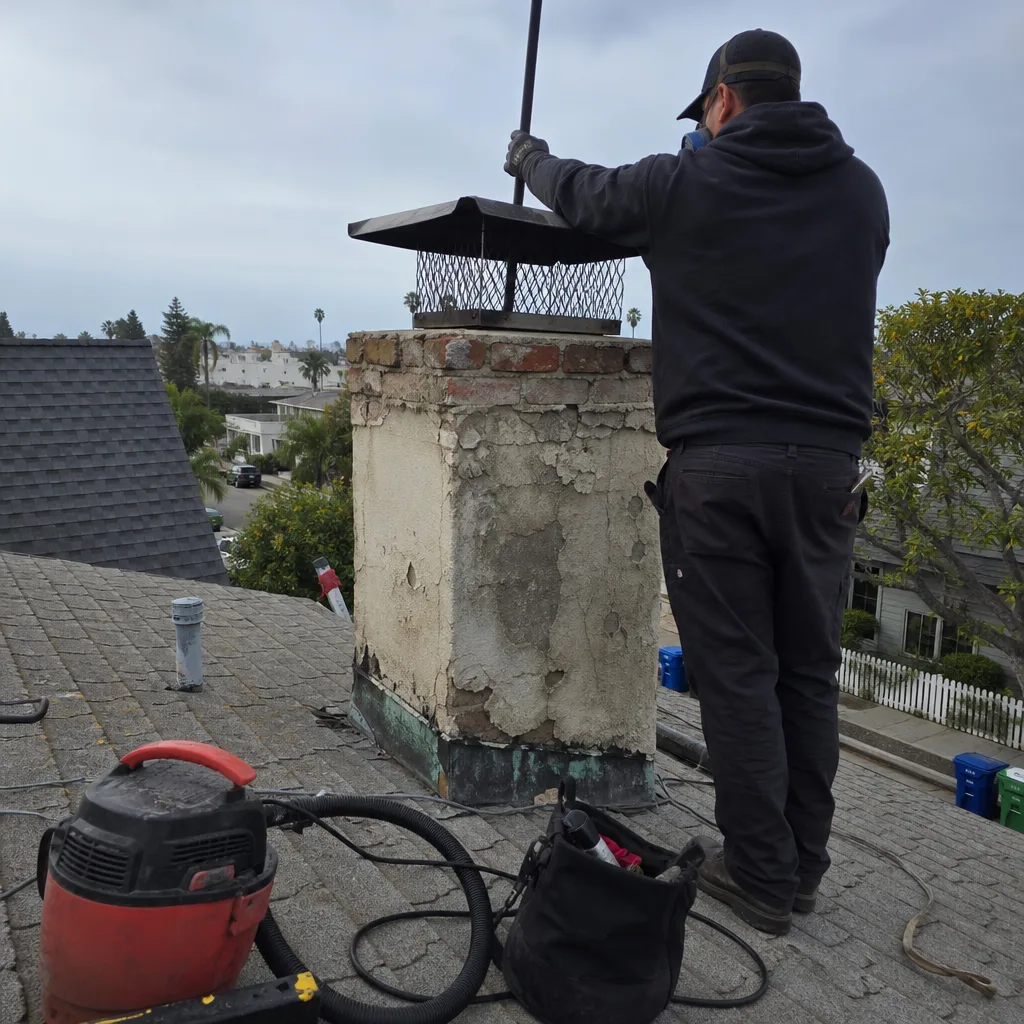 Before
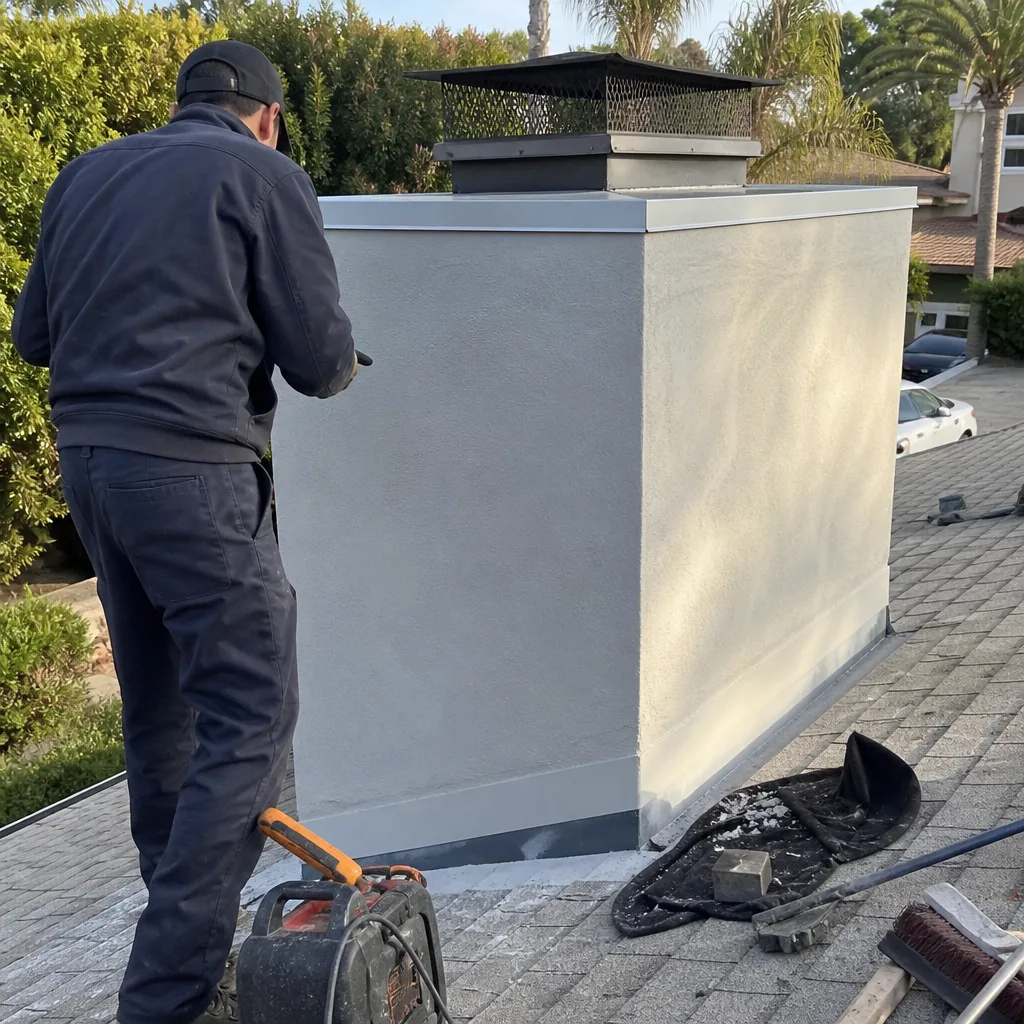 After
When to Call a Professional
Call a chimney professional when you see soot streaks above the firebox, when you smell damp or smoke in the room after a fire, when you hear debris falling inside the flue, when the damper won’t open or close, when you notice white staining on exterior brick, or when you’ve just moved into a home with an undocumented chimney history. Also call after any earthquake you felt in Santa Monica, even a moderate one. Structural shifts can crack liners invisibly. And call if your dryer takes twice as long to dry clothes or the exhaust flap isn’t opening properly. Steadfast Chimney Sweep offers free estimates in Santa Monica, and all inspections come with camera documentation. Call (833) 593-2844 to schedule.
Frequently Asked Questions
A standard chimney sweep with a Level 1 inspection in Santa Monica typically runs between $180 and $320, depending on roof access difficulty, flue height, and whether the chimney has been recently maintained. Additional work like cap replacement, crown sealing, or liner repair is quoted separately after the camera inspection. Chimney Sweep in Santa Monica service from Steadfast includes the inspection, the sweep, and a written photo report. Call (833) 593-2844 for an exact quote based on your home.
Possibly, but don’t accept that recommendation without camera evidence. In Santa Monica, low-use chimneys often develop liner issues because moisture from the marine layer accelerates corrosion and cracking. The liner protects your home from fire and carbon monoxide regardless of how often you burn. If the camera shows cracks, gaps, or spalling, the liner needs attention even if you only light one fire per year. HeatShield resurfacing can restore a damaged flue without full relining in many cases, which is a significantly less expensive option than a full liner replacement.
A Level 1 inspection covers accessible areas of the chimney and is performed during routine annual service. A Level 2 adds concealed spaces such as attics, crawlspaces, and the roof area, and includes full video scanning of the flue. You need a Level 2 when buying or selling a home, after a chimney fire, after an earthquake, or when changing fuel types. In Santa Monica, we recommend Level 2 at minimum for any home purchase because many municipal-era homes have never had a thorough flue scan.
Annually, even if you burn infrequently. Santa Monica’s coastal humidity keeps creosote deposits damp and sticky, which makes them more corrosive and dangerous than dry creosote in inland climates. An annual sweep with camera inspection catches deterioration early, before a small repair becomes a full reline. Schedule for September or October, before the rainy season and before the holiday fire season starts.
In this climate, you’ll likely see progressed creosote buildup in the upper flue, moisture intrusion through a cracked crown or rusted cap, and accelerated mortar breakdown on the weather-facing side of the stack. These conditions can lead to expensive repairs: a full crown rebuild, a new liner, or structural masonry work. You’re also increasing chimney fire risk with each season of unchecked creosote accumulation. Annual maintenance is less expensive than catch-up repair in almost every case.
Yes. Dryer vent cleaning is a core service, not an afterthought. A dryer vent is a chimney for lint, and the same fire physics apply. We inspect and clean both chimney flues and dryer vents in one visit, which is the more efficient way to cover the two biggest exhaust-related fire hazards in your home. If you can only schedule one thing this year, schedule both in the same call. Call (833) 593-2844.
The Bottom Line
Santa Monica’s chimneys don’t fail from overuse. They fail from coastal exposure, moisture, and long dormancy. The solution is not to burn more. It’s to inspect and sweep on a regular schedule, verify what’s actually happening inside the flue with a camera, and use professional-grade materials when repairs are needed so they hold up against the salt air. A competent sweep costs less than a single major repair, and the inspection report tells you whether action is needed now or can wait. Read our DIY vs Professional Chimney Cleaning guide to decide what’s right for your home. The worst chimney surprise is one that was visible all along, if only someone had looked.
Schedule your annual sweep before the season starts. Call Steadfast Chimney Sweep at (833) 593-2844 for a free estimate. We’ll inspect, clean, and repair in one visit when possible, and show you the photos to prove the work was done right.
Written by the team at Steadfast Chimney Sweep, serving Santa Monica since 2015.